 Pin it
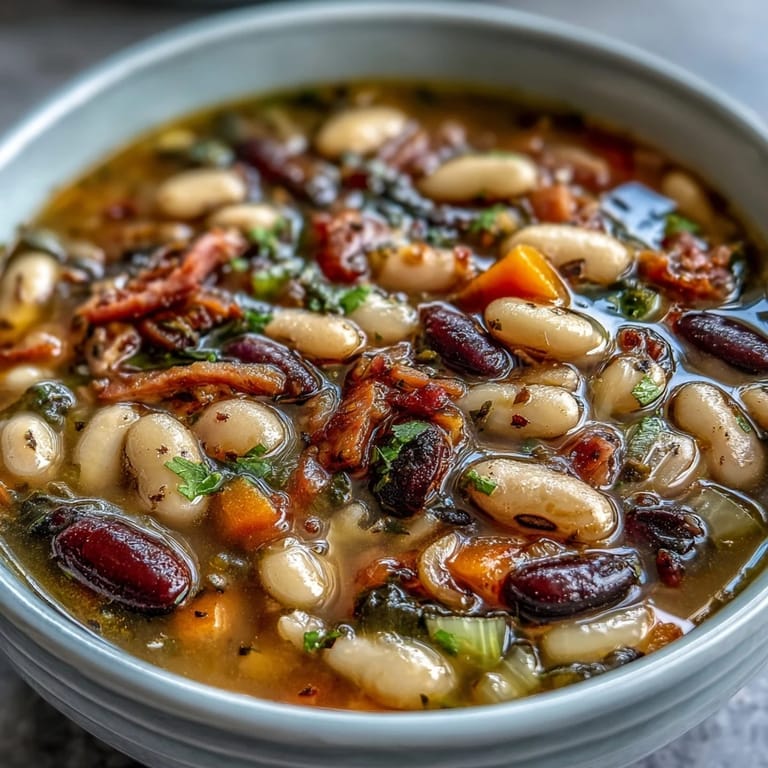
 My neighbor dropped off a ham bone after Christmas dinner one year, and I stood there holding it like some kind of prize, wondering what on earth to do with it. That's when this soup came together—not from a recipe I'd carefully planned, but from pure instinct and a bag of 15-bean mix sitting in my pantry. Eight hours later, my kitchen smelled like pure comfort, and I understood why people save those bones like treasures.
I made this for my book club on a particularly gray February evening, and something shifted when everyone tasted it. They were expecting typical restaurant soup, but instead got this deeply honest bowl that tasted like actual cooking, actual time, actual care. One friend asked for the recipe right there between bites, and I realized this soup had become the kind of thing people want to make for their own families.
Ingredients
- 15-bean soup mix (20 oz / 570 g): This blend is the backbone—it includes everything from pintos to kidneys to limas, each bean contributing its own subtle texture and flavor; rinse it well and pick through for any stones, a small habit that's saved me from an embarrassing crunch.
- Ham bone with meat attached: Don't skip this or swap it carelessly; the bone releases a richness that no broth alone can match, and any clinging meat becomes tender morsels that disappear into the soup.
- Onion, diced large (1): Onions break down completely into this soup, becoming almost invisible but leaving their sweet, savory signature behind in every spoonful.
- Carrots, sliced (3): They add natural sweetness and stay just tender enough to feel like you're eating real vegetables, not mushy ones.
- Celery stalks, sliced (3): Part of the holy trinity that makes soup taste like it belongs in someone's memory, and it works quietly without demanding attention.
- Diced tomatoes with juice (14.5 oz / 410 g can): The acidity brightens everything, cutting through the richness and keeping the soup from tasting one-dimensional.
- Garlic cloves, minced (3): Fresh garlic stirred in raw at the beginning becomes mellow and sweet by hour eight, absolutely essential.
- Chicken broth, low-sodium (8 cups / 2 L): Low-sodium means you control the seasoning and prevents the soup from tasting salty by the end; vegetable broth works beautifully if you're skipping meat.
- Water (2 cups / 480 ml): This dilutes the broth enough that the beans can truly absorb flavor rather than cook in something too concentrated.
- Smoked paprika (1 teaspoon): This is where the smoke comes from when there's no ham bone, and it makes everything taste a little deeper, a little more complex.
- Dried thyme (1 teaspoon): An herb that belongs in this soup the way salt belongs in the ocean—foundational and irreplaceable.
- Black pepper (1 teaspoon ground): Added now, at the beginning, so it seasons the entire pot rather than just sitting on top.
- Bay leaf (1): Remove it before serving—I learned this the hard way when a guest crunched down on one and gave me a look I'll never forget.
- Salt, to taste: This goes in at the very end because salt tightens bean skins and prevents them from becoming tender; I learned to never season until the beans are completely soft.
Tired of Takeout? 🥡
Get 10 meals you can make faster than delivery arrives. Seriously.
One email. No spam. Unsubscribe anytime.
Instructions
- Prepare your beans with intention:
- Rinse the 15-bean mix under cool water, swishing it around with your fingers so you can actually see what you're working with. Pick through slowly and discard any shriveled beans or tiny stones—this takes five minutes and prevents surprises later.
- Build your slow cooker base:
- Arrange the rinsed beans in the bottom of your 6-quart slow cooker, creating an even layer. Nestle the ham bone on top like you're placing it carefully, because it will sit there undisturbed for hours.
- Add your aromatic vegetables:
- Scatter the diced onion, carrots, celery, minced garlic, and canned tomatoes (with all their juice) around and over the ham bone. Don't worry about perfect layering; everything will mingle together as it cooks.
- Pour in your liquids and seasonings:
- Add the chicken broth and water, then sprinkle the smoked paprika, thyme, and black pepper evenly over everything. Nestle the bay leaf somewhere you can find it later, then give everything a gentle stir.
- Set and surrender:
- Cover the slow cooker and set it to LOW for 8 hours—this is not a recipe for rushing. The low, steady heat transforms hard beans into velvet and coaxes every ounce of flavor from the ham bone.
- Finish with the ham bone:
- When the eight hours are up, carefully remove the ham bone and let it cool just enough to handle safely. Shred any meat still clinging to it with two forks or your fingers, then return the meat to the pot and discard the bone.
- Season fearlessly at the end:
- Fish out the bay leaf, then taste the soup and add salt gradually, stirring after each pinch. This is when the soup becomes yours—trust your palate.
- Serve with warmth:
- Ladle into deep bowls and let people add their own toppings—fresh parsley if you have it, crusty bread for dunking, hot sauce if they're adventurous.
 Pin it
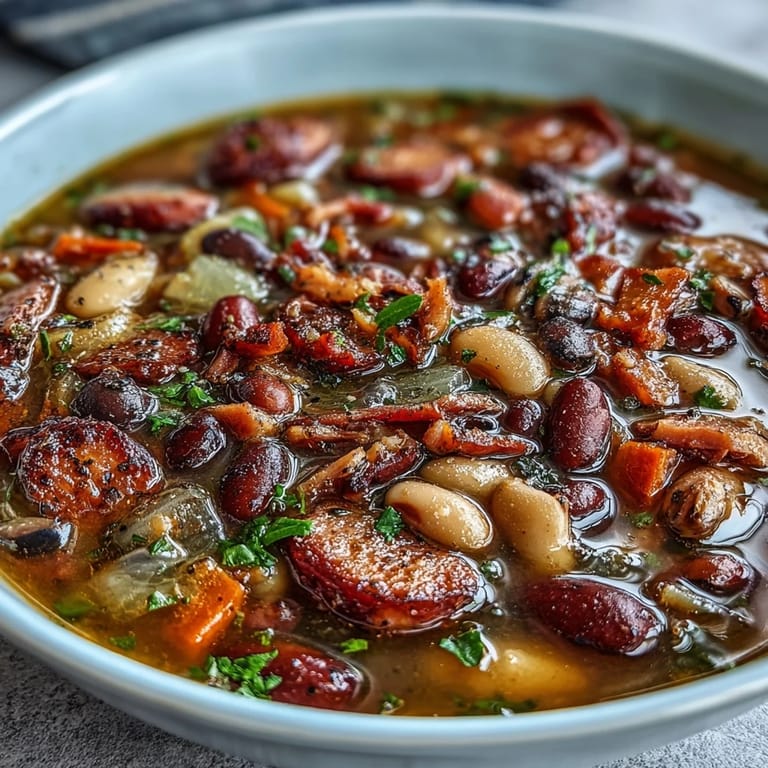
 One cold morning, my daughter asked why this soup tasted different from the canned stuff she'd had at school, and I realized I was watching her experience the difference between eating something and actually tasting food. That's what this soup does—it makes people slow down and notice.
Why This Soup Feels Like Home
Slow-cooker soups have a particular magic because time is an ingredient that can't be rushed or faked. The beans don't just become soft; they become creamy, almost butter-like in the way they fall apart on your tongue. The ham bone releases its essence gradually, so by hour five the broth has transformed into something complex and deeply savory that tastes like it's been simmering for decades.
Make It Your Own
This recipe is a framework, not a mandate, and some of my favorite versions have come from improvisation. I've added chopped spinach in the last twenty minutes (it wilts right into the soup and adds iron you didn't know you needed), tossed in diced jalapeños for heat, and once stirred in a splash of red wine that made everything taste richer and more complex. The beauty is that the slow cooker handles nearly any addition without complaint, and you can season it differently each time based on your mood.
Storage and Second Meals
This soup actually improves on day two or three because the flavors continue to deepen as it sits, and I've learned to make it specifically so I'll have leftovers. Cool it completely at room temperature (don't put hot soup straight into the refrigerator), then divide it into airtight containers where it keeps for four days easily and freezes beautifully for up to three months. I've pulled containers from the freezer on nights when I had nothing planned and felt grateful to past-me.
- Reheat gently on the stove or in the microwave until steaming, stirring occasionally so it warms evenly.
- Add a squeeze of fresh lemon juice or a splash of hot sauce right before serving to brighten it every single time.
- Serve with whatever bread you have on hand—crusty, soft, cornbread, biscuits—because this soup is infinitely forgiving about sides.
 Pin it
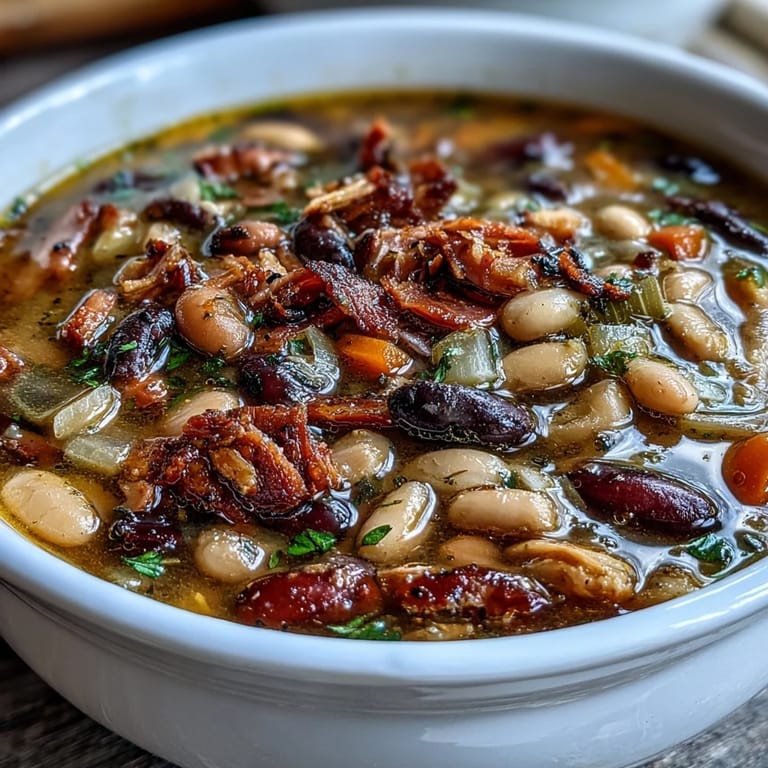
 This soup asks so little of you—a few minutes of prep, eight hours of patience, and faith that time will do what skill alone cannot. In return, it offers comfort in a bowl and the kind of warmth that spreads from your stomach outward.
Recipe Questions & Answers
- → Can I make this soup vegetarian?
Yes, omit the ham bone and add smoked paprika with a little liquid smoke to retain a smoky depth without meat.
- → How long should I cook the beans for best texture?
Cooking on low heat for about 8 hours allows the beans to become tender and fully absorb flavors.
- → What vegetables complement the beans in this dish?
Onions, carrots, celery, tomatoes, and garlic provide a savory base that enhances the overall flavor.
- → Can I add greens to this dish?
Yes, adding chopped spinach or kale in the last 20 minutes of cooking boosts nutrition and freshness.
- → Is it best served immediately or stored?
It serves well hot fresh, but also freezes nicely once cooled, making it great for meal prep.