 Pin it
 My grandmother used to say that black-eyed peas on New Year's Day guaranteed good fortune, but honestly, I was skeptical until I learned that the real magic was in how she built the broth—layering flavors so quietly that each spoonful tasted like comfort itself. When I started adding smoked turkey instead of the traditional ham hock, something shifted; the dish became lighter but somehow more substantial, like it was feeding both body and spirit at once. That first batch I made for my own table felt like inheriting something precious while making it entirely my own.
I served this for the first time to a table full of skeptics—people who'd grown up on their own family versions and weren't convinced a lighter take could work. By the second bowl, someone asked for the recipe, and by the end of the meal, there was barely a pea left in the pot. That's when I realized this dish had its own quiet authority; it didn't need to announce itself, just invite people back for seconds.
Ingredients
- Black-eyed peas (1 pound, dried): Rinse and sort them first—you're looking for any small stones that somehow survive packaging, and this step takes two minutes but saves your teeth later.
- Smoked turkey wings or drumsticks (1 pound): The bones and skin add incredible depth to the broth, so don't skip them; you'll shred the meat back in anyway.
- Onion, celery, and carrot (1 medium, 2 stalks, 1 large): This trio is your flavor foundation—rough chop them since they'll soften completely and almost disappear into the broth.
- Garlic (3 cloves, minced): Mince it fine so it distributes evenly and mellows into a rounded backdrop rather than sharp bursts.
- Chicken or vegetable broth (6 cups) and water (2 cups): Low-sodium broth lets you control the salt; the water keeps things from becoming too concentrated.
- Smoked paprika (1 teaspoon): This is the secret whisper of smoke that makes people ask what you did differently—don't skip it or substitute regular paprika.
- Dried thyme (1 teaspoon) and bay leaf (1): Thyme brings earthiness; the bay leaf anchors everything and must be removed before serving.
- Black pepper (1 teaspoon, freshly ground) and red pepper flakes (½ teaspoon, optional): Freshly ground pepper makes an audible difference in flavor; the flakes add heat if your table likes that edge.
- Olive oil (2 tablespoons) and salt (to taste): Quality olive oil matters here since it's the first flavor note; salt at the end lets you balance everything to your preference.
Tired of Takeout? 🥡
Get 10 meals you can make faster than delivery arrives. Seriously.
One email. No spam. Unsubscribe anytime.
Instructions
- Build your flavor base:
- Heat olive oil in your large pot over medium heat until it shimmers slightly, then add onion, celery, carrot, and garlic all at once. You'll hear the sizzle soften within seconds—that's your cue to stir gently and let them sweat for about 5 to 6 minutes until the onion turns translucent and the kitchen smells like something worth waiting for.
- Combine everything:
- Add the smoked turkey, rinsed black-eyed peas, bay leaf, smoked paprika, thyme, red pepper flakes if using, black pepper, broth, and water, stirring until the peas are mostly submerged. The mixture will look loose and soupy—that's exactly right.
- Simmer low and slow:
- Bring everything to a rolling boil over medium-high heat, then immediately reduce to low and settle in for the long simmer. Leave it uncovered for 60 to 75 minutes, skimming off any foam that rises to the surface early on—this keeps the broth clear and the flavors clean.
- Shred and return the turkey:
- When the peas are completely tender and a few have started to split open, remove the turkey pieces and let them cool just enough to handle. Shred the meat from the bones, discard the skin and bones, and stir the shredded meat back into the pot—it'll distribute throughout and add textural variety.
- Taste and adjust:
- Remove the bay leaf, then taste carefully and add salt gradually until the flavors feel bright and balanced. Remember the broth was low-sodium, so you'll likely need more salt than you'd expect.
- Serve warm:
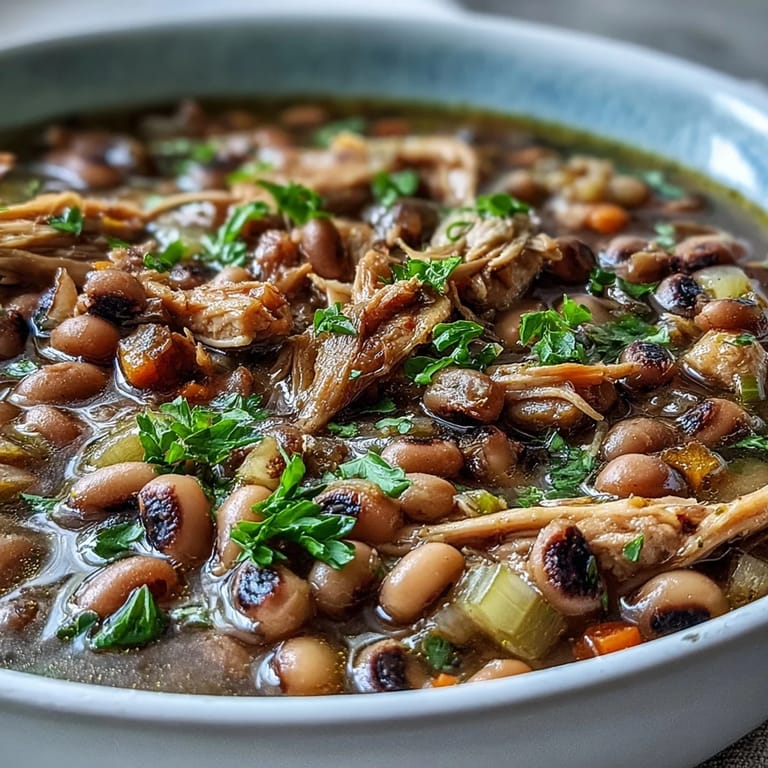
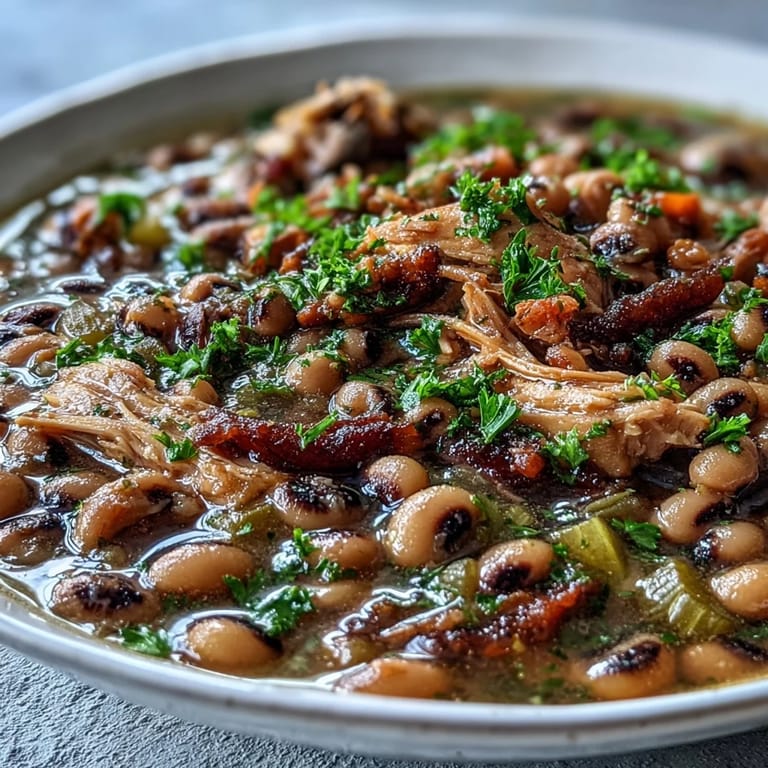
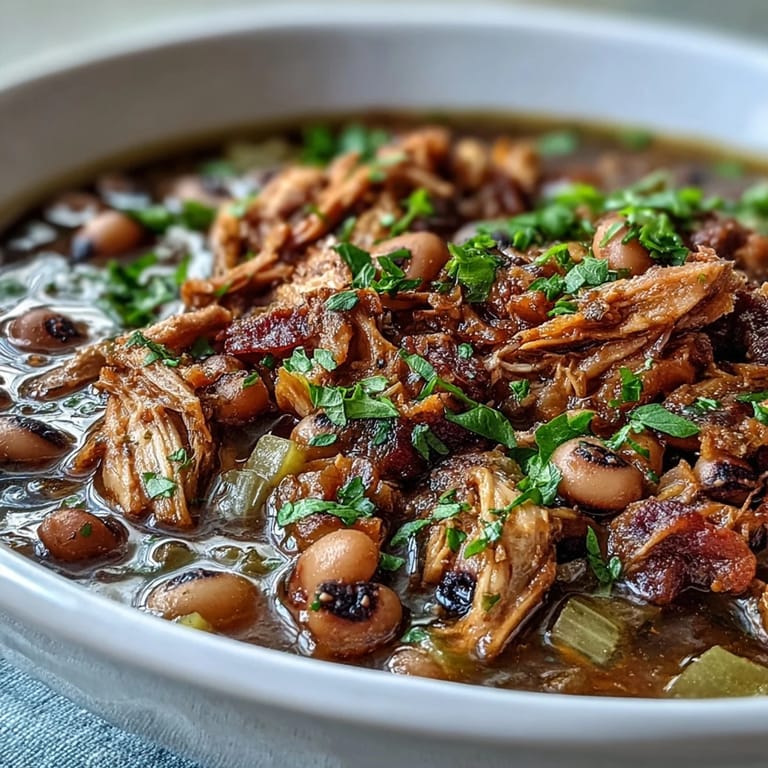
- Ladle into bowls, scatter fresh parsley on top if you have it, and pass the hot sauce for anyone who wants to add their own heat and character.
 Pin it
 There's a moment about 45 minutes in when the whole pot transforms—the broth deepens to a rich bronze, the peas become impossibly tender, and the kitchen fills with this warm, savory embrace that makes everyone stop what they're doing and drift toward the stove. That's when you know it's going to be good, when the dish stops being a recipe and becomes a reason people gather.
Why Smoked Turkey Changes Everything
Traditional black-eyed peas often rely on ham hock or bacon to build smokiness, which adds richness but also fat and sodium. Smoked turkey wings give you that same deep, almost meaty complexity without the heaviness—the broth stays clear and silky rather than coated, and somehow the peas taste more like themselves. It's a subtle shift, but it's the difference between feeling satisfied and feeling actually nourished.
The New Year's Day Tradition, Reframed
The superstition says you need black-eyed peas on January first for prosperity, but I think the real luck is in how this dish brings people back to the table, year after year. It's humble enough to feel unpretentious yet substantial enough to matter, which might be the closest thing to actual good fortune—something that fills you up without demanding attention, that becomes part of your rhythm.
Make It Your Own
This recipe is sturdy enough to handle your experiments—some cooks add a diced bell pepper for sweetness, others swear by a splash of liquid smoke for those who can't access good smoked turkey. I've also seen it made completely vegetarian by doubling the smoked paprika and adding liquid smoke, which surprises people in the best way. The base is patient and forgiving; it's waiting for you to make it yours.
- If you have smoked chicken instead of turkey, use it without hesitation—the cooking time stays the same.
- Serve this over steamed rice or alongside cornbread for the full Southern experience, or eat it plain in a bowl if that's what calls to you.
- Leftovers actually improve overnight as flavors settle, so make extra without apology.
 Pin it
 There's something grounding about a pot of black-eyed peas simmering on the stove, something that feels like an investment in your own well-being. Make this and you'll understand why people keep coming back to it.
Recipe Questions & Answers
- → Do I need to soak black-eyed peas before cooking?
Unlike dried beans, black-eyed peas don't require pre-soaking. However, rinsing and sorting them before cooking ensures any debris or damaged peas are removed. They cook relatively quickly, becoming tender in about 60-75 minutes of simmering.
- → Can I use canned black-eyed peas instead?
Yes, you can substitute canned black-eyed peas to reduce cooking time. Use about 4-5 cans (drained and rinsed) and add them during the last 20 minutes of cooking. The flavor will still develop well from the smoked turkey and seasonings.
- → What cuts of smoked turkey work best?
Smoked turkey wings or drumsticks are ideal because they contain enough collagen and fat to infuse the dish with rich, smoky flavor. The meat becomes tender and shreddable after simmering. You can also use smoked turkey necks or tails for even more intense flavor.
- → How do I store and reheat leftovers?
Store cooled leftovers in an airtight container in the refrigerator for up to 4 days. The flavors continue to develop over time, often tasting even better the next day. Reheat gently on the stovetop, adding a splash of water or broth if needed to adjust consistency.
- → Can I make this vegetarian?
Absolutely. Omit the smoked turkey and use additional smoked paprika along with a splash of liquid smoke to maintain that characteristic smoky depth. Consider adding a diced bell pepper for extra flavor complexity. The result remains hearty and satisfying.
- → What should I serve with this dish?
This pairs beautifully with steamed white rice, which soaks up the flavorful cooking liquid. Cornbread is another classic accompaniment, perfect for sopping up the savory broth. For a lighter meal, serve with a simple green salad dressed with vinaigrette.