 Pin it
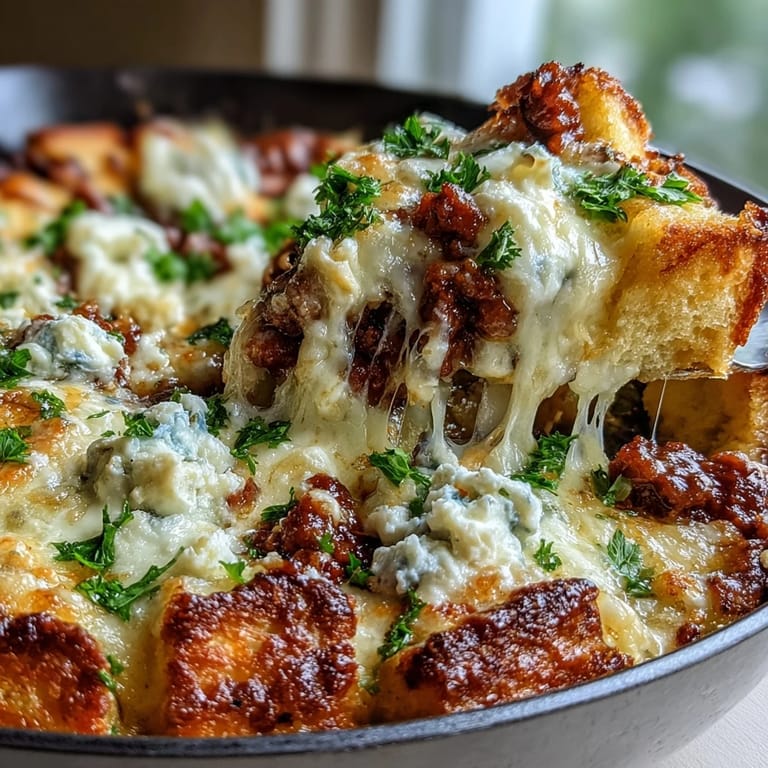
 There's something about cooking in a cast-iron skillet that makes you feel like you're doing something real, something that matters. One Saturday afternoon, I had lasagna on my mind but zero patience for layering noodles, and my bread basket was overflowing with a beautiful Italian loaf. What if I just cubed it, tossed it in garlic butter, and let it become the pasta? The moment those golden bread cubes absorbed all that rich meat sauce and melted cheese, I knew I'd stumbled onto something special—a lasagna that tastes like comfort but behaves like a weeknight miracle.
I made this for a dinner party once when someone mentioned they'd never actually enjoyed lasagna because the noodles always felt stodgy to them. Watching their face light up when they took a bite of something that felt completely new yet deeply familiar—that's when I realized this wasn't just a shortcut, it was a revelation. Now it's what people request, and I've stopped being modest about it.
Ingredients
- Italian bread, cut into 1-inch cubes: Use day-old bread if you have it; the slight dryness helps it hold its shape and absorb sauce without getting mushy.
- Unsalted butter and fresh garlic: This isn't just a coating—it's your secret weapon for making bread taste like it's been baking in someone's dream kitchen.
- Fresh parsley: A small amount scattered through the bread layer adds brightness that cuts through the richness beautifully.
- Ground beef: Italian sausage works too if you want more herbaceous depth, and honestly, a mix of the two is where the magic lives.
- Crushed tomatoes and tomato paste: The paste is essential; it concentrates the tomato flavor and gives the sauce body in a way that feels intentional.
- Ricotta and mozzarella: This is your creamy glue, your promise of gooey goodness—don't skip the ricotta's subtle tang, it balances everything.
- Parmesan cheese: Grated fresh is worth it; pre-grated versions sometimes taste like wood shavings, and this dish deserves better.
- Egg: Just one, and it binds the cheese mixture so it stays cohesive rather than sliding around like a slippery dream.
Tired of Takeout? 🥡
Get 10 meals you can make faster than delivery arrives. Seriously.
One email. No spam. Unsubscribe anytime.
Instructions
- Prepare your mise en place:
- Get your oven heating to 375°F while you gather everything—bread cubes tossed with butter, garlic, and parsley; meat browned and waiting; cheeses mixed. This moment of calm before the assembly is when you remember why cooking feels meditative.
- Build your meat sauce foundation:
- Brown the beef, soften the onions and garlic until they're fragrant, then add your tomatoes and seasonings. Let it simmer until it thickens slightly—you're looking for a sauce that coats a spoon, not something watery or too dense.
- Mix your cheese layer:
- Combine ricotta, Parmesan, egg, and basil in a small bowl, stirring until smooth and pale. This mixture should feel creamy and rich, almost cloud-like in its texture.
- Layer with intention:
- Start with half your garlic bread cubes directly on top of the meat sauce, nestling them in so they're kissing the sauce and each other. Then dollop half your ricotta mixture in scattered spoonfuls, sprinkle half the mozzarella, and repeat—it's like building edible architecture.
- Bake low and slow, then finish with heat:
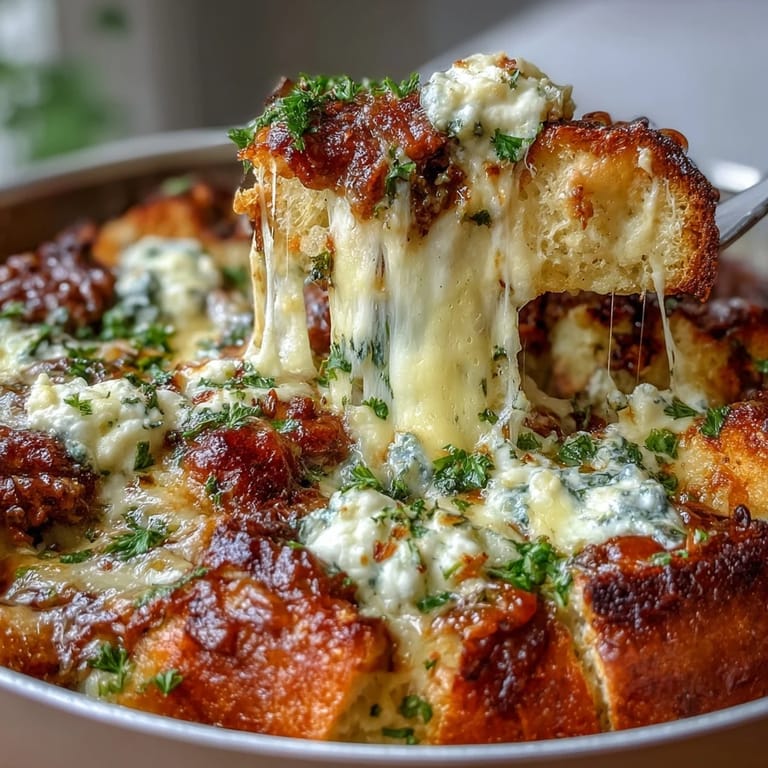
- Cover with foil and bake for 20 minutes so everything gets to know each other; then uncover and bake another 10–15 minutes until the cheese bubbles at the edges and turns golden. That golden top is non-negotiable.
- Rest before serving:
- A 10-minute rest lets everything set, so your first spoonful is a coherent masterpiece, not a delicious avalanche that slides apart.
 Pin it
 There was a moment during one dinner when my neighbor—someone who usually arrives with a recipe book she's testing—asked if I'd share this one instead of her polished, photographed version. That's when I realized comfort food isn't about perfection; it's about someone caring enough to gather good ingredients and cook them together with intention. This skillet does exactly that.
Why Cast Iron Makes a Difference
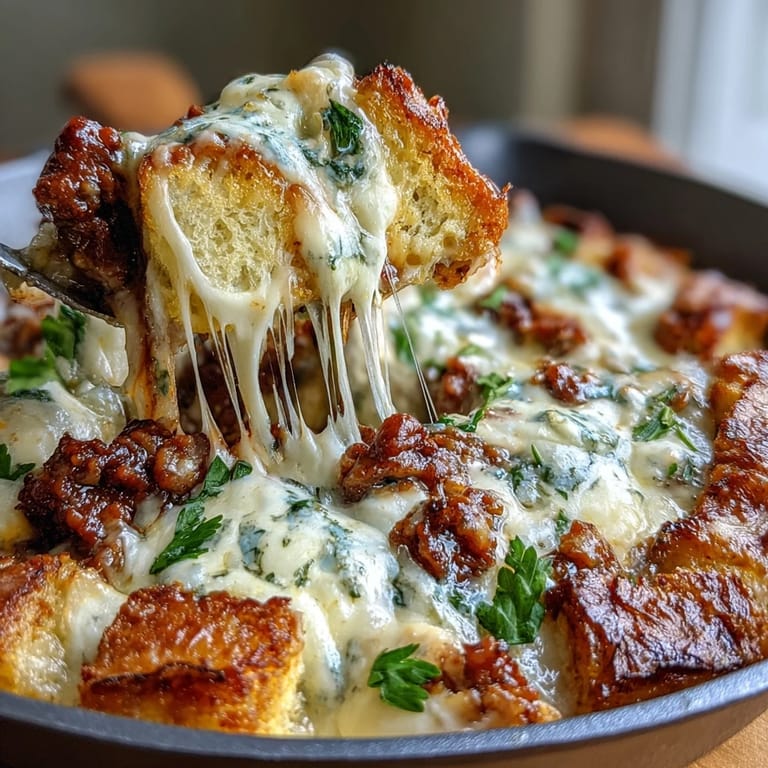
A cast-iron skillet isn't just a vessel here; it's a partner in the cooking. It holds heat evenly, creates that crispy-edged, golden finish on the cheese layer that you can't quite replicate anywhere else, and brings a certain gravitas to the table that says you mean business. Plus, there's something deeply satisfying about serving straight from the skillet, steam rising, everything still bubbling slightly at the edges.
Variations That Work
I've made this with Italian sausage instead of beef—it browns less, stays in larger, more tender pieces, and adds a subtle fennel note that feels like a small surprise. Someone once brought ground turkey to a dinner, worried it wouldn't be hearty enough, and it was lighter but still deeply satisfying. Vegetarians have made it with lentils or mushrooms sautéed with the onions, and honestly, those versions hold their own beautifully.
Pairing and Serving Suggestions
This skillet wants something fresh alongside it—a simple green salad with lemon vinaigrette cuts through the richness like a gentle reminder to breathe. A glass of Chianti or a medium-bodied red wine that doesn't overthink itself pairs perfectly; you're not trying to impress, just enhance. Garlic bread is technically already in the dish, so resist the urge to add more, though crusty bread on the side for soaking up extra sauce never hurt anyone.
- Serve straight from the skillet for maximum drama and minimal dishes.
- A scatter of fresh basil or parsley on top, added just before serving, brightens everything visually and taste-wise.
- Leftovers reheat beautifully in a 300°F oven for 15 minutes, covered—they somehow taste even better the next day.
 Pin it
 This dish reminds me why I cook at all—not for perfection, but for the moment when people pause mid-conversation, forks halfway to their mouths, surprised by how good something this simple tastes. That's the entire story right there.
Recipe Questions & Answers
- → Can I make this ahead of time?
Yes, assemble the entire skillet up to 24 hours ahead, cover tightly, and refrigerate. When ready to bake, add 5-10 minutes to the covered baking time since it will be cold.
- → What type of bread works best?
A sturdy Italian or French bread loaf works best as it holds up well during baking. Avoid very soft sandwich bread which may become too mushy. Day-old bread is actually ideal as it absorbs the sauce without falling apart.
- → Can I freeze leftovers?
Leftovers freeze well for up to 3 months. Cool completely, transfer to an airtight container, and freeze. Thaw overnight in the refrigerator and reheat at 350°F until warmed through.
- → How do I know when it's done?
The dish is ready when the cheese is fully melted, bubbly, and golden brown on top. You should see the sauce bubbling up around the edges. Let it rest 10 minutes before serving so the layers set and it's easier to scoop.
- → Can I make this vegetarian?
Absolutely. Substitute the ground beef with plant-based crumbles, or simply increase the vegetables by adding mushrooms, bell peppers, and zucchini to the sauce. The cheesy garlic bread layers remain just as delicious.