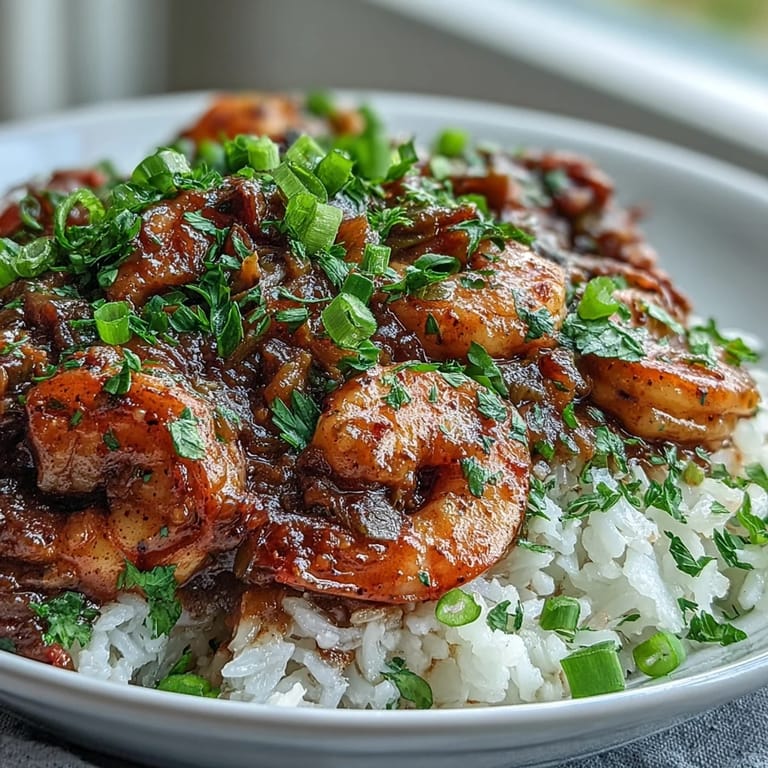
 Pin it
 The kitchen window was open that humid afternoon, and jazz was drifting in from somewhere down the block. I was standing over a pot, wooden spoon in hand, watching the roux darken like liquid amber turning to mahogany. My neighbor had scribbled this recipe on the back of a grocery receipt after I mentioned I'd never made a proper étouffée. She said the secret was patience and a good arm for stirring. I believed her halfway through, when my wrist started to ache and the roux finally began to smell like toasted hazelnuts and something deeper, earthier.
I made this for friends who'd just moved into a cramped apartment with a kitchen the size of a closet. We crowded around a card table, bowls balanced on our knees, and nobody said much for the first few bites. One of them finally looked up and said it tasted like a trip she couldn't afford yet. That's when I realized étouffée isn't just dinner, it's a postcard from a place that lives in the pot as much as it does on a map.
Ingredients
- Vegetable oil and all-purpose flour: These two transform into the backbone of the dish, a dark roux that requires your full attention and a slow, steady hand to avoid bitter burnt spots.
- Onion, green bell pepper, and celery: The holy trinity of Cajun cooking, they soften into the roux and release a sweet, grassy aroma that makes the whole house smell like someone's grandmother is visiting.
- Garlic: Added near the end of the vegetable sauté so it perfumes the pot without burning, just a minute of sizzling is enough.
- Shrimp (or crawfish): Fresh or frozen works, just make sure they're peeled and deveined so they can soak up all that spiced, silky gravy.
- Seafood stock: This is where the ocean meets the roux, adding brininess and body, though chicken stock works if that's what you have on hand.
- Worcestershire sauce: A splash adds a subtle tang and umami depth that you won't quite name but will definitely miss if you skip it.
- Cajun seasoning and cayenne pepper: These bring the heat and the soul, adjust them to your courage level and how much you trust your taste buds.
- Bay leaf: It sits quietly in the pot, lending a faint herbal whisper that ties everything together before you fish it out.
- Cooked white rice: The fluffy, neutral base that catches every drop of that luscious, spice-loaded sauce.
- Green onions and parsley: Fresh, bright, and grassy, they're the final flourish that makes each bowl look like it came from a corner café in the French Quarter.
Tired of Takeout? 🥡
Get 10 meals you can make faster than delivery arrives. Seriously.
One email. No spam. Unsubscribe anytime.
Instructions
- Start the roux:
- Heat the oil in a heavy pot over medium heat, then whisk in the flour until it's smooth and bubbling. Stir constantly, scraping the bottom and corners, until it turns the color of dark chocolate, this takes patience and about 15 to 20 minutes.
- Add the trinity:
- Toss in the diced onion, bell pepper, and celery, stirring them into the roux until they soften and start to glisten, about 5 to 7 minutes. The smell will shift from nutty to sweet and savory.
- Bloom the garlic:
- Stir in the minced garlic and let it sizzle for just a minute, filling the kitchen with that unmistakable sharp, warm fragrance. Don't let it brown or it'll turn bitter.
- Build the sauce:
- Slowly pour in the seafood stock, whisking as you go to marry it with the roux and vegetables into a smooth, thickening gravy. It should look glossy and coat the back of your spoon.
- Season and simmer:
- Add the shrimp, Worcestershire, Cajun seasoning, cayenne, bay leaf, salt, and pepper, then bring it to a gentle simmer. Lower the heat and let it bubble quietly for 20 to 30 minutes, stirring now and then, until the shrimp are tender and the sauce clings like velvet.
- Finish and serve:
- Taste and tweak the seasoning, pull out the bay leaf, then ladle the étouffée over mounds of hot rice. Scatter green onions and parsley on top like confetti.
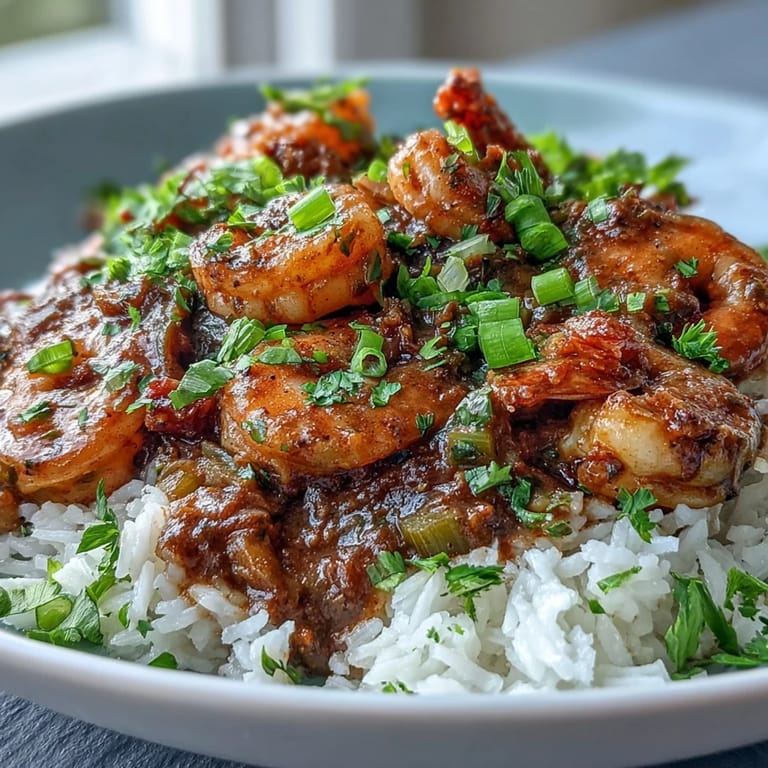 Pin it
 There was a night I served this to my uncle, who grew up in Baton Rouge and has opinions about everything Cajun. He took a bite, paused, then nodded slowly and said, "You got the roux right." I've never felt prouder in a kitchen. It wasn't about perfection, it was about respect for the process, the patience, and the way a dish like this carries the weight of a place and its people in every spoonful.
Making It Your Own
If shrimp isn't your thing or you're cooking for someone with a shellfish allergy, swap in diced chicken thighs, smoky andouille sausage, or even thick-sliced mushrooms. The roux and spices are forgiving, they'll wrap around whatever protein you offer and make it taste like it belonged there all along. I've done a half-and-half version with chicken and sausage that disappeared faster than the original.
What to Serve Alongside
A crusty baguette is traditional, perfect for mopping up every last bit of sauce clinging to the bowl. I also like a simple green salad with a sharp vinaigrette to cut through the richness, or a side of sautéed greens with a splash of hot sauce. If you're feeling festive, a cold beer or a sweet iced tea rounds out the meal like a long exhale at the end of a good story.
Storage and Reheating
Étouffée keeps beautifully in the fridge for up to three days, and honestly, it tastes better after the flavors have had time to settle into each other overnight. Reheat it gently on the stovetop with a splash of stock or water to loosen the sauce, stirring occasionally so nothing sticks. I've even frozen it in portions, though the shrimp can get a little softer, so if you plan to freeze, consider adding the shrimp fresh when you reheat.
- Store in an airtight container and keep the rice separate so it doesn't get mushy.
- Reheat on low heat, adding liquid as needed to bring back that silky texture.
- Freeze for up to two months, but know the shrimp may lose a bit of their snap.
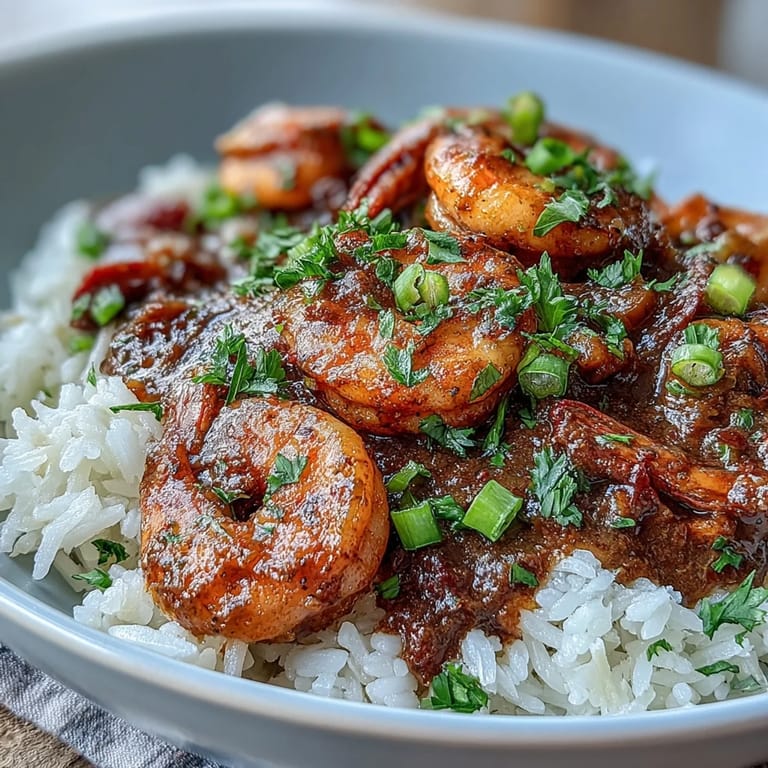 Pin it
 This dish has a way of turning a regular evening into something you remember, the kind of meal that makes people linger at the table and ask for seconds even when they're full. I hope it does the same for you.
Recipe Questions & Answers
- → What makes an authentic étouffée?
Authentic étouffée starts with a dark roux cooked to chocolate color, the Cajun trinity of vegetables, and fresh shellfish. The sauce should be thick and rich, coating the back of a spoon, with deep caramelized flavors from slowly cooking the roux until it reaches that perfect mahogany shade.
- → How long does it take to make the roux?
Cooking the roux to the proper dark color takes 15–20 minutes of constant stirring over medium heat. You'll need to whisk continuously to prevent burning and achieve that deep chocolate brown color that gives étouffée its signature rich flavor and thick texture.
- → Can I substitute crawfish for shrimp?
Absolutely! Crawfish are traditional in Louisiana étouffée and work beautifully in this dish. Use peeled crawfish tails exactly as you would shrimp. You can also try chicken, andouille sausage, or even mushrooms for a vegetarian version while maintaining the soulful essence of the dish.
- → How do I store and reheat leftover étouffée?
Store cooled étouffée in an airtight container in the refrigerator for up to 3 days, or freeze for up to 3 months. Reheat gently over low heat, adding a splash of stock or water if the sauce has thickened too much. Many believe the flavors improve overnight as they meld together.
- → What's the difference between étouffée and gumbo?
While both start with a roux and use the Cajun trinity, étouffée has a thicker, more concentrated sauce that coats the shellfish, while gumbo is more soup-like with additional ingredients like okra or filé powder. Étouffée also typically features only one main protein, whereas gumbo often combines multiple meats and seafood.