 Pin it
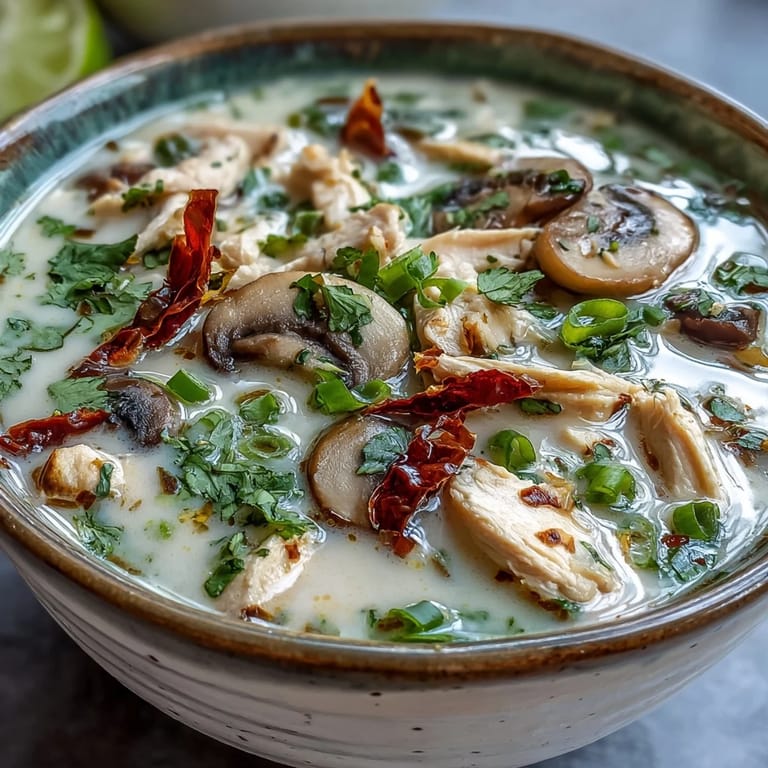
 The first time I made Tom Kha Gai was during a particularly harsh winter in Minneapolis. My fingers were perpetually cold, and the snow outside my window had formed drifts taller than my garden fence. A friend had just returned from Thailand, raving about this coconut soup that seemed to warm you from the inside out. I had collected the exotic ingredients from a tiny Asian market where the owner patiently corrected my pronunciation of galangal. That evening, as the fragrant steam filled my kitchen, I could almost believe I was somewhere tropical instead of frozen.
Last winter, my sister was going through a difficult time after a breakup. I invited her over without mentioning what I was cooking. As the lemongrass and lime leaves began to release their aroma, I noticed her shoulders relaxing for the first time in weeks. We sat at the kitchen counter, steam fogging up our glasses as we hunched over our bowls, slurping and laughing. By the third spoonful, she was sharing stories about her travels instead of her heartache. Thats when I truly understood the healing power of a properly made Thai soup.
Ingredients
- Galangal: This knobby rhizome might look like ginger, but its unique citrusy pine flavor is irreplaceable in authentic Tom Kha if youre tempted to substitute ginger, start with just half the amount as its much more aggressive.
- Coconut Milk: After years of trial and error, I learned that the brands that separate in the can with a thick cream on top actually make for the silkiest soup try shaking less and spooning that cream in first.
- Makrut Lime Leaves: These glossy double leaves might seem like a fussy ingredient to track down, but their intoxicating floral citrus aroma creates that unmistakable Thai restaurant authenticity nothing else comes close.
- Fish Sauce: I watched my Thai cooking teacher smell rather than measure this pungent liquid, adding drops until she nodded with satisfaction the smell transforms completely when cooked, becoming deep and savory rather than fishy.
- Thai Birds Eye Chilies: After once making the rookie mistake of chopping these without gloves, I now respect their fierce heat just crushing them gently releases enough spice without overwhelming the delicate coconut base.
Tired of Takeout? 🥡
Get 10 meals you can make faster than delivery arrives. Seriously.
One email. No spam. Unsubscribe anytime.
Instructions
- Create the aromatic base:
- In a medium pot, bring chicken broth to a gentle simmer, then add your lemongrass, galangal, lime leaves, and chilies. Youll know the broth is properly infused when your kitchen fills with a fragrance thats simultaneously citrusy, woodsy and slightly floral.
- Add the protein:
- Slip in your sliced chicken and shallot, watching as the meat gradually turns from translucent to opaque. The thin slices should curl slightly as they cook through.
- Build the velvety broth:
- When you add the coconut milk, notice how it transforms from clear amber to a milky pearlescence. Keep the heat gentle here gentle bubbles around the edge are what youre aiming for, not a rolling boil that could break the coconut milk.
- Balance the flavors:
- This is where the magic happens as you add fish sauce for saltiness, palm sugar for subtle sweetness, and lime juice for brightness. Take little tastes between each addition until you find that perfect harmony where no single flavor dominates.
- Strain and serve:
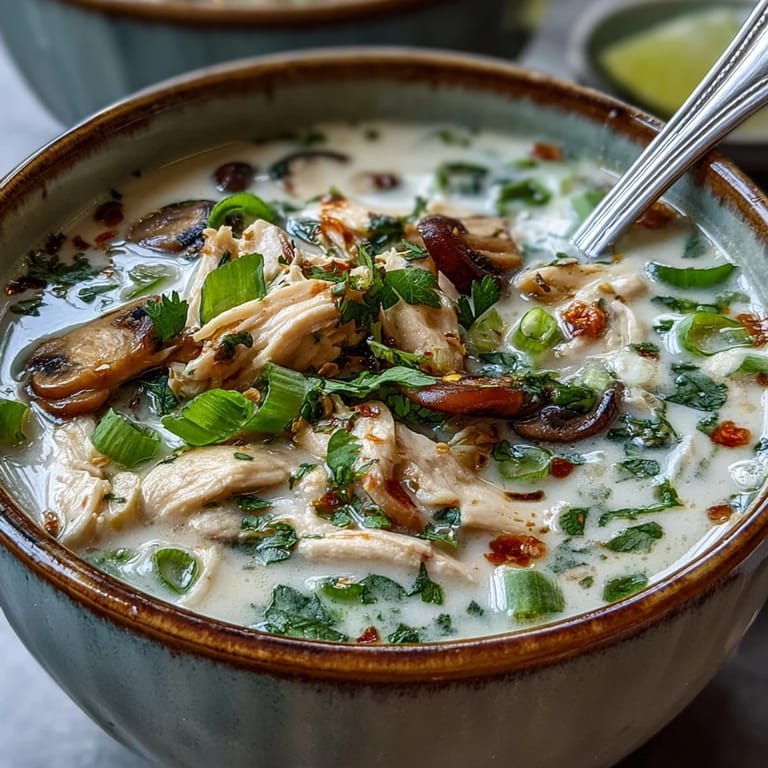
- I like to fish out the lemongrass stalks and galangal slices before serving since theyre meant to flavor but not be eaten. Notice how the soup clings to your spoon with its silky body thats the sign of perfect Tom Kha.
 Pin it
 One rainy Sunday, I served this soup to my neighbors impromptu gathering that formed when a storm knocked out our power. We sat in candlelight, warming our hands on the bowls as thunder rumbled outside. My normally picky neighbor Mark, who claims to dislike both coconut and spicy food, went back for seconds and then thirds, eventually asking somewhat sheepishly if he could take the recipe home to his wife. Sometimes the most meaningful connections happen when comfort food appears exactly when its needed most.
Finding Authentic Ingredients
After striking up a friendship with the owner of my local Asian market, Im now regularly texted when fresh galangal and makrut lime leaves arrive in stock. She taught me to look for galangal with smooth, taut skin rather than wrinkled pieces, and to rub lime leaves between my fingers first if they release an intense citrusy aroma, theyre fresh enough for soup. When these ingredients arent available fresh, I keep a emergency stash in my freezer surprisingly, they retain much of their aromatic power even after freezing, unlike other herbs that fade quickly.
Serving Suggestions
The ritual of serving Tom Kha Gai has become almost as important to me as the soup itself. I place a small bowl of extra lime wedges, another with sliced chilies in fish sauce, and a third with cilantro sprigs on the table. Watching friends customize their bowls, some adding extra chilies while others squeeze in more lime, has taught me that the best dining experiences allow for personal expression. For guests whove never had Thai soup before, I always serve a small portion first, watching with barely concealed anticipation for that inevitable moment when their eyes widen at the first spoonful and they look up, surprised by the complexity of flavors.
Making It Your Own
During a particularly experimental phase, I discovered that this soup base adapts beautifully to what you have on hand. When my vegetarian brother visited, we used firm tofu cubes and vegetable broth instead of chicken, adding a touch more lime to brighten the milder base. Another time, when hosting a friend who loves seafood, I substituted shrimp for the chicken, adding them in the final few minutes to prevent overcooking.
- For a heartier meal, serve Tom Kha Gai alongside a small bowl of jasmine rice that can be spooned into the soup as you eat, a technique my Thai cooking instructor called the working mans approach.
- If youre serving someone with a sensitive palate, keep the chilies whole and barely crushed so they can be easily spotted and avoided while still imparting gentle warmth to the broth.
- When preparing for a dinner party, make the aromatic broth up to a day ahead, then finish with coconut milk and protein shortly before serving for both convenience and enhanced flavor.
 Pin it
 Every time I make this soup, it seems to create a moment of pause in otherwise busy lives. There is something about its complex yet comforting nature that invites presence, encouraging everyone to slow down and savor each spoonful.
Recipe Questions & Answers
- → What makes Tom Kha Gai authentic?
Authentic Tom Kha Gai requires galangal (not ginger), makrut lime leaves, lemongrass, and fish sauce. These aromatic ingredients create the distinctive fragrance and flavor profile that defines this Thai classic. Using full-fat coconut milk ensures the proper creamy texture.
- → Can I substitute galangal with ginger?
While ginger can work in a pinch, galangal has a unique piney, citrusy flavor that's essential for authentic taste. Look for fresh galangal at Asian markets—frozen versions work well too. If unavailable, use young ginger and add kaffir lime leaf extra for complexity.
- → Why shouldn't the soup boil vigorously?
High heat can cause coconut milk to separate and curdle, affecting both texture and appearance. Simmering gently preserves the silky smooth consistency while allowing flavors to meld. Never let the mixture reach a rolling boil after adding coconut milk.
- → How do I balance the flavors?
Thai cuisine relies on balancing sweet, sour, salty, and spicy elements. Taste and adjust—add more fish sauce for saltiness, lime juice for acidity, palm sugar for sweetness, or chilies for heat. The final soup should harmonize all four notes without one dominating.
- → Can I make this vegetarian?
Absolutely. Replace chicken broth with vegetable broth, swap chicken thighs for firm tofu cubes, and use soy sauce or mushroom soy sauce instead of fish sauce. The aromatic base remains unchanged, delivering the same fragrant experience.
- → What's the best way to serve Tom Kha Gai?
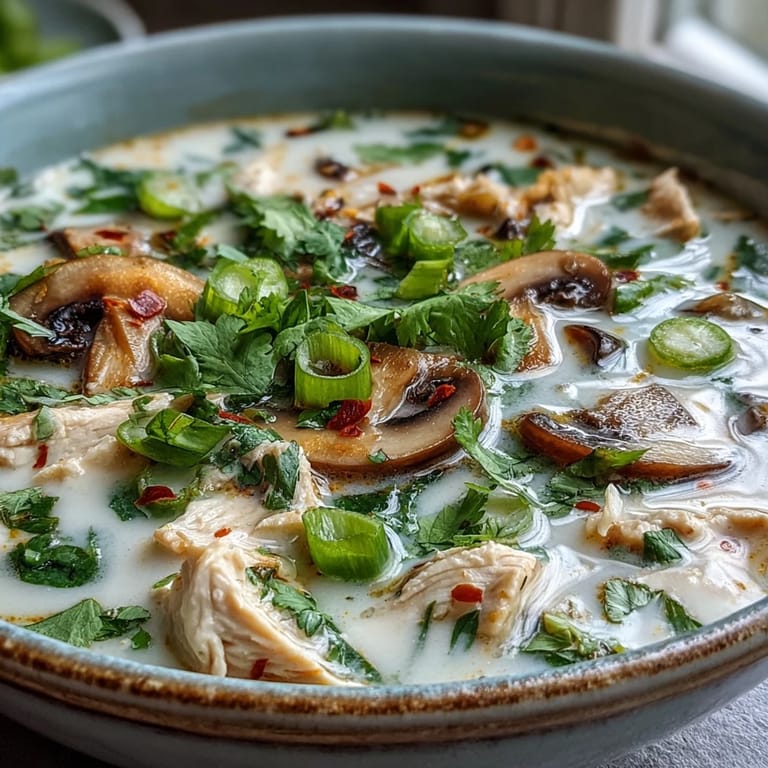
Serve piping hot in deep bowls, garnished generously with fresh cilantro and sliced green onions. Accompany with additional lime wedges for squeezing at the table. Steamed jasmine rice makes the perfect partner, soaking up the flavorful broth.