 Pin it
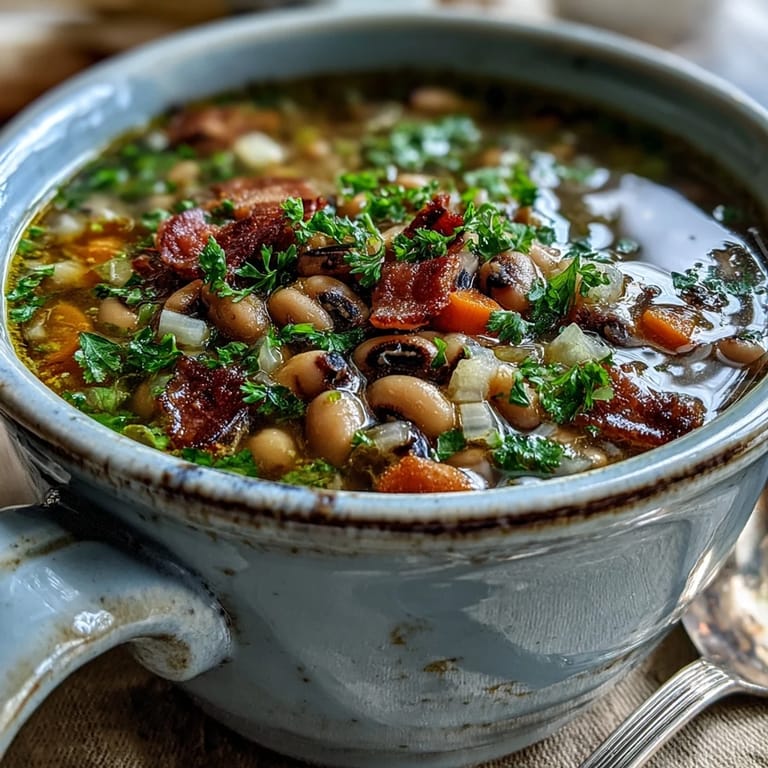
 There's something about the way bacon fat catches the light when you're building a soup that tells you everything's going to turn out right. My grandmother used to say that black-eyed peas were lucky, and I believed her, especially when the house filled with that smoky, savory smell while they simmered. One winter afternoon, a friend stopped by unexpectedly just as I was ladling this into bowls, and she stayed for three helpings, talking about how it tasted like comfort and home. That's when I understood this wasn't just soup—it was the kind of dish that makes people want to linger at the table.
I made this for my book club once, doubling the recipe out of nervousness, and ended up with enough to send everyone home with containers. One member texted me days later saying she'd made it three times already because her kids actually asked for seconds. That moment proved to me that the best recipes aren't the fancy ones—they're the ones people genuinely want to eat again.
Ingredients
- Smoked bacon, 8 oz diced: Use good quality bacon because you're rendering its fat into the entire soup, so mediocre bacon means a mediocre foundation.
- Black-eyed peas, 2 cups dried (soaked overnight) or 3 cans: Dried peas have more personality, but canned saves you time and honestly tastes nearly identical once everything cooks together.
- Yellow onion, 1 medium finely chopped: The sweetness of yellow onions balances the smokiness in a way that matters more than you'd think.
- Carrots, 2 medium diced: These soften completely and add natural sweetness without being obvious about it.
- Celery, 2 stalks diced: It's the quiet ingredient that deepens the savory notes without taking credit for it.
- Garlic, 3 cloves minced: Add this after the vegetables soften so it doesn't burn and turn bitter in the fat.
- Low-sodium chicken broth, 6 cups: Low-sodium gives you control over the final salt level, which is crucial.
- Bay leaf, 1: Toss it in early and remember to fish it out before serving or you'll hear about it from someone.
- Dried thyme, 1/2 tsp: This one herb does more work than it looks like, giving the whole pot an earthy warmth.
- Smoked paprika, 1/2 tsp: This is where the soul of the soup lives—don't skip it or substitute regular paprika.
- Freshly ground black pepper, 1/4 tsp plus more to taste: Freshly ground matters here because stale pre-ground pepper just disappears.
- Salt, to taste: Hold back at first since bacon brings salt, then adjust at the end when you can actually taste everything together.
- Fresh parsley, 2 tbsp chopped (optional but recommended): It brightens the bowl and makes people think you tried harder than you actually did.
Tired of Takeout? 🥡
Get 10 meals you can make faster than delivery arrives. Seriously.
One email. No spam. Unsubscribe anytime.
Instructions
- Render the bacon until golden and crispy:
- Cook it slowly over medium heat so the fat releases gradually and the pieces turn truly crispy rather than chewy. You'll know it's ready when the kitchen smells like a breakfast you can't resist, and the pieces are the color of chestnuts.
- Build your flavor base with the holy trinity:
- Once the bacon's out, add your onion, carrots, and celery to that fat and let them soften for about five to six minutes, stirring occasionally so nothing catches on the bottom. This is where patience pays off because you're creating the underneath layer that holds everything together.
- Wake up the pot with garlic:
- Mince it fine and add it just after your vegetables have softened, cooking for only a minute so it perfumes the fat without scorching. You'll smell when it's ready—it'll smell alive and sharp.
- Bring everything together in the broth:
- Stir in the drained peas, broth, bay leaf, thyme, paprika, and pepper, then let it come to a boil so you know all the heat is distributed evenly. Once it's bubbling, you're ready to settle in for the long slow simmer.
- Simmer until the peas are tender and the flavors marry:
- Lower the heat, cover the pot, and let it sit undisturbed for thirty to thirty-five minutes if you used dried peas, or twenty if you used canned. The lid traps the steam and lets everything soften into each other without losing moisture.
- Taste and adjust seasoning before serving:
- Fish out the bay leaf, take a spoon to the pot, and really taste it now that it's finished cooking. Salt it to your preference because everyone's tolerance is different and you should trust your own palate.
- Finish each bowl with bacon and fresh color:
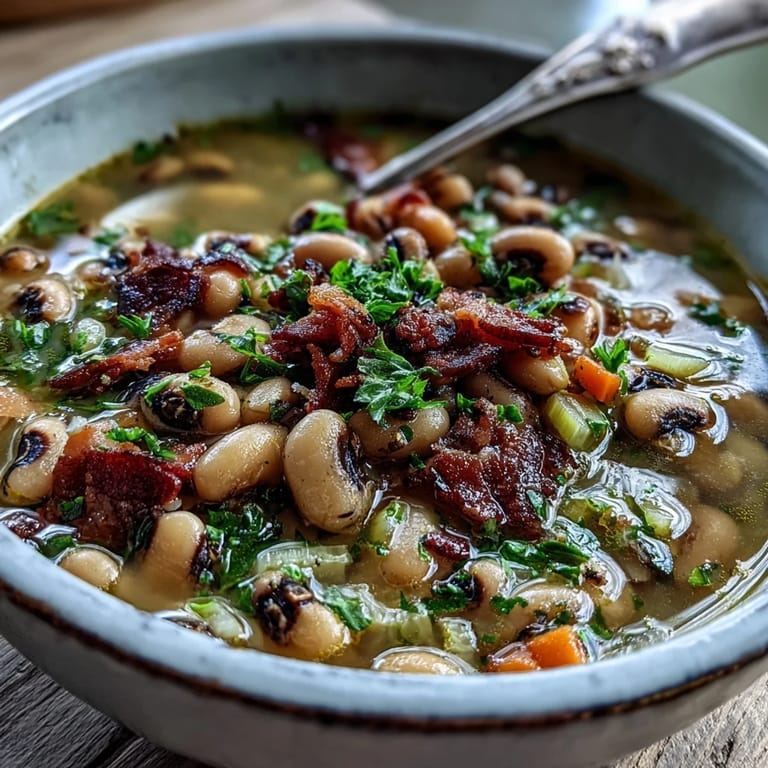
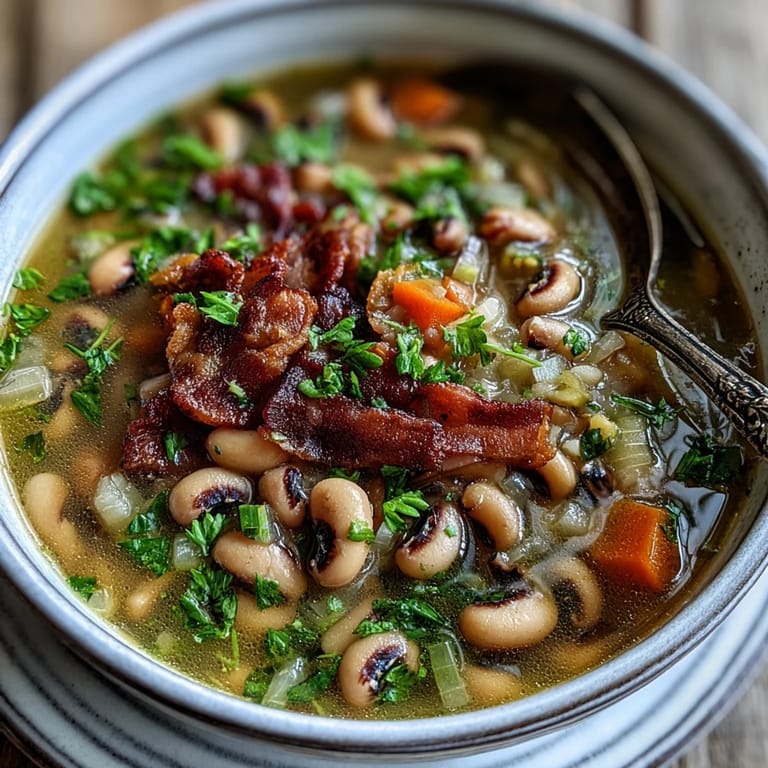
- Ladle the soup into bowls and scatter the reserved bacon on top along with that fresh parsley so each spoonful has a little crispness and brightness. The garnish isn't decoration—it's part of the eating experience.
 Pin it
 My sister called me in the middle of a rough week and asked what she should make for dinner, and I told her this recipe because I knew she needed something that would feel like a hug. The next time I saw her, she hugged me and said the soup had actually helped her feel human again, which taught me that food carries so much more than nutrition—it carries care.
The Story Behind Southern Soup Traditions
Black-eyed peas show up in Southern cooking for reasons that go back centuries, tied to harvests and celebrations and the way people stretched ingredients to feed their families. When you simmer them with bacon, you're not just making dinner—you're participating in a tradition that says simple ingredients done right are better than anything complicated. There's something grounding about that, something that feels true when you're standing at the stove.
Making This Soup Your Own
The beauty of this recipe is that it welcomes additions without falling apart, so don't be afraid to treat it like a starting point rather than a strict rule. I've added collard greens, tossed in a splash of hot sauce, swapped the chicken broth for vegetable broth when I was cooking for a guest, and every version turned out genuinely delicious. Your kitchen is your laboratory, and this soup is forgiving enough to handle your experiments.
Timing and Storage
This soup is one of those rare dishes that improves when it sits in the fridge because the flavors deepen and the peas absorb more of the broth, so if you can make it a day ahead, you absolutely should. It freezes beautifully too, though I always keep a little back before freezing to add fresh parsley and crispy bacon again when I reheat it, because some things deserve a little refresh.
- Store leftovers in an airtight container and they'll keep for up to four days in the fridge without any problems.
- To freeze, let it cool completely first, then portion it into containers leaving a little headspace for expansion.
- Reheat gently on the stove with a splash of broth if it's thickened too much, rather than microwaving which can make the peas grainy.
 Pin it
 Make this soup on a day when you need something warm and honest, and you'll understand why people keep coming back to it. It's the kind of recipe that proves good cooking doesn't require showing off—it just requires paying attention and caring about the people eating it.
Recipe Questions & Answers
- → Can I use canned black-eyed peas instead of dried?
Yes, substitute 3 cans (15 oz each) of rinsed and drained black-eyed peas. Reduce simmering time to 20 minutes since canned peas are already tender.
- → How do I make this vegetarian?
Omit the bacon and use vegetable broth instead of chicken broth. Add a dash of liquid smoke to maintain the smoky flavor profile that bacon provides.
- → Can I freeze this soup?
Yes, this soup freezes well for up to 3 months. Cool completely before transferring to airtight containers. Thaw overnight in the refrigerator and reheat gently on the stovetop.
- → What should I serve with this soup?
Cornbread is the classic Southern accompaniment. Crusty bread, warm rolls, or buttery crackers also work beautifully. A simple green salad adds freshness to the meal.
- → Do I need to soak the peas overnight?
For dried peas, overnight soaking ensures even cooking and tender texture. If short on time, use the quick-soak method: boil peas for 2 minutes, then let stand 1 hour before cooking.
- → Can I add greens to this soup?
Absolutely. Chopped collard greens or kale added during the last 10 minutes of simmering adds nutrition and color. They'll wilt nicely without becoming mushy.