 Pin it
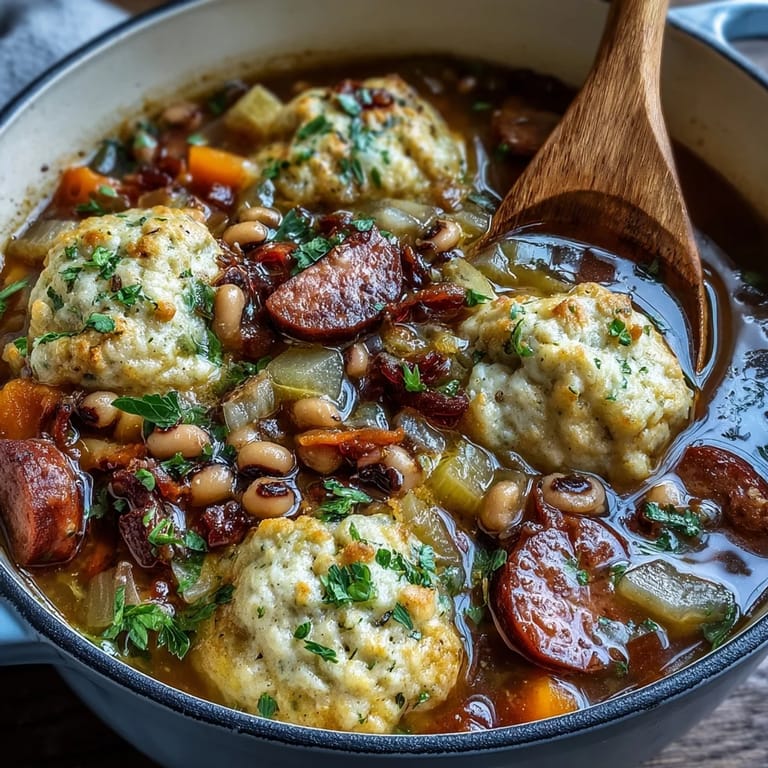
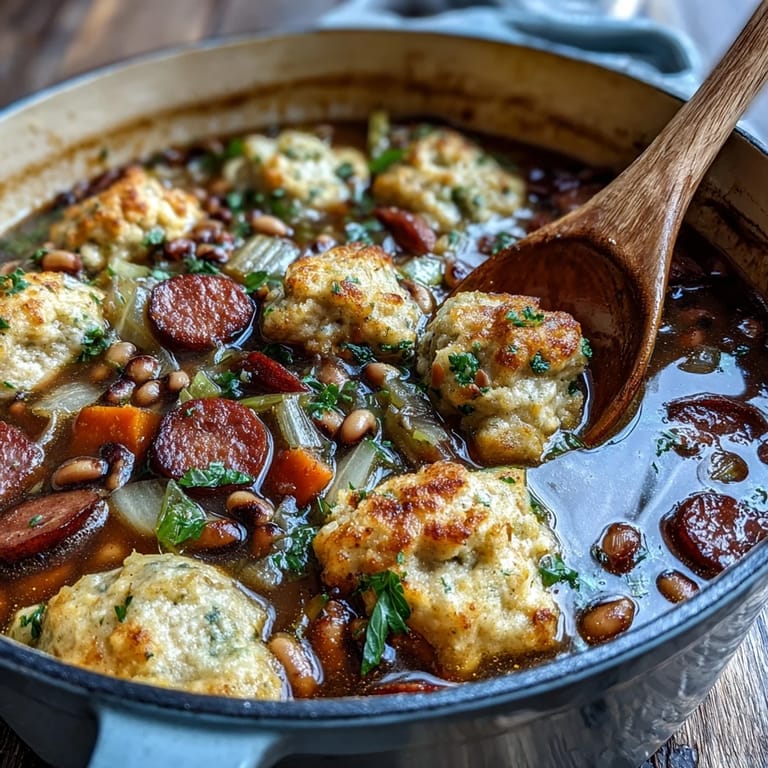
 My neighbor brought over a pot of black-eyed peas and sausage one January, and I watched steam rise from her Dutch oven while she explained how dumplings could transform a simple stew into something almost magical. The kitchen filled with the smell of smoked sausage and thyme, and I realized right then that comfort food doesn't need to be complicated, just thoughtful. When I finally made this myself months later, I understood what she meant the moment those fluffy cornmeal dumplings puffed up on the simmering surface.
I made this for a crew of friends on a cold Friday night, and someone asked if I'd been cooking this my whole life because the flavors felt so settled and right. That question stuck with me because it showed how a recipe can feel like home even when you're making it for the first time. The dumplings floated on top like little clouds, and everyone went quiet for a moment before diving in.
Ingredients
- Smoked sausage (12 oz): The backbone of this stew—choose a good quality one because you're not drowning it in sauce, and its flavor will shine through completely.
- Black-eyed peas (2 cans): Drain and rinse them well, which sounds simple but actually keeps the broth from becoming cloudy and lets the peas taste more like themselves.
- Olive oil (2 tablespoons): Use something you don't mind tasting because it carries the initial flavor of the sausage and vegetables into the pot.
- Chicken broth (4 cups): Low-sodium is important here so you control the salt and the flavors don't get muffled.
- Yellow cornmeal (1/2 cup): This is what makes the dumplings distinctive—it adds a slight grittiness and corn flavor that plays beautifully against the savory stew below.
- Buttermilk (3/4 cup): Don't skip this or substitute regular milk; the acidity is what makes the dumplings tender and gives them that subtle tang.
- Smoked paprika (1/2 teaspoon): A small amount transforms the broth from plain to smoky and warm, almost like the sausage is in there twice.
- Thyme, black pepper, bay leaf: These three work together to build layers—thyme is herbaceous, pepper adds heat, and the bay leaf whispers in the background tying everything together.
Tired of Takeout? 🥡
Get 10 meals you can make faster than delivery arrives. Seriously.
One email. No spam. Unsubscribe anytime.
Instructions
- Brown the sausage first:
- Heat olive oil over medium heat and let the sliced sausage sear for about five minutes until the edges are caramelized and some fat renders into the pot. This step is worth the time because you're building flavor that seasons everything else.
- Build the vegetable base:
- Add your diced onion, garlic, celery, carrot, and bell pepper to the rendered fat and let them soften for five to seven minutes, stirring occasionally. The kitchen will smell alive and complex at this point, which tells you the aromatics are doing their job.
- Simmer the stew base:
- Pour in the broth, add the drained black-eyed peas along with thyme, smoked paprika, black pepper, the optional cayenne, bay leaf, and a pinch of salt. Bring everything to a boil, then drop the heat down and let it simmer uncovered for about twenty-five minutes so the flavors can marry without becoming muddled.
- Mix the dumpling batter:
- While the stew simmers, whisk together flour, cornmeal, baking powder, baking soda, and salt in a separate bowl. Stir in the melted butter and buttermilk just until everything comes together into a slightly lumpy dough—overmixing develops gluten and makes dumplings tough instead of tender.
- Taste and adjust the stew:
- Remove the bay leaf and taste the broth carefully, adding more salt if it needs it before you add the dumplings. This moment of pausing to taste is when you claim the recipe as your own.
- Top with dumplings and steam:
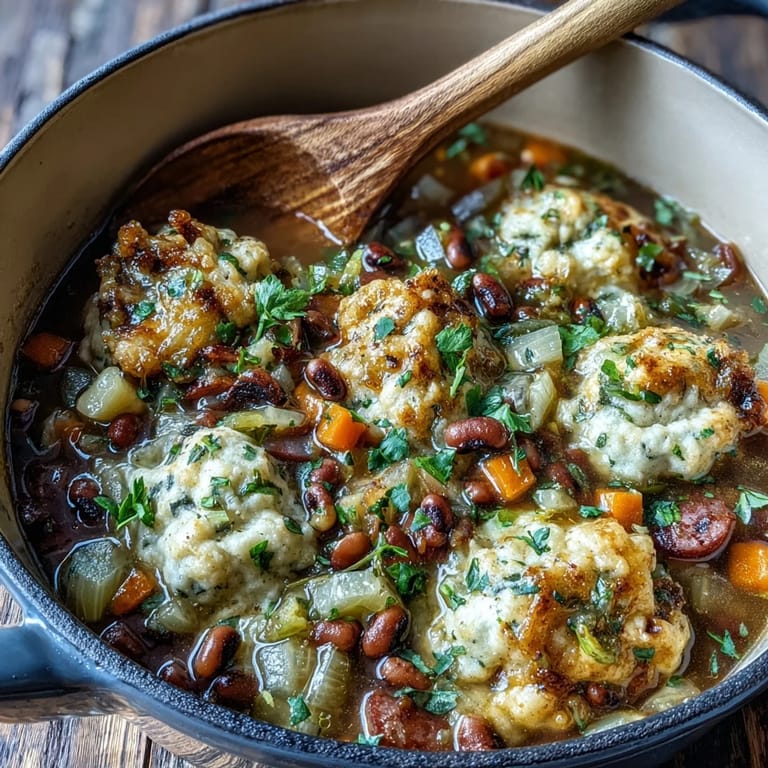
- Drop spoonfuls of dumpling batter (about two tablespoons each) across the surface of the simmering stew, then cover the pot and reduce heat to low. Cook for twenty to twenty-five minutes without lifting the lid, as the steam is what puffs the dumplings up and cooks them through.
- Rest and serve:
- Let the pot sit for a moment after cooking, then ladle everything into bowls while the dumplings are still steaming and the stew is at its warmest.
 Pin it
 What surprised me most was how the stew became something different once the dumplings finished cooking—richer, more complete, like two dishes had learned to live together. I watched my friend's face light up when she realized the dumplings were soft enough to almost dissolve on the tongue, and that's when I knew this recipe was worth keeping close.
Sausage Selection Matters More Than You'd Think
Not all sausage tastes the same, and this stew is honest enough that your choice becomes obvious in the final bowl. Smoked sausage is traditional because it carries a depth that complements black-eyed peas without overwhelming them, but andouille brings a Creole spiciness and kielbasa offers something earthier. I've made this with grocery store links and with ones from a butcher, and the difference is there—not dramatic, but noticeable in how the broth develops flavor.
The Dumpling Technique Is Simpler Than It Feels
The first time I dropped dumpling batter into a pot, I was terrified I'd made a mistake, that they'd sink or fall apart. They didn't, and that taught me that recipes sometimes seem more fragile than they actually are. Butter and buttermilk create a dough that's sturdy enough to hold together in simmering liquid, and the baking powder ensures they rise as the steam cooks them from the inside out.
Making This Vegetarian and Other Variations
Omit the sausage and swap vegetable broth for chicken broth, then add extra smoked paprika to replace the depth the meat would have contributed. The black-eyed peas are protein enough, and you might find the stew becomes even more delicate, letting the thyme and paprika lead instead of following behind sausage smoke. I've also added hot sauce at the table for people who wanted more heat, and a handful of fresh parsley stirred in at the end brings brightness that feels right.
- Vegetarian versions taste best when you give them an extra ten minutes to simmer after adding the broth.
- Adding a splash of hot sauce or fresh lemon juice at the end wakes up the flavors if the stew tastes a bit flat.
- Fresh herbs like parsley or chives scattered on top just before serving add color and a hint of freshness.
 Pin it
 This is the kind of recipe that tastes even better when you make it for someone else, when you watch them taste it and see their face relax into comfort. Keep it in your back pocket for days when people need feeding and warmth at the same time.
Recipe Questions & Answers
- → What makes these dumplings different from regular ones?
These dumplings feature cornmeal alongside flour, giving them a slightly grainier texture and subtle sweetness that pairs beautifully with the savory stew. The buttermilk adds tanginess and creates an especially fluffy, tender result.
- → Can I use dried black-eyed peas instead of canned?
Absolutely. Soak 1 cup dried black-eyed peas overnight, then simmer them for about 45-60 minutes until tender before adding them to the stew. You may need to increase the broth slightly as dried beans absorb more liquid during cooking.
- → What type of sausage works best?
Smoked sausage like andouille, kielbasa, or any smoked pork sausage adds wonderful depth. The smoking process provides that essential savory backbone. For less heat, choose a milder smoked sausage; for more kick, opt for andouille or add extra cayenne.
- → Why shouldn't I lift the lid while dumplings cook?
Steaming is crucial for fluffy dumplings. Lifting the lid releases the trapped steam and heat, causing dumplings to become dense or gummy instead of light and airy. Trust the process and let them steam undisturbed for the full 20-25 minutes.
- → Can I make this vegetarian?
Yes. Omit the sausage and use vegetable broth instead of chicken broth. Increase the smoked paprika to 1 teaspoon to maintain that smoky depth. You might also want to add a smoked salt or liquid smoke for additional savory complexity.
- → How do I store and reheat leftovers?
Store in an airtight container in the refrigerator for up to 4 days. Note that dumplings will soften as they absorb liquid. Reheat gently on the stovetop over medium-low heat, adding a splash of broth or water if needed. The dumplings won't be quite as fluffy but remain delicious.