 Pin it
 There's something about the sound of onions hitting a hot pan that still makes me pause whatever I'm doing. Years ago, a friend's grandmother in Lyon taught me that French onion soup isn't rushed—it's a slow conversation between butter, time, and patience. She'd stand at her stove on grey afternoons, stirring those golden ribbons with a wooden spoon worn smooth from decades of use, and I finally understood why this humble dish had survived centuries. The first time I made it alone, I nearly burned a batch because I got impatient, but that mistake taught me everything about why the caramelization matters so much.
I made this for my family on the first real cold snap of autumn, when the kitchen window fogged up and everyone gathered around the table like we'd been waiting for permission to finally feel cozy. My youngest asked if the soup was fancy, and when I said it was actually French, she declared it her new favorite—which meant I'd be making it again soon, probably more often than I'd planned.
Ingredients
- Yellow onions (6 large, thinly sliced): The backbone of this soup; their natural sugars caramelize into sweetness, so don't skip the slicing step—a mandoline saves time and your fingertips.
- Unsalted butter and olive oil (3 tbsp and 1 tbsp): Butter brings richness while olive oil prevents burning; together they create the perfect medium for caramelization.
- Sugar and salt (1 tsp each): A pinch of sugar jumpstarts the caramelization process, while salt draws out moisture and deepens flavor.
- Freshly ground black pepper (1/2 tsp): Grind it fresh right before adding; pre-ground pepper loses its bite and personality.
- Garlic (2 cloves, minced): Added near the end so it doesn't burn, just a whisper of sharpness to complement the sweet onions.
- All-purpose flour (2 tbsp): This acts as a gentle thickener and helps develop a deeper flavor when cooked with the onions.
- Dry white wine (1/2 cup): Use something you'd drink yourself; cheap wine tastes cheap, and your soup will know it.
- Beef broth (6 cups): Quality broth makes all the difference here, so read labels or make your own if you have time.
- Fresh thyme and bay leaf: These aromatics simmer quietly in the background, adding sophistication without shouting.
- Sourdough baguette (1 small, sliced 1/2-inch thick): The tang of sourdough plays beautifully against the sweet onions and salty cheese.
- Gruyere cheese (1 cup, grated): Its nuttiness melts into the broth; don't substitute with just any cheese, this one is essential.
- Parmesan cheese (1/2 cup, optional): Adds an extra salty punch if you want more complexity on the crostini.
Tired of Takeout? 🥡
Get 10 meals you can make faster than delivery arrives. Seriously.
One email. No spam. Unsubscribe anytime.
Instructions
- Build your foundation:
- In a large heavy-bottomed pot, melt the butter with olive oil over medium heat until it froths slightly. This mixture is your stage, so let it warm through for a minute before adding the onions.
- Begin the long caramelize:
- Add your sliced onions, sugar, salt, and pepper all at once, then start stirring. You're looking for 35 to 45 minutes of patient cooking, stirring frequently so they brown evenly and never stick. The onions will seem watery at first, then golden, then deeply caramelized—that final stage is where the magic lives.
- Welcome the garlic:
- Once the onions are a rich caramel color, stir in your minced garlic and let it cook for just one minute, releasing its warmth into the pot.
- Dust and deepen:
- Sprinkle the flour over the onions and stir constantly for two minutes. You're not making a roux; you're coating the onions and toasting the flour to add body and a subtle nuttiness.
- Deglaze with wine:
- Pour in the white wine slowly, scraping the bottom of the pot with your spoon to lift all those caramelized bits—they're flavor gold. Let it simmer for two to three minutes until the wine reduces by half and the raw alcohol smell fades.
- Build the broth:
- Add your beef broth, fresh thyme sprigs, and bay leaf, then bring everything to a gentle boil. Reduce the heat and let it simmer uncovered for 25 to 30 minutes, which gives the flavors time to marry.
- Toast while soup simmers:
- Preheat your oven to 400°F (200°C) and arrange baguette slices on a baking sheet. Brush them lightly with olive oil—you want them golden, not swimming in oil—then toast for five to seven minutes until they're crispy and fragrant.
- Top with cheese:
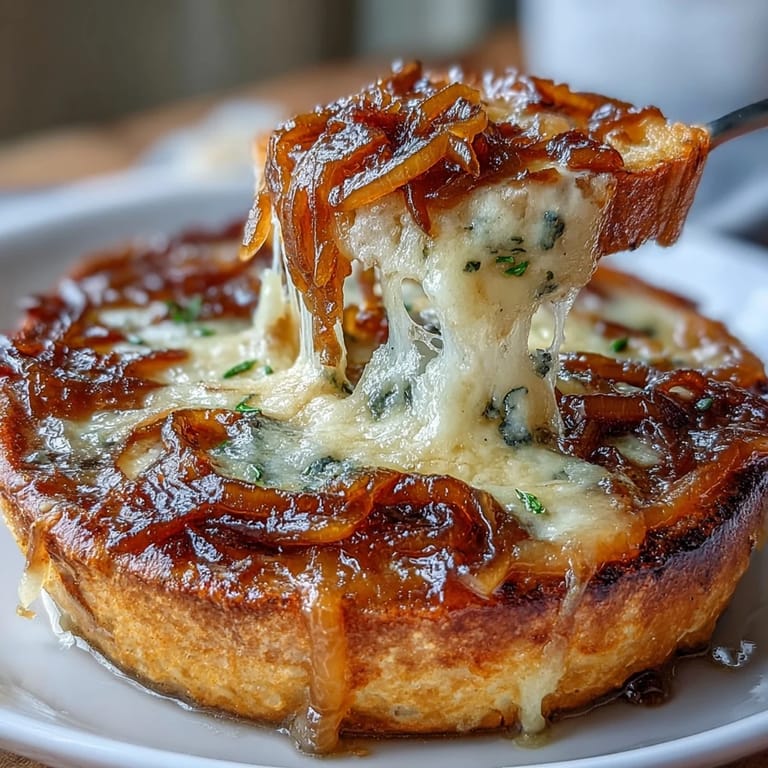
- Generously sprinkle Gruyere (and Parmesan if using) over each warm crostini, then return them to the oven for three to four minutes until the cheese is melted and bubbly, with the edges just starting to brown.
- The final assembly:
- Taste your soup and adjust seasoning with salt and pepper, then remove the thyme sprigs and bay leaf. Ladle the hot soup into oven-safe bowls, crown each one with a cheesy crostini, and if you want extra drama, broil for one to two minutes until the cheese bubbles and browns slightly.
 Pin it
 My neighbor caught the smell drifting through our shared wall one evening and showed up at my door with hope in her eyes, and I knew right then that this soup had crossed into the territory of something worth making again and again. There's a reason this dish has been warming people for centuries.
The Art of Caramelization
Caramelization isn't magic, though it feels like it when you watch pale onions transform into burnished gold. The key is patience and heat control—medium heat is your friend here because high heat will scorch the outside while leaving the inside raw. Stir frequently, maybe every couple of minutes, and if you notice the bottom browning too fast, lower the heat slightly and give the onions more time. When they're done, they should smell sweet and rich, almost like onion jam.
Wine Matters More Than You'd Expect
Using a wine you wouldn't drink is a false economy that shows up immediately in your final bowl. The wine does two things: it adds acidity to balance all that sweetness, and it brings its own subtle flavors to the broth. A crisp Sauvignon Blanc or a dry Pinot Grigio works beautifully here, and yes, that splash of brandy or sherry mentioned in the notes can elevate the whole experience into something almost luxurious.
Making It Your Own
This recipe is a classic, but it also leaves room for personal touches that make it feel like your own creation. Some people add a pinch of nutmeg to the broth, others swear by a touch of balsamic vinegar stirred in at the end, and vegetarian versions work beautifully with quality vegetable broth instead of beef. The crostini base is also flexible—try whole grain bread, rye, or even focaccia if that's what's in your bread box.
- If you're cooking vegetarian, use vegetable broth and let the caramelized onions and herbs carry all the flavor.
- A splash of brandy, sherry, or even a good cognac stirred in at the very end transforms this into something special.
- Gruyere can be swapped for Emmental, Swiss, or even a sharp white cheddar if Gruyere isn't available.
 Pin it
 This soup tastes even better the next day, when the flavors have settled into each other and become something deeper. Make it on a weekend afternoon, and you'll have something warm and restorative waiting whenever you need it most.
Recipe Questions & Answers
- → How do you caramelize onions properly?
Cook thinly sliced onions slowly over medium heat with butter and oil, stirring often, until they turn deep golden and sweet, about 35-45 minutes.
- → Can vegetable broth be used instead of beef broth?
Yes, substituting vegetable broth creates a vegetarian-friendly version without sacrificing depth of flavor.
- → What type of cheese works best for the crostini?
Gruyere is ideal for melting and flavor, though Emmental or Swiss cheese can be good alternatives.
- → How should the crostini be prepared?
Sourdough baguette slices are brushed with olive oil, toasted until golden, topped with cheese, then baked until bubbly and melted.
- → Are there tips for enhancing flavor?
A splash of brandy or sherry before serving adds extra richness and complexity to the broth.
- → Can this dish be broiled before serving?
Yes, broiling briefly melts and browns the cheese topping for an extra golden finish.