 Pin it
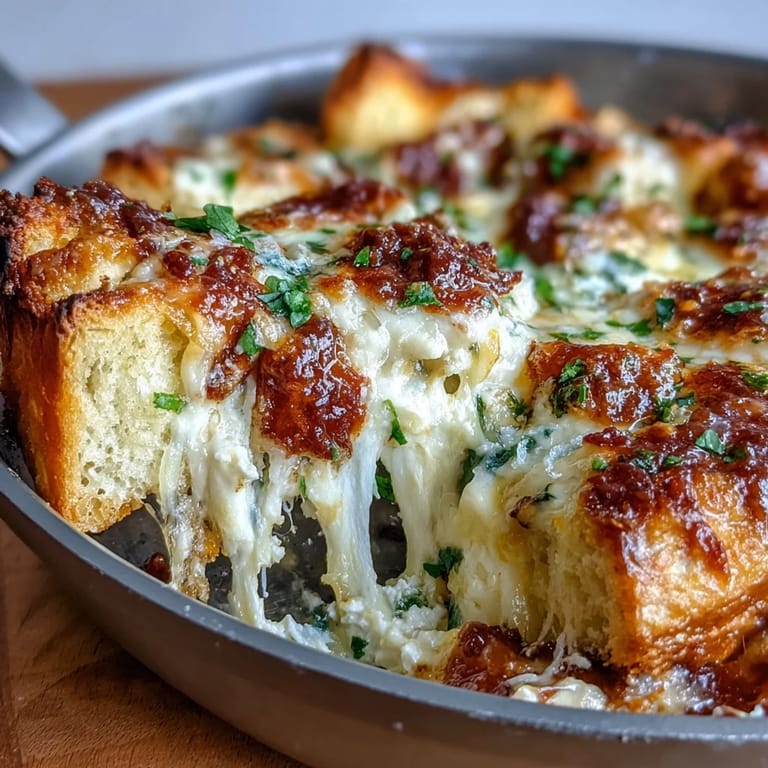
 My cast-iron skillet has seen a lot of dinners, but the night I first made this cheesy garlic bread lasagna, my kitchen smelled like a neighborhood Italian bakery decided to move in. I'd been staring at leftover garlic bread and a jar of marinara, wondering if I could somehow merge two dishes that had no business working together—and yet, somehow, they did. When that golden, bubbling top came out of the oven, my partner actually gasped.
I made this for a weeknight dinner when my sister called saying she was stopping by with no warning, and instead of panicking, I actually felt relieved. Thirty-five minutes later, we were passing around this skillet with crusty bread and a shared bottle of wine, and she asked for the recipe before she'd even finished her first bite. That's when I knew this dish had staying power.
Ingredients
- 1 large baguette or Italian loaf, cut into 2-inch cubes: The bread is your secret weapon here—it soaks up all the meaty, garlicky goodness while staying sturdy enough not to disintegrate, so don't skimp on quality.
- 4 tbsp unsalted butter, melted: Unsalted lets you control the salt level throughout, and the melted butter coats every cube evenly without clumps.
- 3 cloves garlic, minced (for bread): Fresh, freshly minced garlic is non-negotiable; jarred loses its punch in the oven.
- 2 tbsp fresh parsley, chopped: This brightens everything up at the end, so don't skip it even if you're tempted.
- 1/4 tsp salt (for bread): Just a whisper here since the cheese layers will add more.
- 1 lb ground beef or Italian sausage: Ground beef gives you control, but Italian sausage adds a fennel note that's absolutely sublime if you're feeling adventurous.
- 1 small onion, diced: The onion sweetens as it cooks and creates a flavor foundation that makes everything else taste better.
- 2 cloves garlic, minced (for filling): Yes, more garlic—it's garlic bread lasagna for a reason.
- 1 (24 oz) jar marinara sauce: Choose one you'd actually eat straight from the jar; it's the backbone of your filling.
- 1 tsp dried oregano: Don't use old oregano sitting in the back of your spice cabinet; it should smell like summer.
- 1/2 tsp black pepper and 1/2 tsp salt: Taste as you go because marinara brands vary in saltiness.
- 1 cup ricotta cheese: Creamy, mild ricotta is your contrast to the bold meat sauce—it's like the peacemaker in the skillet.
- 1 large egg: This binds the ricotta so it doesn't just slip everywhere when you cut into it.
- 1/4 cup grated Parmesan cheese: Freshly grated if you can manage it; the pre-grated stuff has cellulose that prevents it from melting as smoothly.
- 2 cups shredded mozzarella cheese: Low-moisture mozzarella works best so you don't end up with a watery skillet by the end.
Tired of Takeout? 🥡
Get 10 meals you can make faster than delivery arrives. Seriously.
One email. No spam. Unsubscribe anytime.
Instructions
- Heat your oven and prep your skillet:
- Set the oven to 375°F (190°C) and make sure your 12-inch cast-iron skillet is clean and ready—it's your stage for the next hour. If your skillet hasn't been seasoned in a while, this is actually the perfect recipe to bring it back to life.
- Make your garlic bread seasoning:
- In a large bowl, whisk together the melted butter, minced garlic, fresh parsley, and salt until it smells absolutely incredible. Toss your bread cubes through this mixture until every surface is coated, then set them aside so they can get a head start on toasting.
- Brown the meat and build the base:
- Heat your cast-iron skillet over medium heat and add the ground beef and diced onion, breaking the beef into small pieces as it cooks—this should take about 5 to 6 minutes, and you'll know it's ready when there's no pink left and the onion has softened into the meat. Drain any excess fat if there's a pool sitting in the bottom.
- Season the meat sauce:
- Stir in the minced garlic, marinara sauce, oregano, black pepper, and salt, then let it bubble gently for 5 minutes so the flavors get to know each other. Taste it here and adjust seasoning—this is your moment to make sure the sauce tastes like it's worth building around.
- Mix your ricotta layer:
- In a separate bowl, combine the ricotta, egg, and Parmesan until it's smooth and creamy, with no lumps of ricotta fighting you. This mixture is delicate, so fold gently rather than stirring aggressively.
- Strategic sauce removal:
- Remove about half of the meat sauce from your skillet and set it aside on the counter—this creates the layers that make lasagna feel like lasagna instead of just beef and bread in a pan.
- First layer down:
- Spread half of your buttered garlic bread cubes over the remaining sauce in the skillet, then dollop half of the ricotta mixture over the bread and sprinkle 1 cup of mozzarella on top. You're building architecture here, so don't worry about perfect coverage; the cheese will melt and fill the gaps.
- Second layer:
- Spoon the reserved meat sauce over this cheese layer, then finish with the remaining bread cubes, the last of the ricotta, and the final cup of mozzarella. The skillet will look full—that's exactly right.
- The covered bake:
- Cover your skillet loosely with aluminum foil (not tight, or steam will create a soggy bottom) and slide it into the oven for 20 minutes. The foil steams everything gently, preventing the top from burning while the inside gets creamy.
- Uncover and finish:
- Remove the foil and bake for another 10 to 15 minutes, watching until the cheese is bubbling at the edges and the top has turned golden-brown. You're looking for those dark, crispy spots on the mozzarella—that's when you know it's done.
- The hardest part—waiting:
- Let it cool for 10 minutes before serving; this allows everything to set slightly so you can actually scoop it out instead of pouring it. Use this time to pour a glass of something cold and appreciate what you've done.
 Pin it
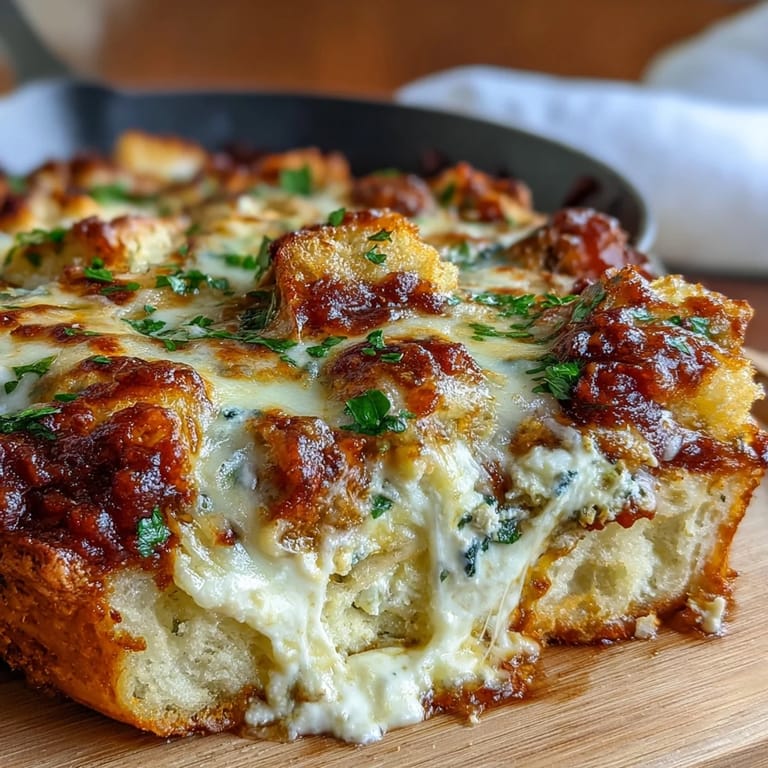
 There was a moment when I realized this dish had become something more than a recipe I was testing—it was at a dinner party when someone asked for thirds, and another guest started planning when they'd make it at home. Food that makes people immediately want to cook it themselves is rare, and this skillet somehow bridges the gap between "impressive enough for guests" and "easy enough for Tuesday night."
Why Cast-Iron Matters Here
A regular baking dish would work in a pinch, but cast-iron does something special—it holds heat so evenly that every corner gets that same golden brown finish, and the bread on the edges gets crispy in a way that feels intentional rather than accidental. Plus, bringing it straight to the table makes the whole thing feel less "here's your dinner" and more "gather around this masterpiece."
Making It Your Own
The beauty of this recipe is that it handles customization gracefully—vegetarians can swap the meat for sautéed mushrooms (cremini and shiitake together are magical), and spice lovers should absolutely add red pepper flakes to the meat sauce. I've also tried this with fresh basil instead of parsley, which pushes it into a different flavor direction entirely and still feels right.
Serving and Storage
Serve this with a crisp green salad to cut through the richness, and a glass of Chianti if you're drinking—the acidity pairs beautifully with all that cheese and garlic.
- Leftovers reheat in a 350°F oven for about 15 minutes and taste even better the next day as flavors marry together.
- You can assemble this the morning of and bake it when you get home, which makes weeknight cooking feel manageable.
- This freezes well before baking, so make two and freeze one for the night when you need dinner in under an hour.
 Pin it
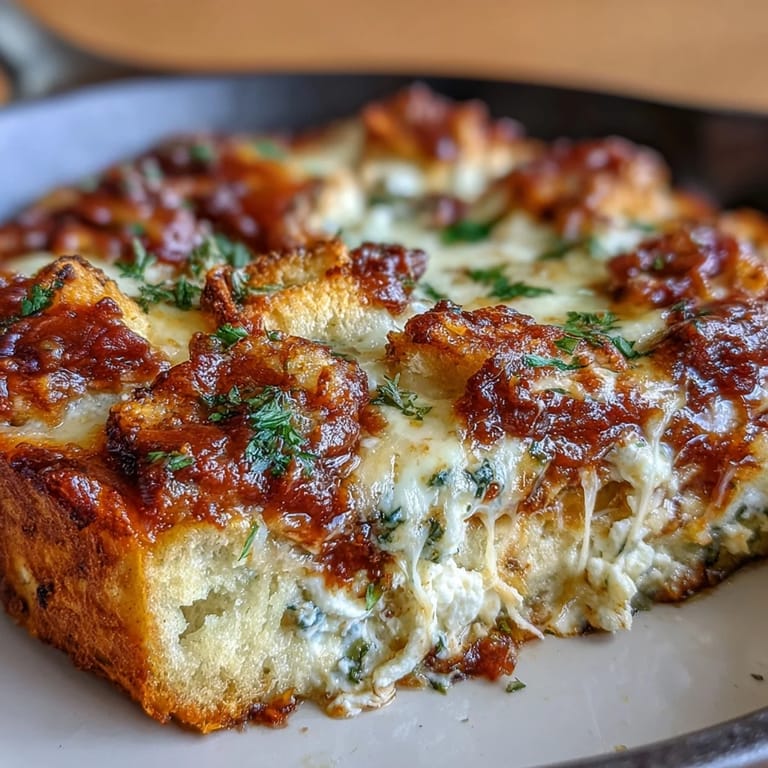
 This dish taught me that the best recipes aren't about complexity or technique—they're about understanding what makes people feel loved when they eat. Make this for someone.
Recipe Questions & Answers
- → Can I make this vegetarian?
Yes, simply replace the ground beef with plant-based meat crumbles or sautéed mushrooms. The rest of the ingredients work beautifully for a vegetarian version.
- → Can I use different bread?
While baguette or Italian loaf works best for its sturdy texture, you can use ciabatta, sourdough, or even day-old French bread. Avoid soft sandwich bread as it may become too mushy.
- → How do I store leftovers?
Store in an airtight container in the refrigerator for up to 4 days. Reheat in a 350°F oven for 15-20 minutes to restore the crispy texture, or microwave individual portions.
- → Can I freeze this dish?
Yes, assemble and bake completely, then cool and freeze in portions for up to 3 months. Thaw overnight in the refrigerator and reheat in the oven until heated through.
- → What can I serve with this skillet?
A crisp green salad with vinaigrette balances the richness perfectly. Steamed vegetables or roasted broccoli also make great sides. Red wine like Chianti complements the Italian flavors wonderfully.