 Pin it
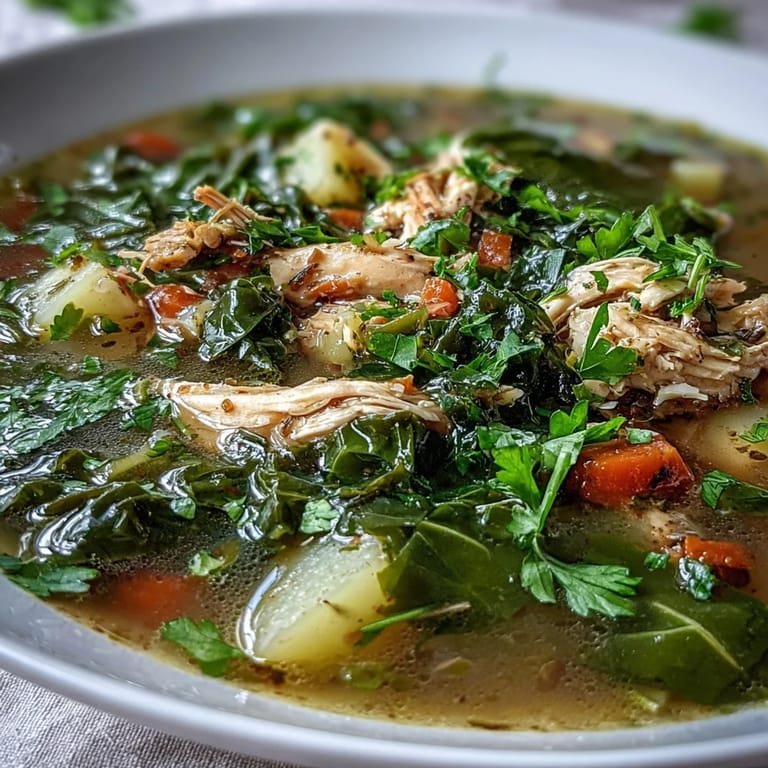
 There's something about the smell of celery and onions hitting hot oil that signals comfort is on the way. My neighbor stopped by one chilly afternoon with a bunch of collard greens from her garden, and I realized I had everything else already waiting in my kitchen. What started as a simple idea to use them up turned into this soup that's now become my go-to when someone needs feeding or when I just want to feel grounded by a bowl of something warm and honest.
I made this for my sister when she was dealing with a busy week, and watching her face when she tasted it told me everything. The broth was golden, the chicken shredded perfectly, and somehow those collard greens had absorbed every bit of flavor without losing their personality. She asked for the recipe before she'd finished the bowl, which is how I knew I'd gotten something right.
Ingredients
- Boneless, skinless chicken breasts (2, about 400 g): They cook gently in the broth and shred into tender pieces that feel substantial without being heavy.
- Collard greens (1 large bunch, about 300 g), stems removed and leaves chopped: The hearty leaves hold their texture and develop a subtle sweetness as they simmer, so don't skip removing the tough stems.
- Yukon Gold potatoes (2 medium, peeled and diced): These waxy potatoes stay intact instead of falling apart, giving the soup body and comfort.
- Carrots (2, peeled and sliced): They add natural sweetness and a slight crunch if you slice them thin enough.
- Celery stalks (2, diced): This is your aromatic foundation, so don't rush past it.
- Onion (1 medium, diced): Yellow onions work beautifully here, softening into the background flavor.
- Garlic cloves (3, minced): Fresh garlic is non-negotiable for the depth it brings in just one minute of cooking.
- Low-sodium chicken broth (1.5 liters or 6 cups): Good broth is everything, so taste yours first and adjust salt accordingly.
- Bay leaf (1): This little leaf adds a quiet herbal note that makes people wonder what your secret is.
- Dried thyme (1 teaspoon): It bridges the earthiness of the greens with the comfort of the broth.
- Smoked paprika (1 teaspoon): This gives the whole pot a gentle warmth and subtle smokiness that keeps things interesting.
- Black pepper (½ teaspoon) and salt (1 teaspoon): Season gradually and taste as you go, especially if your broth is already salted.
- Olive oil (2 tablespoons): This is your cooking fat, so use something you'd actually taste.
- Lemon juice (from ½ lemon): Add this at the very end to brighten everything without making it taste sour.
- Fresh parsley, chopped (optional): It's not essential, but a handful on top adds color and reminds you that this is made with care.
Tired of Takeout? 🥡
Get 10 meals you can make faster than delivery arrives. Seriously.
One email. No spam. Unsubscribe anytime.
Instructions
- Start your flavor foundation:
- Pour olive oil into a large pot over medium heat and let it warm just enough that it shimmers when you move the pan. Add your diced onion, carrots, and celery all together, stirring them so they're coated in oil, and let them soften for 5 to 6 minutes while you listen for that gentle sizzle.
- Invite the garlic:
- Stir in your minced garlic and cook it for just about a minute, watching as the kitchen fills with that sharp, aromatic smell that tells you everything is developing beautifully.
- Build the broth:
- Add the chicken breasts whole, then scatter in your diced potatoes, bay leaf, thyme, smoked paprika, salt, and pepper. Pour in the broth slowly so nothing splashes, and you'll see the pot transform into something golden and full of promise.
- Let it simmer gently:
- Bring everything to a boil so you see active bubbles breaking the surface, then turn the heat down and cover it loosely. Let it cook for about 20 minutes until the chicken feels tender when you press it with a spoon and the potatoes give way easily.
- Shred and return:
- Lift the chicken breasts out onto a cutting board, and using two forks, pull them apart into soft, bite-sized pieces while it's still warm. Stir the shredded chicken back into the pot so it distributes evenly.
- Add the greens:
- Stir in your chopped collard greens, pushing them down so they're submerged in the broth, and let everything simmer uncovered for 10 to 12 minutes until the greens are tender but still hold their bright color.
- Finish and taste:
- Squeeze in the lemon juice and stir, then taste a spoonful of broth and adjust the seasoning with more salt, pepper, or lemon juice if it needs it.
- Serve with intention:
- Ladle the soup into bowls, scatter fresh parsley on top if you have it, and watch someone's face as they take that first spoonful.
 Pin it
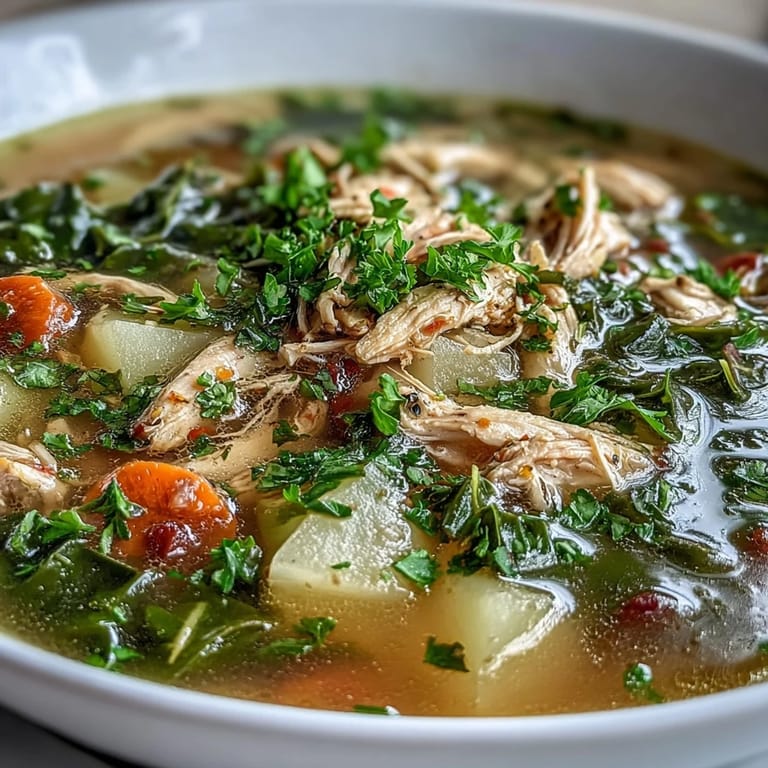
 What made this soup special wasn't any single ingredient or technique, but rather how it became a quiet ritual. Every time I made it, someone told me it was exactly what they needed that day.
The Magic of Timing
Soup is one of those dishes where patience actually pays off in a way you can taste. I learned early on that rushing the initial sauté of onions, carrots, and celery means missing out on the sweet, mellow base that makes everything else sing. When you give those vegetables their full 5 to 6 minutes, they transform into something caramelized and deep, which is why this soup tastes so much fuller than the sum of its parts.
Why Collard Greens Matter Here
Collard greens bring something different to the table than their trendier cousins like kale. They're sturdier, less bitter, and they actually improve with gentle cooking rather than falling apart or becoming unpleasantly chewy. In this soup, they absorb the flavors of the broth while keeping their own gentle earthiness, which is exactly the balance you want in something meant to nourish.
Building Warmth in Your Kitchen
There's a rhythm to making soup that you can't rush no matter how much you want to. It teaches you to slow down, to notice when things are ready, and to trust that the simplest ingredients, given time and heat, become something greater. This particular soup has taught me more about patience and presence than I expected from something so straightforward.
- Taste as you go and adjust seasoning in small increments, especially with the salt.
- Use good chicken broth because it's not masked by heavy cream or complicated spices.
- Serve it with crusty bread or over brown rice if you want something more substantial.
 Pin it
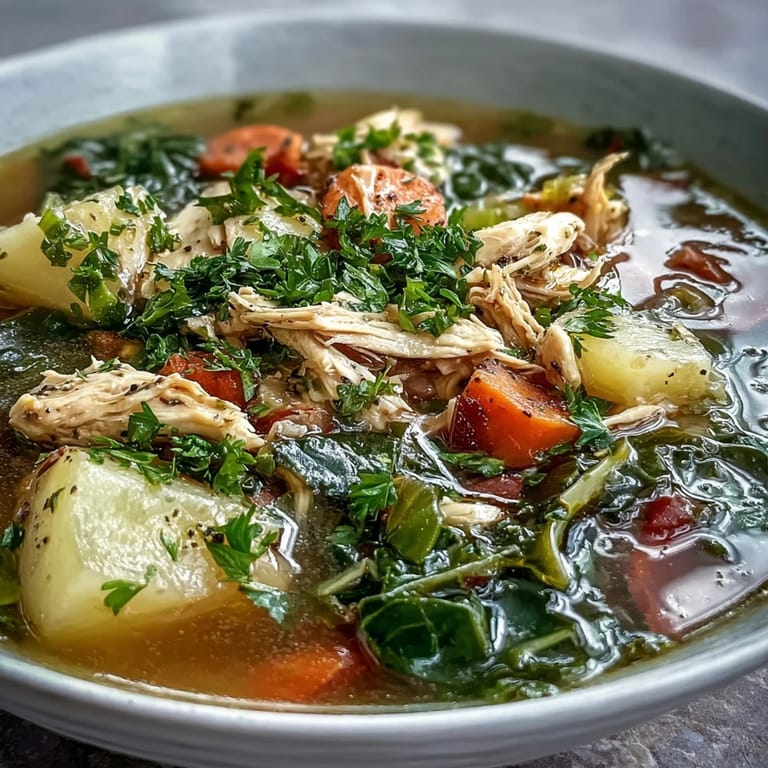
 This soup has become my answer to almost everything, a simple way to show up for people with something made by hand. It's proof that you don't need complexity to create something memorable.
Recipe Questions & Answers
- → Can I use kale instead of collard greens?
Yes, kale or Swiss chard make excellent substitutes for collard greens in this soup. Add them during the last 10–12 minutes of cooking until tender but still vibrant.
- → How long does this soup keep in the refrigerator?
This soup stores well in an airtight container for up to 4 days. The flavors often deepen after a day or two, making it ideal for meal prep.
- → Can I freeze this soup?
Absolutely. Cool completely before transferring to freezer-safe containers. It freezes well for up to 3 months, though potatoes may become slightly softer upon reheating.
- → What can I serve with this soup?
Crusty bread, cornbread, or crackers pair beautifully. For a heartier meal, serve over cooked brown rice or with a simple side salad.
- → How do I make this vegetarian?
Omit the chicken and use vegetable broth instead. Add a can of drained white beans like cannellini or navy beans during the last 15 minutes of cooking for protein.
- → Can I use bone-in chicken pieces?
Yes, bone-in thighs or breasts work well. Cook until meat pulls away easily from the bone, then remove bones, shred the meat, and return it to the pot.