 Pin it
 There's a Tuesday night I'll never forget—my roommate's friend showed up unexpectedly with a bottle of wine, and I had maybe thirty minutes to turn my sparse pantry into something memorable. I found a box of elbow macaroni and started melting butter like my life depended on it, whisking in flour until my kitchen smelled like toasted wheat and possibility. That night, mac and cheese stopped being just a side dish and became my secret weapon for turning an ordinary evening into something warm and celebratory. Now I make it whenever I need comfort, whether I'm alone or feeding a crowd.
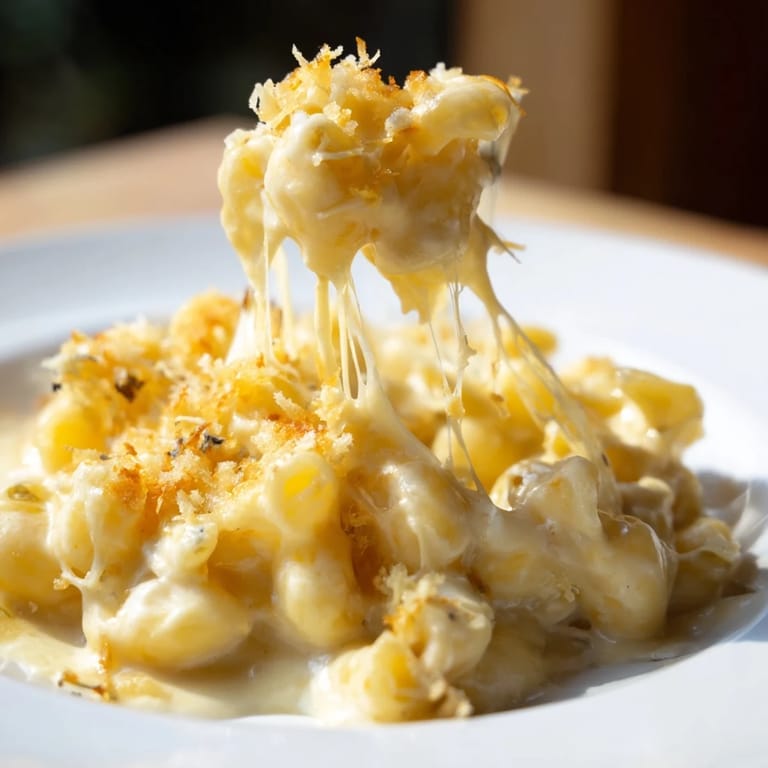
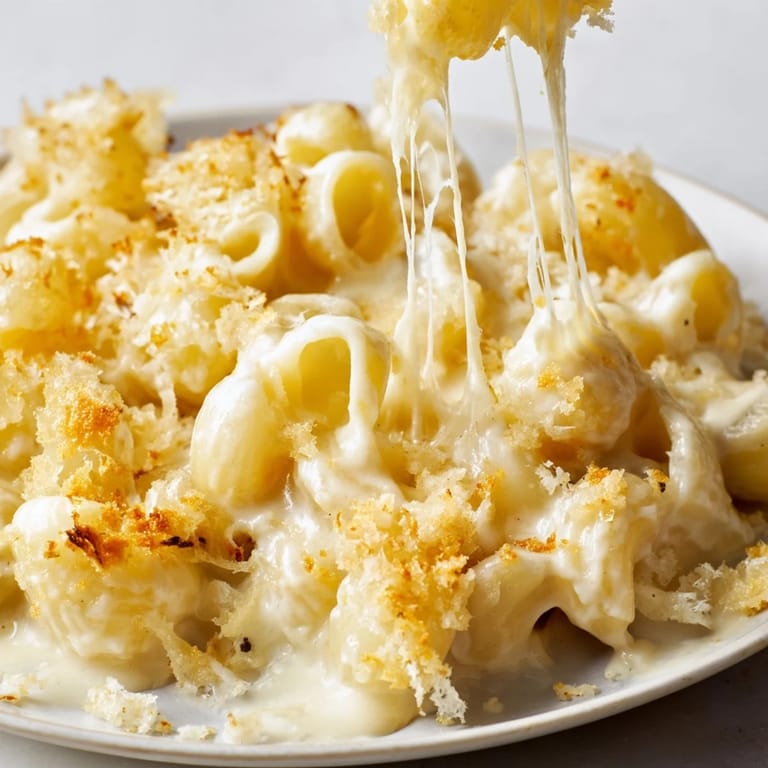
I'll always remember the first time I baked it with the panko topping for my sister's book club—watching everyone go quiet when they took their first bite, then immediately asking for seconds. There's something about that golden crust giving way to silky cheese that makes people feel genuinely cared for, even though you've barely broken a sweat making it.
Ingredients
- Elbow macaroni, 350 g (12 oz): Boil it one to two minutes under al dente so it stays tender when mixed with the sauce, not mushy after baking.
- Unsalted butter, 3 tbsp (45 g): Using unsalted lets you control the saltiness of the entire dish and taste the actual butter flavor in your béchamel.
- All-purpose flour, 3 tbsp (25 g): This thickens your sauce without any lumps or grittiness if you whisk it carefully into the butter first.
- Whole milk, 2 cups (480 ml), warmed: Cold milk can seize up your butter and flour mixture, so warm it gently beforehand—this one detail transforms your sauce from grainy to silky.
- Heavy cream, 1 cup (240 ml): It's the richness that makes this feel restaurant-quality, mellowing any sharp flavors and creating that luxurious mouthfeel.
- Sharp cheddar cheese, 200 g (2 cups), grated: Sharp cheddar is the backbone—use mature or extra-mature if you want to taste the cheese singing through every bite.
- Gruyère or Swiss cheese, 75 g (¾ cup), grated: This brings nuttiness and depth that plain cheddar alone can't achieve.
- Parmesan cheese, 50 g (½ cup), finely grated: A little goes a long way with Parmesan; it adds saltiness and that umami finish that makes people wonder what your secret is.
- Dijon mustard, 1 tsp: Don't skip this—it's barely noticeable as mustard but somehow makes the cheese taste more like cheese.
- Garlic powder, onion powder, salt, pepper, cayenne: These seasonings work together to lift the cheese flavor and add subtle warmth without any spice you can identify.
- Panko breadcrumbs, ½ cup (30 g): Panko stays crunchier than regular breadcrumbs and browns beautifully when tossed with melted butter.
Tired of Takeout? 🥡
Get 10 meals you can make faster than delivery arrives. Seriously.
One email. No spam. Unsubscribe anytime.
Instructions
- Start your oven and prepare your dish:
- Preheat to 200°C (400°F) and grease a medium baking dish with butter or cooking spray. This matters more than you'd think because it keeps the edges from sticking and turning crusty in an unpleasant way.
- Cook the pasta just shy of done:
- Boil salted water and add your elbow macaroni, cooking it one to two minutes under what the box says. You want it to give a little when you bite it, not to be fully tender, because it's going back into heat with the sauce.
- Build your béchamel base:
- In a large saucepan, melt butter over medium heat, then whisk in flour and cook for a minute or two until it turns pale gold and smells like toasted flour. This is called a roux, and it's the reason your sauce won't be watery.
- Make the sauce silky:
- Pour in your warmed milk and cream slowly while whisking constantly, then bring everything to a gentle simmer and keep stirring until it coats the back of a spoon. This takes about four to five minutes and is where patience pays off—rushing it or using cold milk will give you lumps.
- Season with intention:
- Lower the heat to barely a simmer and stir in mustard, garlic powder, onion powder, salt, pepper, and a pinch of cayenne. Let these seasonings mingle for just a moment before you add cheese.
- Add the cheese:
- Add your grated cheeses in three batches, stirring until each batch melts completely before adding the next. This prevents clumping and ensures everything stays smooth and glossy.
- Combine pasta and sauce:
- Fold the cooked macaroni into your cheese sauce gently, making sure every piece gets coated without crushing the pasta or overworking the sauce.
- Choose your finish:
- For stovetop mac and cheese, serve hot immediately with a shower of extra cheese. For the baked version, pour everything into your prepared dish and move to the next step.
- Add the crispy topping and bake:
- Mix panko breadcrumbs with melted butter and grated Parmesan, then sprinkle evenly over the top. Bake for twenty to twenty-five minutes until the top is deep golden and the edges bubble slightly, then let it rest for five minutes before serving—this resting time keeps the macaroni from being mouth-burning hot.
 Pin it
 I made this for my neighbor after her surgery, and she told me later that sitting in her kitchen with a bowl of it, eating slowly, was the first moment she felt human again. Food has a way of doing that when you actually care about making it right.
The Cheese Choice Matters More Than You'd Think
The difference between forgettable and unforgettable mac and cheese lives entirely in your cheese selection. I used to think any melted cheese would do, but after years of tinkering, I realized that sharp cheddar alone tastes one-note, while Gruyère alone feels too fancy and loses the dish's soul. The three-cheese combination—cheddar for familiarity, Gruyère for complexity, Parmesan for brightness—creates something that tastes like an elevated home-cooked meal rather than a boxed side dish. The trick is to use truly good cheese; it's worth spending a little extra at the cheese counter because it's literally the main flavor of this dish.
Stovetop Versus Baked: Which Version to Make
The stovetop version is what I reach for on weeknights when I want comfort food fast and can't be bothered with the oven—it's ready in thirty minutes and tastes luscious and creamy. The baked version, with its golden panko crust, is what I make when people are coming over or when I want a little theater; there's something about that moment you pull it from the oven, still bubbling at the edges, that feels like real cooking. Both are equally valid, so I choose based on my mood and how much time I have to fuss with dishes.
Variations and Flavor Twists
Once you master the basic recipe, it's incredibly forgiving of additions. I've stirred in crispy bacon, sautéed mushrooms, and blanched broccoli with excellent results; each addition adds a textural contrast that keeps the dish interesting. My friend swears by mixing in a handful of fresh thyme, and I've started doing it too—it adds an herbaceous whisper that makes people ask what's different. The foundation is strong enough to handle a lot of personalization without falling apart, so think of this as a starting point rather than a rule.
- Try sharp-aged cheddar for an intensely cheesy version, or mix in smoked cheddar for a subtle smokiness that nobody can quite identify.
- A pinch of smoked paprika or a touch more cayenne adds warmth and depth without making the dish spicy.
- Fresh breadcrumbs mixed with grated Parmesan and fresh herbs like parsley or chives creates a more sophisticated topping than plain panko.
 Pin it
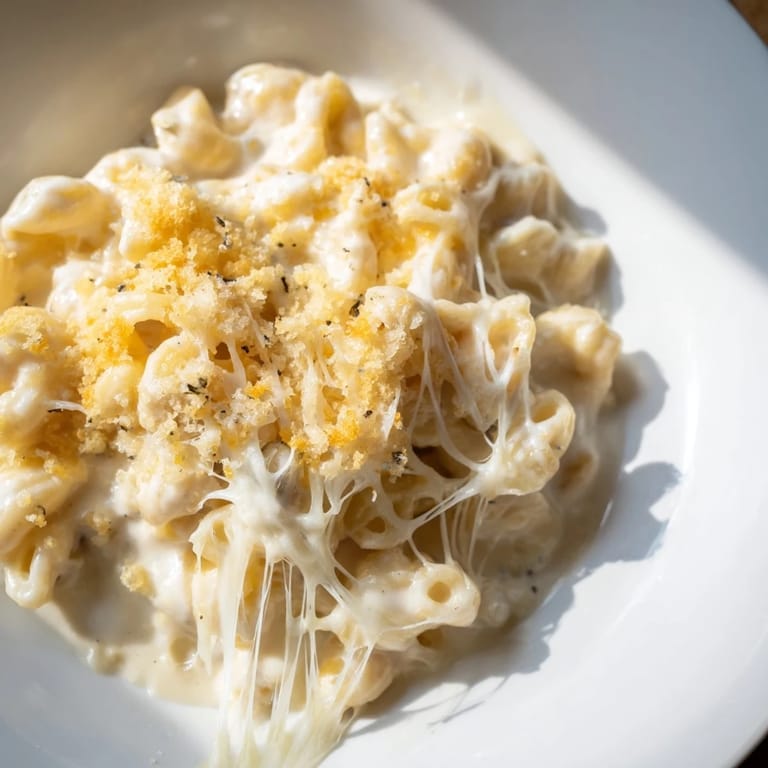
 Mac and cheese is comfort food that somehow tastes like you've spent hours in the kitchen, even though you haven't. Once you understand the technique, it becomes something you'll make again and again, each time a little better because you understand it a little deeper.
Recipe Questions & Answers
- → What type of pasta is best for creamy macaroni cheese?
Elbow macaroni is ideal as its curved shape holds the cheese sauce well, ensuring every bite is flavorful.
- → How can I make the béchamel sauce smooth without lumps?
Whisk the butter and flour thoroughly before gradually adding warm milk and cream while stirring constantly to prevent lumps.
- → Can I prepare this dish without baking?
Yes, serving it stovetop results in a luxuriously creamy texture without the crispy topping.
- → What cheeses complement the béchamel base in this dish?
A combination of sharp cheddar, Gruyère, and Parmesan creates a balanced, rich flavor and smooth melt.
- → Any tips for adding variation or extra flavor?
Incorporate cooked bacon, sautéed mushrooms, or blanched broccoli to introduce new textures and flavors.