 Pin it
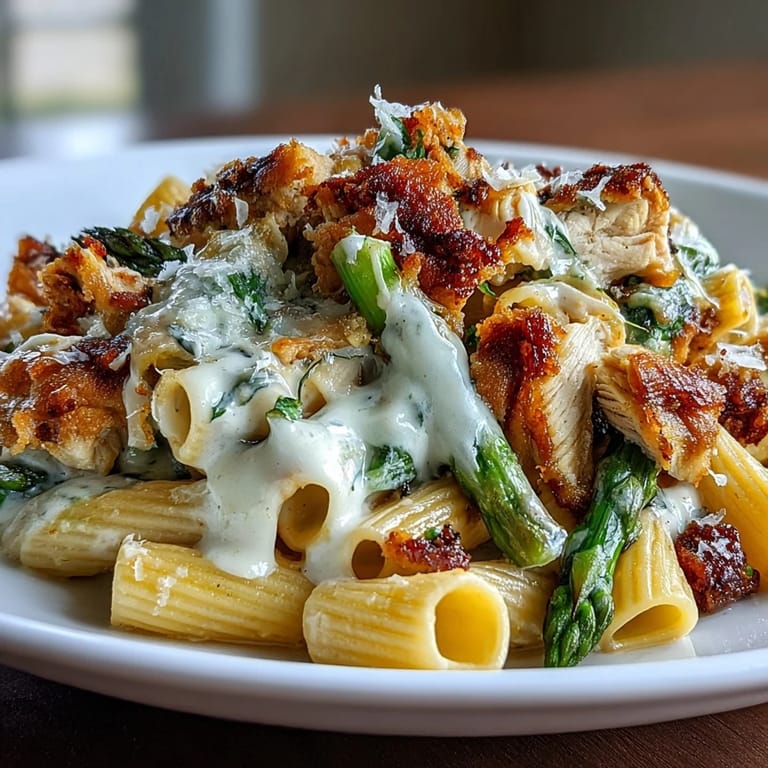
 My kitchen smelled like roasted lemon and melted cheese the afternoon my neighbor stopped by unexpectedly, drawn in by the aroma wafting through our shared wall. She watched me toss crispy asparagus into a silky cream sauce with chicken and pasta, asking what on earth I was making that smelled so good. That simple question led to her staying for dinner, and somehow this dish became our unofficial friendship meal. Now whenever she mentions she's had a rough week, I know exactly what to cook.
I made this for a dinner party once when I was running forty minutes behind, and the timing worked out so perfectly that I actually arrived at the table relaxed instead of frazzled. My guests kept asking if I'd made the pasta myself because the sauce was so silky, and I let them wonder for a moment before revealing my cream-and-lemon shortcut. The best part was watching someone cut through a piece of asparagus and discovering that crackling cheese layer underneath.
Ingredients
- Asparagus (about 400g): Look for stalks that are firm and bright green, not limp or withered. The woody ends snap off naturally when you bend them, and this is the easiest way to trim without wasting good vegetable.
- Asiago cheese (1/3 cup grated): This cheese has a slightly nutty, rich flavor that elevates the dish beyond standard Parmesan. If you can only find it in blocks, a microplane gets you the finest shreds that crisp up beautifully.
- Parmesan cheese (total 2/3 cup): Buy a wedge and grate it fresh if possible, as pre-shredded versions sometimes have anti-caking agents that prevent proper melting and crispiness.
- Chicken breasts (2 medium, about 400g): Pat them dry before seasoning so they brown properly instead of steaming. If they're thick, you can gently pound them to even thickness for faster, more consistent cooking.
- Heavy cream (1/2 cup): This creates the luxurious base of your sauce, but don't skip the pasta water since it'll help emulsify everything into a silky coating rather than a heavy slick.
- Lemon (fresh juice and zest): This is where the brightness lives, so use a real lemon and taste as you go since acidity levels vary. The zest adds little bursts of flavor that remind you this isn't just a heavy cream dish.
- Pasta (350g penne or rigatoni): The tube shapes catch sauce beautifully, but long pasta works too if that's what you have on hand.
Tired of Takeout? 🥡
Get 10 meals you can make faster than delivery arrives. Seriously.
One email. No spam. Unsubscribe anytime.
Instructions
- Set your oven and prep your workspace:
- Preheat to 220°C (425°F) and line a baking sheet with parchment paper so your asparagus doesn't stick. Having everything ready before you start means you're not scrambling once the pan gets hot.
- Roast the asparagus until it's golden and crispy:
- Toss the trimmed asparagus with olive oil, salt, pepper, both cheeses, and lemon zest, then spread in a single layer. Roast for 12–15 minutes until the edges are caramelized and the cheese is bubbling and golden brown. Let it cool slightly so you can handle it, then chop into bite-sized pieces.
- Season and sear the chicken until cooked through:
- Pat the chicken dry, season generously with salt, pepper, and garlic powder, then sear in a hot skillet with olive oil for 4–5 minutes per side until the outside is golden and a meat thermometer reads 165°F. Let it rest for 5 minutes before slicing so the juices redistribute and keep the meat tender.
- Cook the pasta until just tender:
- Boil salted water and cook the pasta until al dente, tasting a minute before the package says it's done. Reserve about 1/2 cup of pasta water before draining, since this starchy liquid is what transforms your sauce from grainy to glossy.
- Build your cream sauce base:
- In the same skillet you used for chicken, melt butter over medium heat and sauté minced garlic for about a minute until it's fragrant but not brown. Pour in chicken broth and heavy cream, let it simmer for 2–3 minutes, then stir in grated Parmesan until it melts into a smooth, creamy sauce.
- Combine pasta with sauce and balance the flavors:
- Add the drained pasta to the cream sauce along with fresh lemon juice and half the reserved pasta water, tossing gently to coat every piece. Keep adding pasta water a little at a time until the sauce is silky and clings to the pasta without pooling at the bottom.
- Fold in chicken and crispy asparagus:
- Add the sliced chicken and chopped asparagus to the pan and warm through for about a minute, being gentle so the asparagus pieces stay intact. Taste and adjust seasoning with salt, pepper, or a squeeze more lemon depending on your preference.
- Plate and finish:
- Divide among bowls while everything is still warm, and top with fresh parsley and extra Parmesan if you like.
 Pin it
 There was an evening when my teenage daughter, who usually picks at dinner, asked for seconds and then thirds, which felt like winning the lottery in our house. She told me the lemon made it taste like spring somehow, even though it was the middle of winter. That moment reminded me that cooking isn't just about following steps correctly, it's about creating something that makes people feel a little bit lighter.
The Roasting Magic
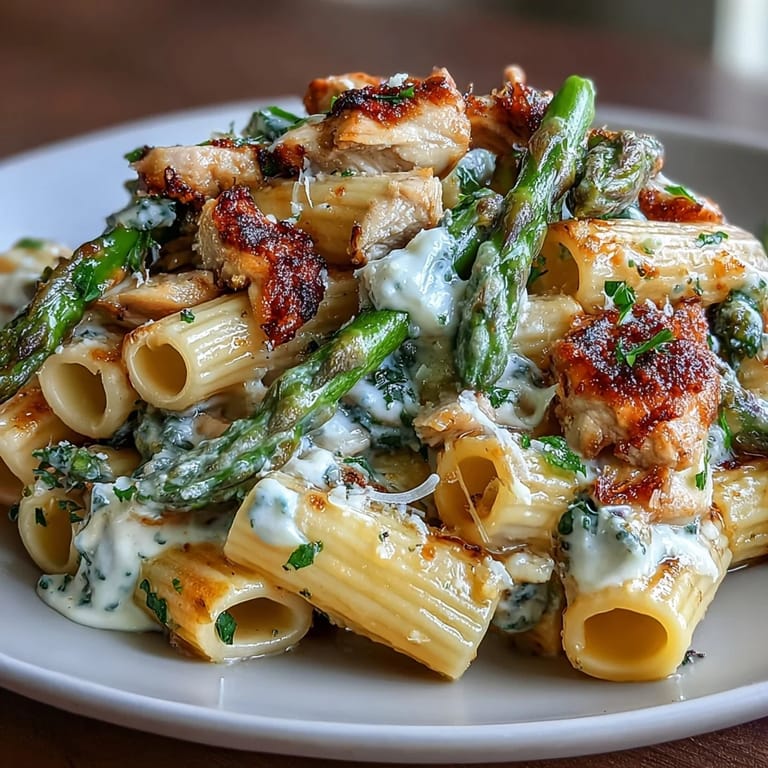
The secret that changed this dish for me was discovering that roasting the asparagus separately means it stays crispy and charred instead of getting soggy in the pasta sauce. I used to throw everything together at the end and wondered why my asparagus tasted boiled. Now I treat it like the star ingredient it is, giving it those golden, bubbling cheese edges that make people pause mid-bite to ask what that crunch is.
Pasta Water Is Your Best Friend
Once I learned that starchy pasta water is what emulsifies a cream sauce and makes it silky instead of thick and heavy, I started saving it for every pasta dish. The starch helps the sauce coat each piece evenly, and you get this glossy finish that looks almost restaurant-quality. It sounds like a small thing, but it's genuinely the difference between a good dish and one that tastes restaurant-made.
Timing and Temperature
Getting the chicken perfectly tender comes down to not overcooking it, which means a meat thermometer is your friend even if it feels fussy. I learned this after making too many dry chicken breasts, and now I sear until golden, then let it rest while I handle the pasta and sauce. This recipe moves fast once you start, which is honestly one of my favorite things about it because you can have dinner on the table in under an hour.
- Use a meat thermometer to check for 165°F internal temperature so your chicken stays juicy and never dries out.
- Don't skip the resting period after searing because those five minutes make the difference between tender and tough.
- Keep your heat at medium or medium-high so nothing burns while everything comes together at the end.
 Pin it
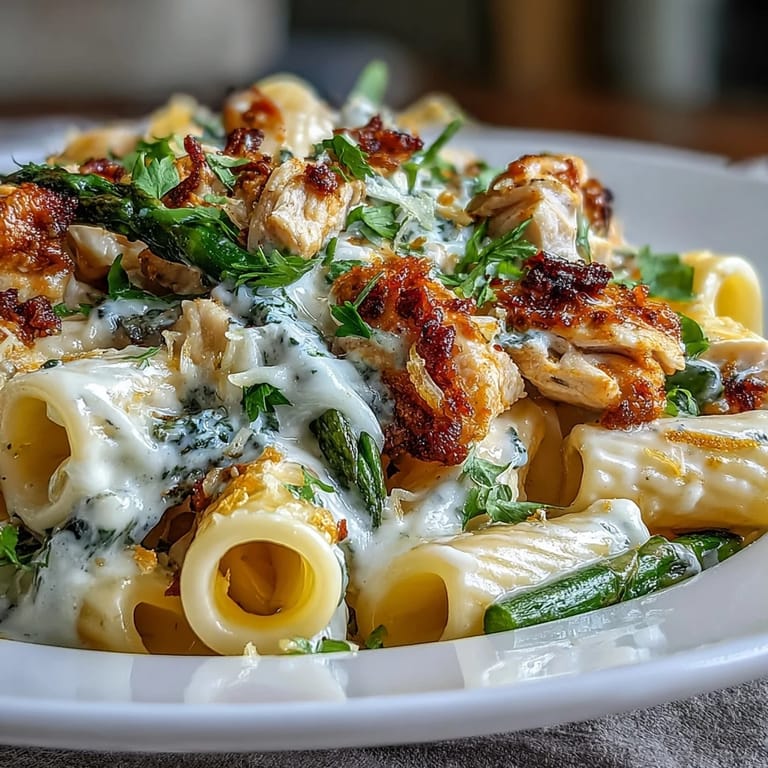
 This is the meal I make when I want to feel capable in the kitchen without stress, and the meal I make when I want to impress someone without trying too hard. It deserves a glass of crisp white wine and a table full of people who appreciate good food made simply.
Recipe Questions & Answers
- → What makes the asparagus crispy?
The asparagus gets its crispy texture from roasting at high heat with grated Parmesan and Asiago cheese, which forms a golden, melted crust.
- → Can I use a different pasta shape?
Yes, rigatoni, fusilli, or even fettuccine work well. Choose something that holds onto the creamy sauce nicely.
- → How do I prevent the sauce from separating?
Keep the heat at medium when adding the cream and cheese, and stir constantly. Don't let it come to a rolling boil.
- → Can I make this ahead of time?
The components can be prepped in advance, but it's best assembled and served immediately for the crispiest asparagus texture.
- → What can I substitute for heavy cream?
Half-and-half works for a lighter sauce, though it will be slightly less creamy. Avoid milk as it may curdle.
- → Why reserve pasta water?
The starchy pasta water helps bind the sauce to the noodles and creates a silky, emulsified texture.