 Pin it
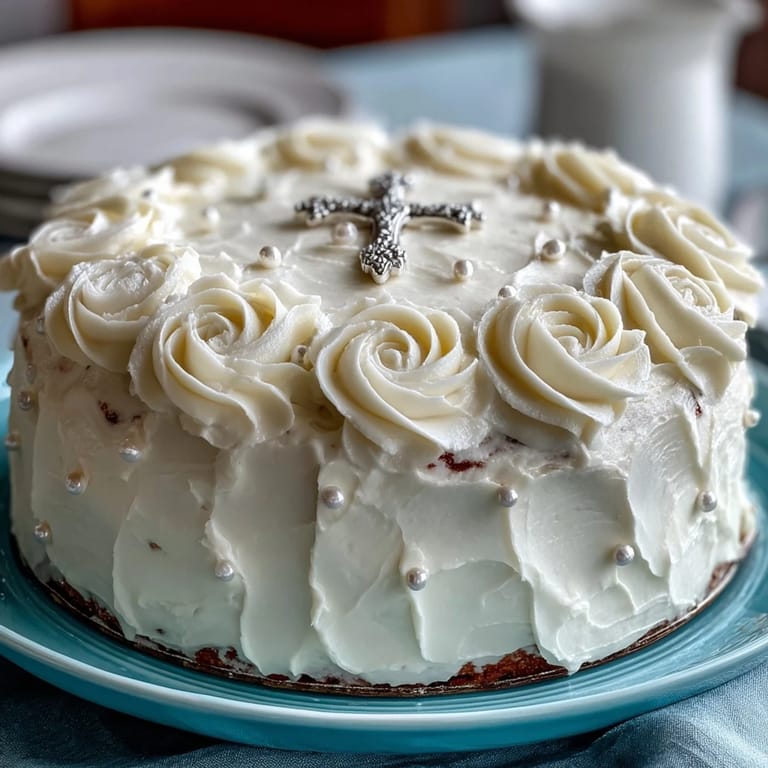
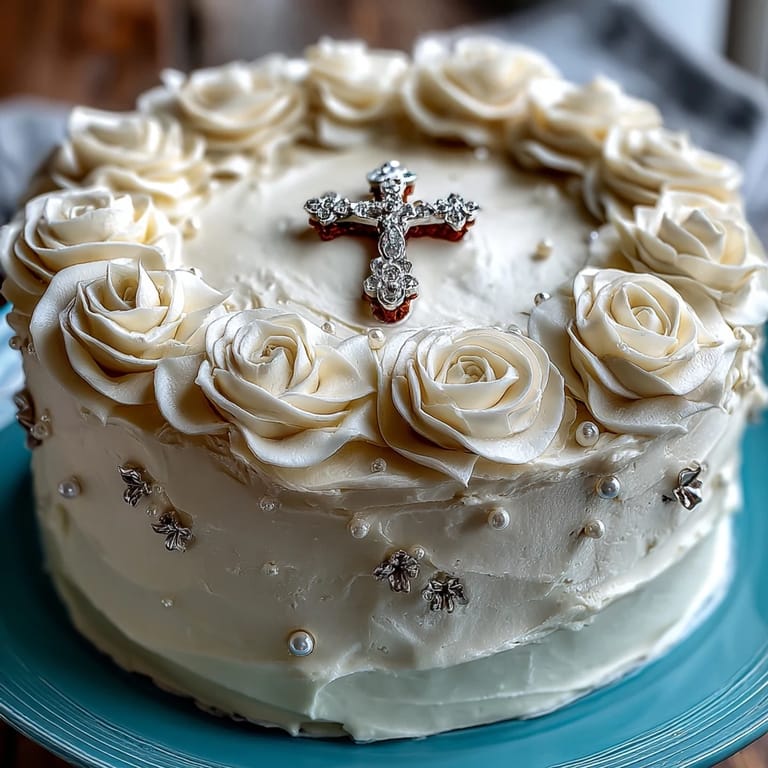
 There's something about baking a First Communion cake that shifts the whole kitchen into a different mood. My cousin asked me to make hers three weeks before the big day, and I found myself standing in the baking aisle, suddenly aware that this wasn't just dessert—it was a marker, a memory. The vanilla sponge layers had to be perfect, the buttercream smooth as silk, and those fondant roses needed to look like they'd been crafted with intention. I'd made plenty of celebration cakes, but this one felt different, quieter somehow.
I remember my hands shaking slightly as I positioned the cross topper on top of her cake—not from nerves about baking, but from the weight of what it meant. My cousin walked into the kitchen just as I'd finished the final fondant rose, and she got quiet too, which told me everything. We stood there together for a moment, two of us in a quiet kitchen, looking at something that was about to become part of her daughter's day. That's when cake stops being just cake.
Ingredients
- All-purpose flour (2 ½ cups): This is your foundation—the structure that keeps the cake tender without density, and room-temperature eggs and milk help it blend into something almost cloud-like.
- Unsalted butter (1 cup for sponge, 1 ½ cups for frosting): You need real butter here because it carries flavor and creates that golden crumb; cold butter in the sponge would fight you every step.
- Granulated sugar (2 cups): The creaming process—where you beat butter and sugar together—is where the magic starts; don't rush those three minutes.
- Eggs (4 large, room temperature): Cold eggs won't incorporate properly, and you'll taste it; pull them out an hour before if you remember.
- Pure vanilla extract (1 tbsp plus 2 tsp): The pure stuff matters here because this is a simple cake and vanilla is the star; imitation extract tastes thin by comparison.
- Whole milk (1 cup): Room temperature keeps the batter from seizing when it hits the butter mixture; cold milk can make the batter look broken.
- Powdered sugar (5 cups, sifted): Sifting removes lumps before you even start, which saves you from tiny gritty spots in your frosting.
- White fondant (16 oz): This is the canvas for your roses and the thing that makes this cake look intentional; quality fondant rolls smoother and tears less.
- Edible pearls or silver dragees (optional): These aren't just decoration—they catch light and add a whisper of shimmer that says celebration without shouting.
- Cross topper: Whether you buy an edible one or use a decorative topper, this is the punctuation mark that grounds the whole design.
Tired of Takeout? 🥡
Get 10 meals you can make faster than delivery arrives. Seriously.
One email. No spam. Unsubscribe anytime.
Instructions
- Set the stage:
- Preheat your oven to 350°F and grease those two 8-inch cake pans thoroughly—sides and bottoms—then line the bottoms with parchment paper so your cakes slip out without sticking. Having everything ready before you start mixing is the difference between calm baking and frantic baking.
- Build your dry foundation:
- Whisk together flour, baking powder, and salt in a medium bowl, making sure the baking powder is distributed evenly so your cake rises consistently. This step takes two minutes but saves you from dense pockets later.
- Create the creaming base:
- Beat softened butter and sugar together for about three minutes until it's light, fluffy, and noticeably paler—this is where air gets incorporated, and air is what keeps the cake tender. Stop and scrape down the bowl once or twice so everything creams evenly.
- Add eggs with care:
- Add eggs one at a time, beating well after each addition so each egg fully incorporates before the next one goes in. If you rush this, the batter can look separated and broken, even though it'll usually turn out fine.
- Mix in the vanilla:
- Once all eggs are in, add the vanilla extract and beat until it's distributed throughout the batter. The batter should look smooth and almost mousse-like at this point.
- Alternate wet and dry:
- With the mixer on low speed, add the flour mixture and milk alternately, starting and ending with flour, which keeps the batter from becoming overmixed. Add just enough milk to reach spreading consistency.
- Into the pans:
- Divide batter evenly between the prepared pans and smooth the tops with an offset spatula—if one pan gets more batter, it'll bake faster and you'll have unlevel layers. Even layers make decorating infinitely easier.
- Bake until golden:
- Bake for 30-35 minutes until a toothpick inserted into the center comes out clean or with just a few moist crumbs. The kitchen will smell like butter and vanilla in a way that makes you understand why people love baking.
- Cool with patience:
- Let cakes cool in the pans for 10 minutes—this firms them up enough to turn out without falling apart—then turn them out onto wire racks to cool completely. Never frost a warm cake or the frosting will melt and slide.
- Make the buttercream:
- Beat softened butter until creamy, then gradually add sifted powdered sugar, vanilla, and a pinch of salt, adding milk or cream 1 tablespoon at a time until you reach soft spreading consistency. If you add milk too fast, you'll oversweeten the frosting trying to fix it.
- Level and layer:
- If your cake layers domed in the oven, use a serrated knife to level them, then place the first layer on your cake board and spread with buttercream. The second layer goes on top, and now you have height and structure.
- Apply the crumb coat:
- Spread a thin layer of buttercream all over the cake to seal in crumbs, then chill for 20 minutes until it's firm. This step is what separates homemade-looking from bakery-looking cakes.
- The final frosting:
- Apply a smooth, final layer of buttercream using an offset spatula and a light hand; some people warm their spatula under hot water and wipe it dry between strokes for that ultra-smooth finish. Take your time here—it's worth it.
- Roll and shape fondant roses:
- Roll white fondant to 1/8-inch thickness, cut small circles, flatten them into petal shapes, then roll them into tight roses starting from the center and overlapping petals outward. Each rose takes maybe two minutes once you understand the rhythm.
- Create green leaves (optional):
- Tint a small amount of fondant with green gel food coloring and roll thin leaf shapes with a slight curve. These ground the roses and make the design feel botanical instead of abstract.
- Arrange your decoration:
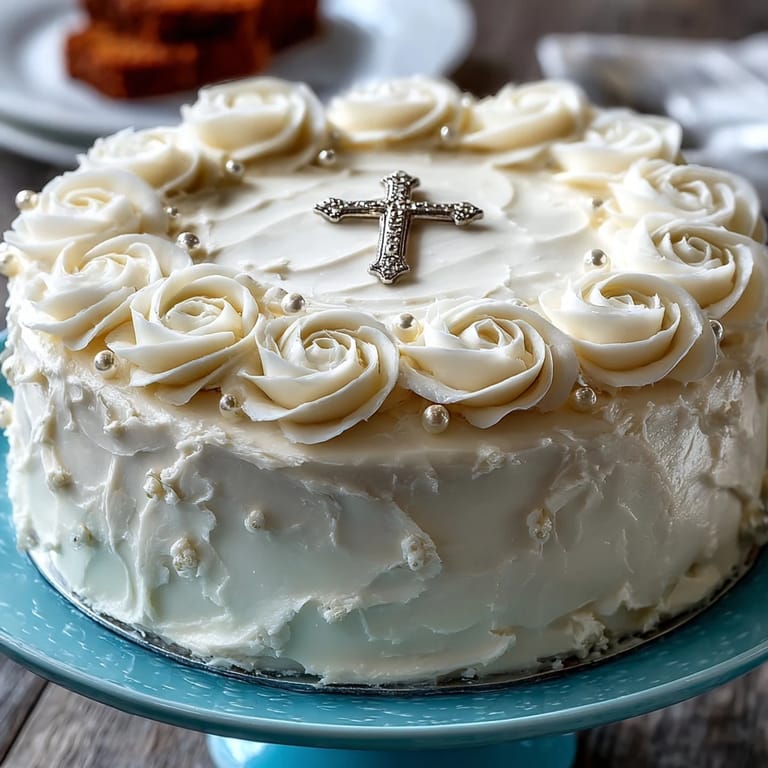
- Place fondant roses and leaves around the cake in a way that feels balanced—I usually cluster them on one side or create a gentle garland around the middle. Scatter edible pearls or dragees between the roses for shimmer.
- Crown it:
- Place your cross topper at the center top or in a position that feels intentional—this is the moment the cake becomes the cake you envisioned. Step back and look at it before chilling.
- Final chill:
- Refrigerate the finished cake until serving time so everything sets and holds its shape, especially those fondant details.
 Pin it
 On the morning of the First Communion, I helped my cousin move the cake into her car with the kind of careful precision usually reserved for transporting newborns. The evening before, her daughter had stopped by the kitchen and stood on her tiptoes to peek at the finished cake, and I watched her eyes go quiet the way kids do when something matters. It struck me then that this cake wasn't an achievement or a project—it was a moment someone would remember, and maybe that's the only recipe that really matters.
The Science of a Tender Crumb
The magic in this vanilla cake lives in the ratio of butter to flour and how you handle the wet and dry ingredients. When you cream butter and sugar, you're mechanically incorporating air, which traps during baking and creates the tender structure you're after. The alternating method—adding flour mixture and milk in stages—keeps the batter from becoming overworked; overmixing develops gluten, which makes cakes tough. The milk hydrates the flour gently and keeps everything from compacting into a dense crumb.
Buttercream Consistency is Everything
The difference between buttercream that spreads like silk and buttercream that resists is usually just two tablespoons of milk and a little patience. If you add milk too quickly, you'll end up with something grainy or too soft, so add it in small increments and beat between additions. Temperature matters too—if your kitchen is warm, your buttercream will be softer; if it's cool, you might need slightly more milk. The consistency should feel like soft butter at room temperature, spreadable but not runny.
Fondant Roses Without Fuss
Making fondant roses intimidates people, but they're really just layered petals with patience. The trick is not overthinking the petals—they don't need to be perfect because once they're layered, slight imperfections look organic. Roll small balls of fondant, flatten them into petal shapes with your finger, then stack them overlapping around a tight center ball, building upward in a spiral. Your first rose will take ten minutes and look sort of rough; by your third one, you'll have found a rhythm and they'll look effortless.
- Keep leftover fondant wrapped tightly in plastic wrap or it'll dry out and crack when you try to work with it.
- If fondant is sticky, dust your work surface lightly with powdered sugar or cornstarch so it doesn't cling.
- Make roses the day before and let them set up in a cool place so they hold their shape when you arrange them.
 Pin it
 This cake is the kind you make when celebration matters, when you want someone to taste the care in every layer. It feeds twelve people and hands them a moment they'll mention for years—and honestly, that's why we cook for the people we love.
Recipe Questions & Answers
- → What type of flour is ideal for the sponge layers?
All-purpose flour works best to create a tender yet structured sponge that holds the layers well.
- → How can I achieve smooth buttercream frosting?
Beat softened butter until creamy, then gradually add sifted powdered sugar and vanilla. Incorporate milk or cream slowly to reach a spreadable texture.
- → How are the fondant roses made?
Fondant is rolled thin, shaped into small petals, and assembled into roses by layering petals around a center.
- → Can the cake be prepared in advance?
Yes, bake and chill layers ahead. Assemble and decorate closer to serving to keep fondant fresh.
- → Are there alternatives for a lighter texture?
Substituting half the butter with vegetable oil can create a lighter sponge without sacrificing moisture.