 Pin it
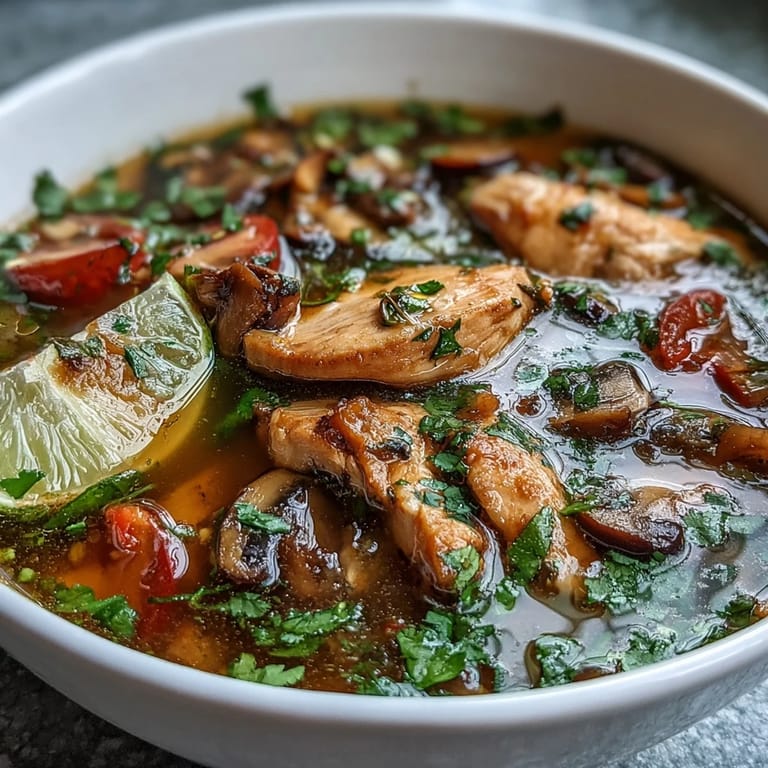
 The first time I made Tom Yum chicken soup, my kitchen windows fogged up with aromatic steam that carried me straight to the streets of Bangkok. I'd tasted this spicy, sour masterpiece during a rainy season visit to Thailand, where a street vendor served it in a chipped bowl while motorbikes splashed by. Standing in my apartment with lemongrass in hand, I felt both terrified and thrilled trying to recreate those complex layers of flavor.
Last winter, my friend Sarah came over after a particularly rough workweek, shoulders slumped and spirits low. Rather than our usual wine and chat, I silently started pulling out lemongrass and lime leaves. The kitchen soon filled with fragrant steam, and as we hunched over steaming bowls, her face transformed with each spoonful. By the bottom of the bowl, her problems seemed less overwhelming, temporarily washed away by chilies and lime.
Ingredients
- Lemongrass: The woody aroma forms the backbone of authentic Tom Yum, and Ive learned to bruise it thoroughly with the back of my knife to release those essential oils that make all the difference.
- Birds Eye Chilies: These tiny firebombs should be crushed just enough to release their heat into the broth without overwhelming it, though my brother always asks me to add extra.
- Makrut Lime Leaves: These wrinkled little leaves might look unassuming, but they contain the citrusy soul of Tom Yum, and Ive found that tearing them releases even more of their aromatic magic.
- Chicken Thighs: After multiple attempts, Ive discovered thighs stay more tender than breasts in the hot broth, maintaining their juiciness even when reheated the next day.
- Fish Sauce: This pungent liquid might make you wrinkle your nose when adding it, but it provides that mysterious umami depth that makes people ask what your secret ingredient is.
Tired of Takeout? 🥡
Get 10 meals you can make faster than delivery arrives. Seriously.
One email. No spam. Unsubscribe anytime.
Instructions
- Prepare Your Aromatics:
- Take each lemongrass stalk and smash it firmly with the back of your knife until it splinters slightly, releasing its citrusy scent that will immediately transport you. Do the same with the galangal slices and tear those lime leaves to wake up their essential oils.
- Infuse Your Broth:
- As your chicken stock comes to a boil, add the aromatics and watch as the clear liquid begins to take on a golden hue, carrying the fragrance of Thailand. The kitchen will fill with a scent that makes everyone suddenly interested in what youre cooking.
- Cook Your Protein:
- Slide those chicken slices into the fragrant broth along with the onion, and notice how they change from pink to opaque white as they poach. Keep the heat at a gentle simmer rather than a rolling boil to keep the meat tender.
- Add Body With Vegetables:
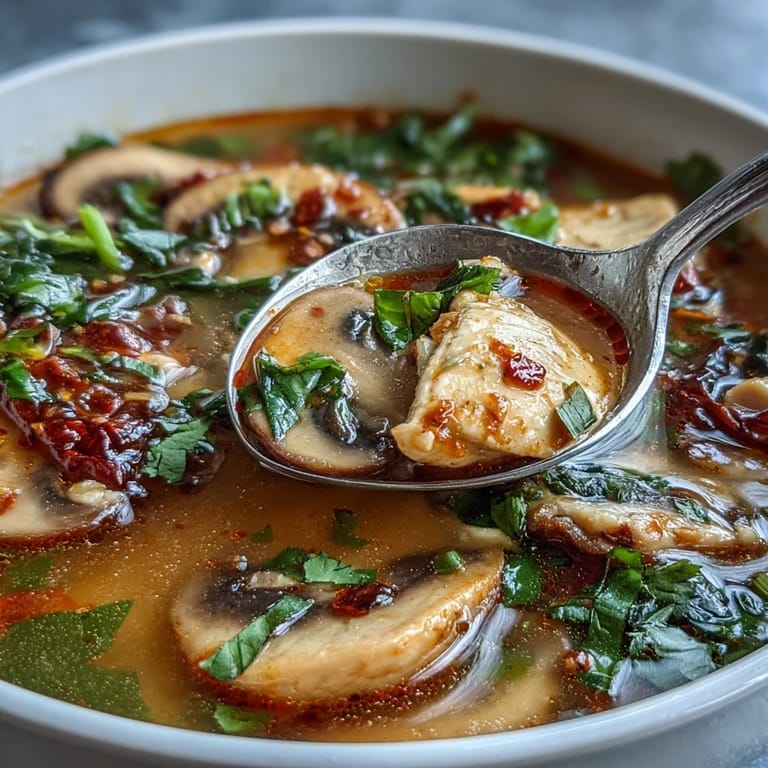
- When you introduce the mushrooms and tomato wedges, theyll drink up the flavors while adding their own earthy and sweet notes. I love watching how the tomatoes gradually soften and melt slightly into the broth.
- Balance Your Flavors:
- This is where the magic happens as you add fish sauce for salt, lime juice for sour, and sugar to round everything out. Trust your taste buds here, adding a splash more of whatever the soup seems to be asking for.
- Garnish With Fresh Elements:
- The cilantro and spring onions arent just for color, they add a fresh, bright counterpoint to the deep flavors of the broth. I like to add them at the very last minute so they maintain their vibrant snap.
 Pin it
 My partner once called this soup my emotional first aid kit, and theres truth to that. During a particularly stressful deadline week, I made a double batch on Sunday and lived off it for days, each bowlful centering me during late-night work sessions. The ritual of squeezing fresh lime over the steaming broth became a moment of mindfulness, the bright zing of citrus cutting through both the spice and my scattered thoughts.
Finding Your Perfect Heat Level
My sister-in-law cant handle spice, while my brother adds extra chilies to everything, which taught me the beauty of this soups adaptability. Now I keep the base broth more moderate and offer a small dish of crushed chilies in oil on the side, allowing everyone to customize their own bowl. Sometimes I slice the chilies into thin rings so cautious diners can easily spot and avoid them, while heat-seekers can purposefully seek them out for that eye-watering punch.
The Art of Serving
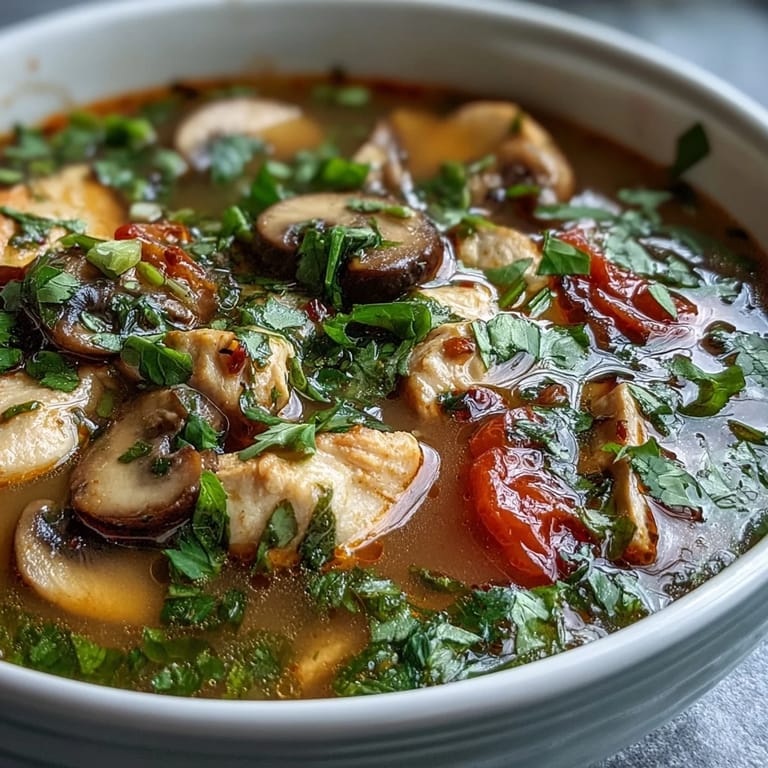
Ive learned that wide, shallow bowls showcase the beautiful colors of this soup better than deep ones, letting the vibrant reds and greens shine against the golden broth. When hosting friends, I place small dishes of extra lime wedges, cilantro, and sliced chilies on the table, turning dinner into an interactive experience. The conversations that happen around a shared pot of Tom Yum often turn more intimate and revealing, something about the heat and tanginess inspiring openness.
Storage and Leftovers
The flavors in Tom Yum actually intensify overnight as all those aromatics continue their magic in the refrigerator. Ive discovered that removing the spent lemongrass and galangal before storing prevents the broth from becoming overpowered, and adding a fresh squeeze of lime when reheating restores that bright, zingy edge that might have mellowed.
- Store any leftovers in glass containers rather than plastic to prevent the aromatics from permanently scenting your storage ware.
- When reheating, stop just before the soup reaches a full boil to preserve the delicate flavors and prevent the chicken from toughening.
- Add fresh herbs and a squeeze of lime to each reheated serving to make it taste freshly made.
 Pin it
 This soup has become more than just a recipe in my kitchen repertoire, its a remedy for cold days, busy weeks, and uncertain times. When the fragrance of lemongrass and lime fills my home, I know that regardless of whats happening outside, inside these walls, all is momentarily well.
Recipe Questions & Answers
- → What makes Tom Yum taste authentic?
The authentic flavor comes from the holy trinity of Thai aromatics: fresh lemongrass, galangal, and makrut lime leaves. These ingredients, along with birds eye chilies and fresh lime juice, create the distinctive spicy-sour profile that defines Tom Yum. Using fresh rather than dried herbs makes a significant difference in the final dish.
- → Can I make this less spicy?
Absolutely. Start by reducing the number of birds eye chilies or removing the seeds before adding them. You can also omit the chilies entirely during cooking and serve chili oil on the side so diners can adjust heat to their preference. The soup remains flavorful even with reduced spice.
- → What's the difference between clear and creamy Tom Yum?
Clear Tom Yum is the traditional version with just broth and aromatics. Creamy Tom Yum incorporates evaporated milk or coconut milk, creating a richer, smoother texture and mellowing some of the sharp sour notes. The creamy version is called Tom Yum Nam Khon and is equally delicious.
- → Can I use chicken breast instead of thighs?
Yes, chicken breast works well in this soup. Slice it thinly against the grain to prevent it from becoming tough. Breast meat cooks faster than thighs, so add it a few minutes later in the process to ensure it stays tender and moist.
- → How long can I store leftovers?
Store cooled soup in an airtight container in the refrigerator for up to 3 days. The flavors often develop and improve overnight. Reheat gently on the stovetop, adding a splash of water or stock if needed. Avoid freezing as the texture of vegetables may become mushy.