 Pin it
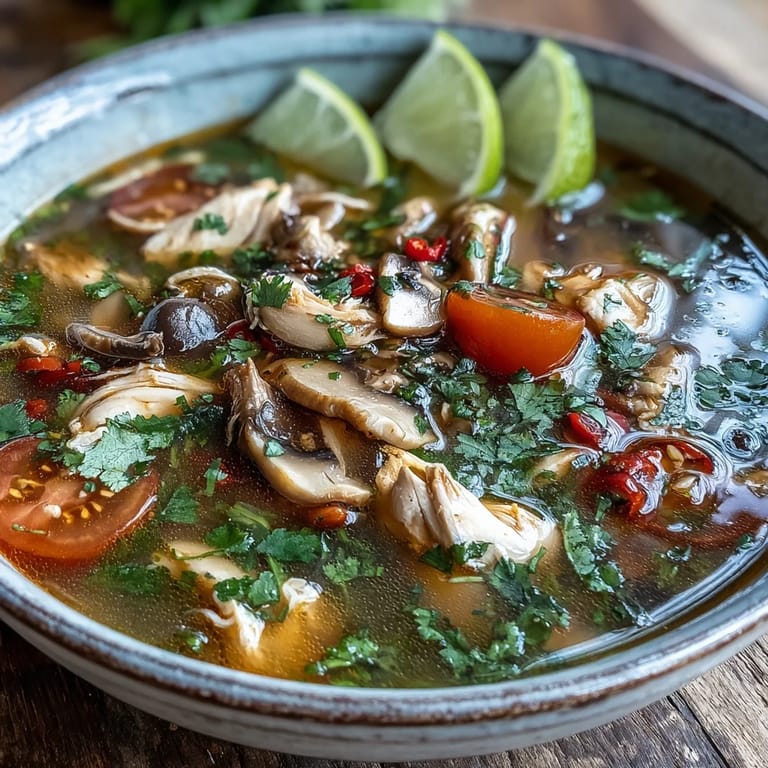
 The scent of lemongrass and lime leaves hit me like a welcome wave the first time I visited my friend Dao's kitchen in Bangkok. Her hands moved with practiced precision, bruising stalks of lemongrass against the cutting board as she laughed at my wide eyes. 'Tom Yum is how we chase away colds and bad moods,' she told me, dropping chiles into the fragrant broth with a sizzle. That afternoon, huddled over steaming bowls as rain pattered against the windows, I understood why this soup is Thailand's liquid comfort.
Last winter when my sister caught that terrible flu, I showed up at her apartment with a portable burner and all the fixings for Tom Yum Gai. The sharp aroma of lime and chiles cut through the stuffy air as I worked in her tiny kitchen. By the time she ventured out from beneath her blanket fortress, the steam from the soup had fogged her windows. Her first sip was followed by wide eyes, then a smile, then proper hunger for the first time in days.
Ingredients
- Nam Prik Pao (Thai Roasted Chili Paste): This complex paste is the secret weapon that gives authentic depth to the broth, offering smoky sweetness that balances the sour lime.
- Lemongrass: Always remove the tough outer layers and bruise the stalks before adding them to release their citrusy oils fully into the broth.
- Kaffir Lime Leaves: Tear these just before adding to release their intense aromatic oils, and remember they're meant to flavor the broth but not be eaten whole.
- Chicken: Slice the meat against the grain and quite thinly so it cooks quickly without becoming tough in the hot broth.
- Fish Sauce: Don't be put off by the intense aroma from the bottle, as it mellows beautifully in cooking and provides that umami foundation that makes Thai food so addictive.
Tired of Takeout? 🥡
Get 10 meals you can make faster than delivery arrives. Seriously.
One email. No spam. Unsubscribe anytime.
Instructions
- Infuse the Broth:
- Bring your chicken stock to a gentle rolling boil before adding the aromatic powerhouses: lemongrass, kaffir lime leaves, galangal, and those smashed chiles. The kitchen will start filling with a citrusy, spicy perfume as these ingredients release their essence.
- Cook the Chicken:
- Slip those thin slices of chicken into the fragrant broth and watch them change from pink to opaque white in just minutes. Keep the heat at a gentle simmer to ensure tenderness, not toughness.
- Add the Vegetables:
- Tumble in the mushrooms, tomatoes, and onion, giving everything a gentle stir to immerse them in the flavorful liquid. These need just enough time to soften while maintaining some texture and brightness.
- Build the Flavor Profile:
- Now comes the magic moment when you transform the broth with nam prik pao, fish sauce, and sugar. Watch how the color deepens slightly and the aroma becomes more complex and inviting.
- Add the Brightness:
- Off the heat, stir in that fresh lime juice and watch the soup come alive. This final acidic touch balances everything and creates that characteristic Tom Yum tang that makes your mouth water in anticipation.
- Serve with Flair:
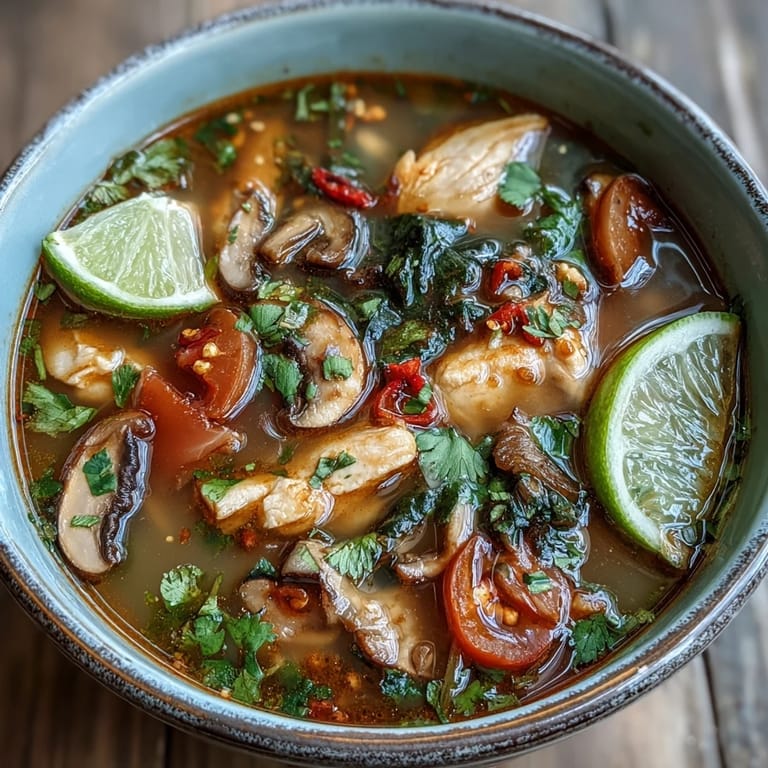
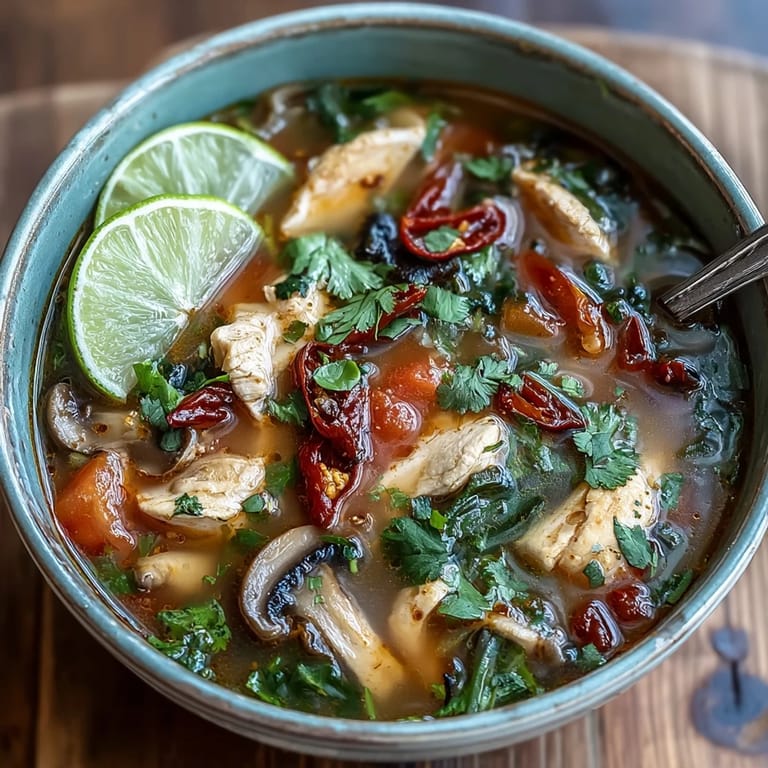
- Ladle the steaming soup into bowls and crown with fresh cilantro and perhaps those extra chile slices if youre feeling brave. The contrast of the hot soup with the cool, fresh garnishes creates a delightful sensory experience.
 Pin it
 The first time I served Tom Yum Gai at a dinner party, my friend Michael, who normally picks cautiously at spicy foods, couldn't stop eating. Between spoonfuls, he told us about his backpacking trip through Thailand years ago, stories he hadn't shared before. Something about the familiar aroma had unlocked those memories, and suddenly we were all transported to night markets and beachside meals through his vivid descriptions, the soup creating connections beyond just nourishment.
Finding the Right Ingredients
When I couldn't find galangal at my local market, I almost postponed making Tom Yum until an elderly Thai woman shopping nearby noticed my frustrated expression. 'Fresh ginger works too,' she whispered, 'just use a little less and add an extra squeeze of lime at the end.' Her practical wisdom reminded me that while traditional ingredients create authenticity, adaptations aren't failures but part of making a recipe your own. Now I keep both on hand, using whichever speaks to me that day.
Controlling the Heat
Thai chiles are tiny powerhouses that can overwhelm the uninitiated. I've learned to start with just one, lightly crushed, when cooking for mixed company. The beauty of Tom Yum lies in its customizability, so I now serve extra sliced chiles on the side, allowing each person to sprinkle them into their bowl according to their heat tolerance. This small adjustment has made the soup accessible to everyone from my spice-adverse mother to my husband who adds chiles to his breakfast cereal.
Making It a Complete Meal
While Tom Yum Gai stands gloriously on its own, I've found it transforms into a more substantial meal with a few thoughtful additions. Sometimes I double the chicken and mushrooms or add a handful of rice noodles for heartier appetites, especially when serving it as a main course on chilly evenings.
- Serve alongside a bowl of jasmine rice to soak up the flavorful broth and provide a cooling counterpoint to the soup's intensity.
- A simple side of cucumber salad with rice vinegar and a touch of sugar creates a refreshing contrast to the hot, spicy soup.
- For a proper Thai meal experience, pair with fresh spring rolls or crispy fried wontons for textural contrast.
 Pin it
 This soup has become my culinary first aid kit, appearing at my table when celebrations call or when comfort is needed. Like the best of Thai cooking, it teaches us that balance isnt just a flavor principle but perhaps a life philosophy too, reminding us that sour moments need sweetness, heat requires coolness, and simple ingredients can create extraordinary experiences.
Recipe Questions & Answers
- → What makes Tom Yum Gai different from other Thai soups?
Tom Yum Gai features the distinctive spicy-sour balance that defines Tom Yum, with the sharp heat of fresh chiles cut by bright lime juice. Unlike creamy Tom Kha Gai which uses coconut milk, this version has a clear broth enriched with roasted chili paste for depth.
- → Can I make this soup less spicy?
Absolutely. Reduce the amount of Thai birds eye chiles in the broth, or omit them entirely. You can also decrease the nam prik pao (roasted chili paste) to 1 tablespoon instead of 2. The soup will still be flavorful thanks to the aromatic herbs.
- → What's the best substitute for galangal?
Fresh ginger works as a substitute, though it has a slightly different flavor profile. Use slightly more ginger than the galangal called for, as galangal has a more intense, piney taste. Avoid dried galangal powder if possible.
- → Can I use other proteins besides chicken?
Yes, this soup works beautifully with shrimp (becoming Tom Yum Goong), or even tofu for a vegetarian version. Adjust cooking times accordingly—shrimp cooks in just 2-3 minutes, while tofu can be added with the vegetables.
- → How do I store and reheat leftovers?
Store cooled soup in an airtight container for up to 3 days. The flavors often improve overnight. Reheat gently on the stovetop, adding a splash more water or stock if needed. Avoid boiling vigorously to prevent the chicken from becoming tough.