 Pin it
 The first time I understood baklava wasn't just dessert but a ritual was watching my neighbor's hands move with absolute precision as she layered paper-thin phyllo sheets in her Istanbul kitchen. She didn't measure the butter—just knew when each layer had enough by feel. Years later, I finally recreated that moment at home, and the smell of butter crisping between those delicate layers brought everything back. Now when I make this Turkish hazelnut and pistachio version, I'm not just following steps; I'm having a quiet conversation with that memory. It's become my favorite way to end a meal, especially when I want something that tastes like it took hours but actually surprised me with how manageable it was.
I remember bringing this to a potluck and watching people's faces light up when they bit into a piece—that first crunch followed by the warm honey hitting their taste buds. One guest asked if I'd bought it from a Turkish bakery, and honestly, that compliment stayed with me longer than it probably should have. Since then, I make it whenever I want to remind myself that sometimes the simplest techniques, done with care, create something genuinely special.
Ingredients
- Phyllo dough (16 sheets): Thaw it completely before opening the package, or it'll tear and frustrate you—I learned this the hard way on my first attempt.
- Unsalted butter (150 g, melted): Use real butter, not margarine, because the flavor difference is noticeable and matters in a dessert this simple.
- Hazelnuts (100 g, finely chopped): Toast them lightly before chopping if you have time—it deepens their flavor in a way that's worth the extra five minutes.
- Pistachios (100 g, finely chopped): The green ones look beautiful, but any natural pistachio works; the key is keeping them chunky enough to taste.
- Granulated sugar (100 g, for filling): Mix this with your nuts before layering so every bite has sweetness distributed evenly.
- Ground cinnamon (1 tsp, optional): Don't skip this—it adds a subtle warmth that makes people ask what the secret ingredient is.
- Water (120 ml, for syrup): Cool, filtered water works best because it lets the honey and sugar shine.
- Honey (150 g): Good quality honey makes a difference here since it's such a visible ingredient; avoid the crystallized stuff.
- Granulated sugar (100 g, for syrup): This balances the honey's sweetness and helps create that glossy, soaking syrup.
- Lemon juice (1 tsp): A tiny squeeze cuts the sweetness and brightens everything in a way that feels almost undetectable but absolutely necessary.
Tired of Takeout? 🥡
Get 10 meals you can make faster than delivery arrives. Seriously.
One email. No spam. Unsubscribe anytime.
Instructions
- Prepare your pan and preheat:
- Heat your oven to 180°C and brush that 20x30 cm pan generously with melted butter so nothing sticks. This step only takes two minutes but makes the whole process smoother.
- Build the first phyllo base:
- Lay down 4 sheets of phyllo, brushing each one with butter as you go—use a pastry brush and don't be shy with it. The phyllo will be paper-thin and slightly fragile, but that's exactly how it should feel.
- Layer the first third of nuts:
- Sprinkle one-third of your nut mixture evenly across that phyllo base, making sure you don't miss any corners. The nuts should form a light, even layer—not clumpy, not sparse.
- Build the middle layers:
- Add another 4 buttered phyllo sheets, then another third of the nut mixture, layering methodically like you're creating something precious. This is meditative work, and there's no rush.
- Final assembly:
- Top with the last 4 phyllo sheets, buttering each one including the very top layer, which will turn golden and gorgeous. At this point, you've built something beautiful, even if you can't see it yet.
- Score before baking:
- Using a sharp knife, cut your baklava into diamonds or squares all the way through—don't second-guess yourself, just commit to the cuts. Some people prefer diamonds because they look fancy; I like squares because they're easier.
- Bake until golden:
- Bake for 35–40 minutes until the top is deep golden and the whole thing smells like toasted butter and nuts. You'll know it's done when the phyllo is crisp to the touch and the pastry has puffed slightly.
- Make the honey syrup simultaneously:
- While the baklava bakes, combine water, honey, sugar, and lemon juice in a saucepan and bring to a boil. Let it simmer for 10 minutes—this concentrates the flavors and makes the syrup less runny.
- The crucial syrup moment:
- The moment your baklava comes out of the oven, pour that hot syrup over the hot pastry—this is what makes it special. The heat allows the syrup to soak into the layers instead of sitting on top.
- Cool and let it set:
- Leave it alone completely until it cools to room temperature; this takes a couple of hours, but it's when the magic happens. The baklava will drink in that syrup and become tender, sweet, and absolutely irresistible.
 Pin it
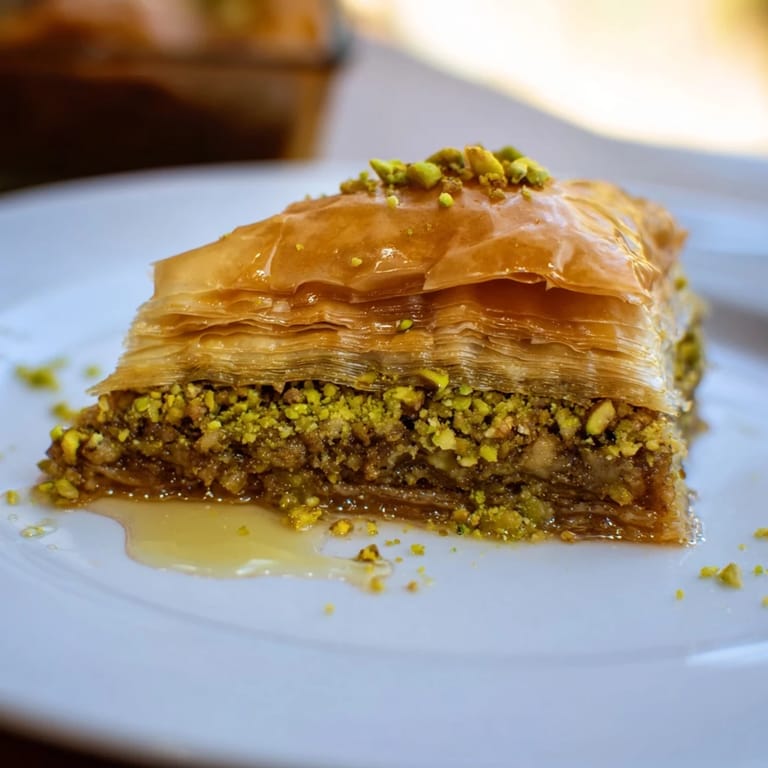
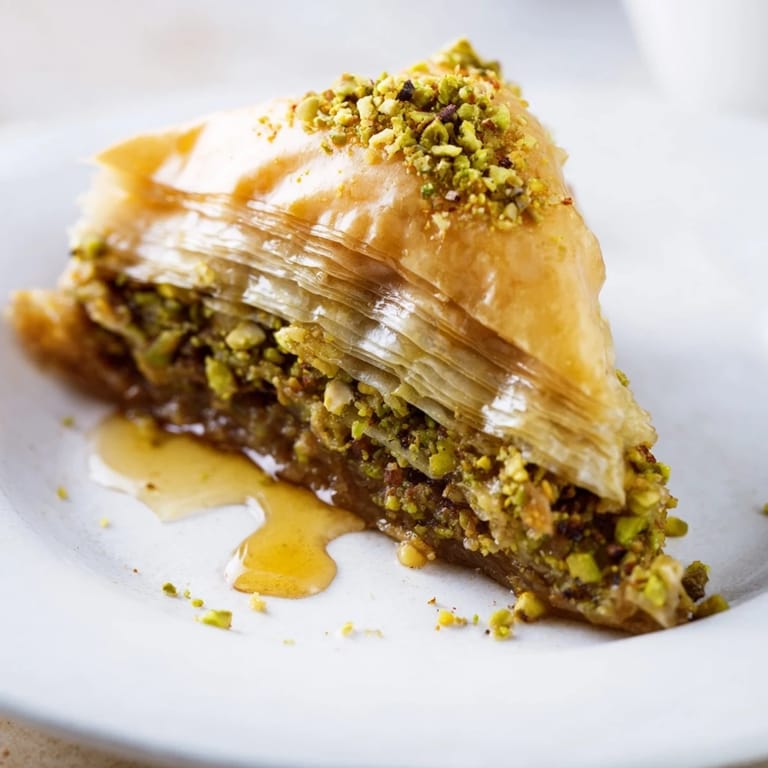
 There's a moment after everything cools and you cut into a piece, watching the layers separate slightly as the knife passes through, that you realize why baklava has been made the same way for centuries. It's not complicated, but it's dignified—every step serves a purpose, and the result is something that feels like a small luxury.
Why Phyllo Matters More Than You Think
Phyllo is the soul of baklava, and I used to think I understood it until I started working with it regularly. Those sheets are so thin that light passes through them, and they're surprisingly forgiving once you stop being afraid of them. The trick is keeping them moist by covering unused sheets with a damp kitchen towel while you work—dry phyllo tears, but slightly moist phyllo flexes and layers beautifully. I've made baklava with store-bought phyllo and made it with homemade sheets, and both work, but the quality of the phyllo you choose will honestly show in every bite.
The Nut Filling Strategy
Hazelnuts and pistachios are a perfect pair because they have different textures and flavors that complement each other without fighting. Hazelnuts bring richness and an almost buttery undertone, while pistachios add a slightly fruity, delicate note that keeps everything from feeling too heavy. The cinnamon isn't just decoration—it's a bridge that brings both nuts together and adds a warmth that makes people taste every layer. You can adjust the ratio slightly depending on what you have on hand, but I wouldn't go too heavy on either one at the expense of the other.
Storage, Serving, and Unexpected Uses
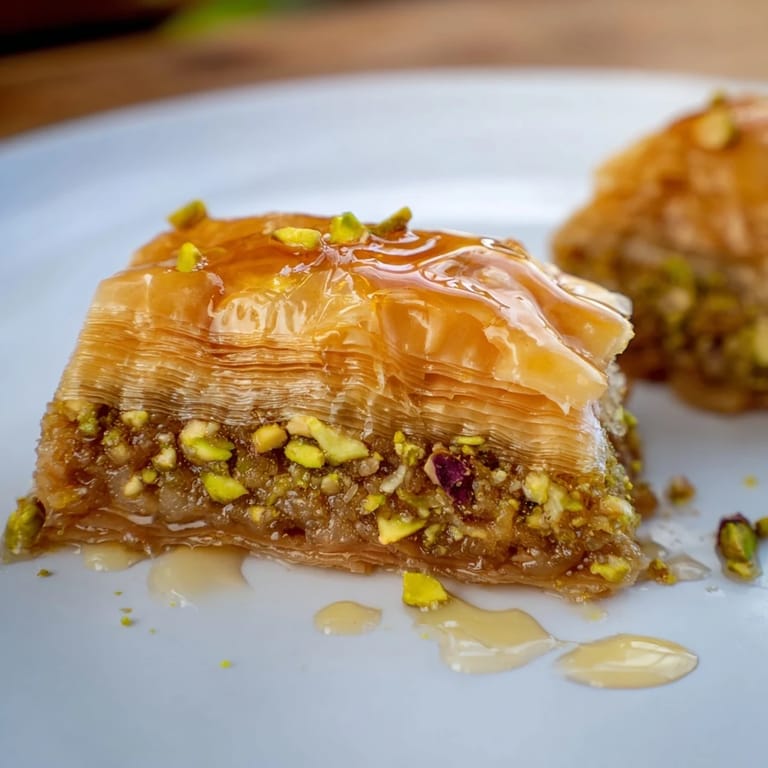
Baklava actually improves slightly over the first day or two as the syrup continues to settle, so there's no rush to eat it all immediately. Store it in an airtight container at room temperature—not the fridge, which will make the phyllo lose some of its crispness. I've served this as dessert after dinner, packed it for picnics, given it as gifts in pretty boxes, and even broken it into smaller pieces for coffee service, and it's been welcomed every time.
- If you want it to last longer than five days, freeze the baked baklava before adding syrup, then thaw and pour warm syrup when you're ready to serve.
- A small piece pairs beautifully with strong coffee or tea because the sweetness and richness need that contrast.
- If you're making this for someone with a nut allergy, this particular recipe unfortunately isn't adaptable, but the phyllo technique works with seeds or dried fruit if you ever want to experiment.
 Pin it
 Making baklava has taught me that some things are worth taking your time with, not because they're difficult, but because the slowness itself is part of what makes them special. Every time someone bites into a piece you've made, they're tasting butter, honey, nuts, and skill—and that's a lovely thing to share.
Recipe Questions & Answers
- → What type of nuts are used for the filling?
Hazelnuts and pistachios are finely chopped to create a flavorful nutty filling that complements the crisp phyllo layers.
- → How is the phyllo pastry prepared to achieve crispiness?
Each phyllo sheet is generously brushed with melted butter before layering, ensuring a golden, crisp texture after baking.
- → What is the purpose of the honey syrup?
The warm honey syrup, combined with sugar and lemon juice, is poured over the hot pastry to add sweetness and moisture that soaks into the layers.
- → Can other nuts be substituted in the filling?
Yes, walnuts can replace hazelnuts for a slightly different but equally delicious flavor and texture in the nut mixture.
- → How should the dessert be stored after preparation?
Keep it in an airtight container at room temperature for up to five days to maintain freshness and texture.