 Pin it
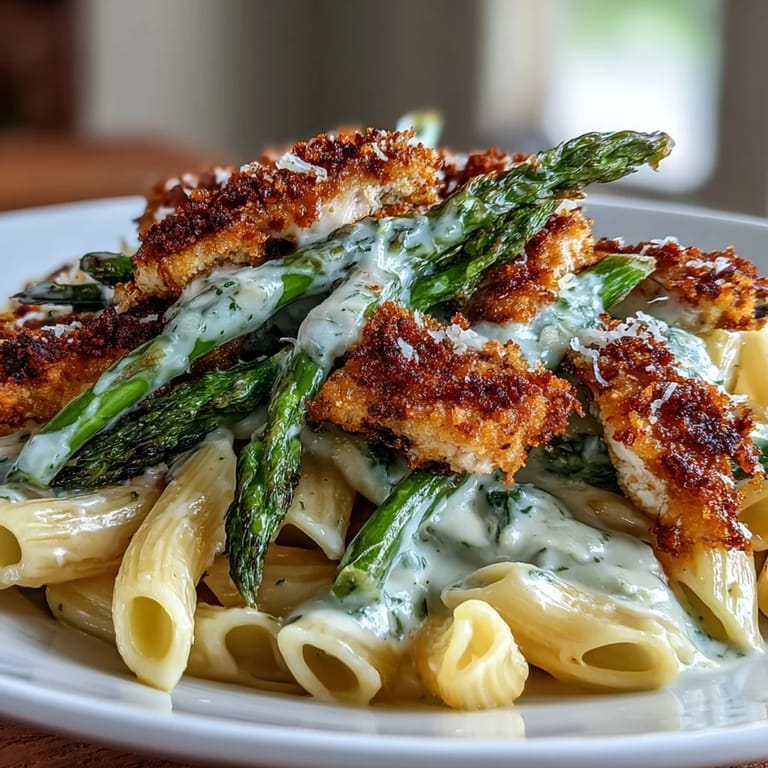
 There's something about the combination of crispy and creamy that stops me mid-bite every single time. My sister brought this pasta to a dinner party on a rainy Thursday, and honestly, I watched people abandon their conversations just to focus on their plates. The lemon brightness cuts through the richness in a way that feels almost elegant, yet it comes together in less time than it takes to stream a movie. That night, I realized asparagus didn't have to be a side dish—it could be the star.
I made this for my partner on an ordinary Tuesday when we both needed something to look forward to, and it turned into this moment where we actually sat down without our phones. The kitchen smelled like toasted garlic and bright lemon, and somehow that simple act of cooking together shifted the whole evening. Food has this quiet power sometimes.
Ingredients
- Penne or rigatoni (340 g/12 oz): The tube shapes catch all the creamy sauce in their little pockets, so don't shortcut this by using spaghetti.
- Boneless, skinless chicken breasts (2 large, sliced into strips): Slicing them yourself means they cook faster and more evenly than trying to pound them flat.
- Salt and pepper: Season the chicken generously because it's your only chance to build flavor before the sauce comes in.
- Garlic powder (1/2 tsp): This goes on the chicken to give it a subtle depth that fresh garlic alone can't quite achieve.
- Olive oil (2 tbsp total): Use a light hand here—you're not making a slick dish, just enough to prevent sticking.
- Asparagus (1 bunch, about 300 g/10 oz): Snap off those woody ends where they naturally break; your knife will thank you and your mouth will thank you more.
- Panko breadcrumbs (1/2 cup/50 g): Don't use regular breadcrumbs—panko gets crispier and stays that way longer once it hits the sauce.
- Parmesan cheese (1/2 cup/50 g total across topping and sauce): Fresh grated tastes completely different from the pre-grated stuff, and this recipe deserves the real deal.
- Asiago cheese (1/4 cup/25 g): It's nuttier than Parmesan and adds a subtle richness that makes people ask what you did differently.
- Unsalted butter (2 tbsp): The sauce needs control, so unsalted lets you season to taste.
- Garlic cloves (3, minced): The lemon zest goes in at the same moment, and they bloom together into something almost perfumy.
- Lemon zest and juice (1 whole lemon): This is where the magic happens—don't skip the zest, it's the soul of the sauce.
- Heavy cream (1 cup/240 ml): Full fat cream only; the light stuff breaks and leaves you with a grainy situation.
- Fresh parsley (1/4 cup/15 g chopped): Chop this right before serving so it stays bright and doesn't turn dark.
Tired of Takeout? 🥡
Get 10 meals you can make faster than delivery arrives. Seriously.
One email. No spam. Unsubscribe anytime.
Instructions
- Heat your oven and start the pasta water:
- Set the oven to 200°C (400°F) and get a large pot of salted water going—it should taste like the sea. While the water comes to a boil, you'll have time to prep everything else without feeling rushed.
- Cook the pasta to al dente:
- Add your pasta and stir it once so nothing sticks to the bottom, then set a timer for a minute less than the package says. Reserve a full half cup of starchy pasta water before draining—this liquid gold will help you adjust the sauce consistency later.
- Prepare and roast the asparagus:
- Toss your cut asparagus with olive oil, salt, and pepper on a baking sheet, then mix those cheeses with panko and coat the asparagus generously. Into the oven it goes for 10 to 12 minutes until the topping turns golden and you can see the asparagus starting to char at the edges.
- Sear the chicken until golden:
- Pat your chicken strips dry, season them with salt, pepper, and garlic powder, then get a large skillet properly hot over medium-high heat. The oil should shimmer and almost smoke—when the chicken hits the pan, listen for that aggressive sizzle, and don't move it around for a few minutes so it can develop that golden crust.
- Build the sauce with butter, garlic, and lemon:
- In that same skillet (the fond is pure flavor), melt your butter over medium heat and add the minced garlic along with lemon zest, stirring constantly for about a minute. You'll know it's ready when your kitchen smells like a bright, garlicky dream.
- Finish the sauce with cream and Parmesan:
- Pour in the lemon juice and watch it sizzle, then add the cream and bring everything to a gentle simmer. Reduce the heat and whisk in the Parmesan a little at a time so it melts smoothly without turning grainy—taste and adjust seasoning with salt and pepper.
- Combine pasta, chicken, and sauce:
- Add your cooked pasta and chicken back to the skillet, tossing everything together so every piece gets coated in that silky sauce. If it looks too thick, splash in a bit of that reserved pasta water until it reaches that perfect flowing consistency.
- Fold in the asparagus and finish:
- Gently add the roasted asparagus with all its crispy topping, using a light hand so you don't crush it into the sauce. Finish with a generous handful of fresh parsley right before plating.
 Pin it
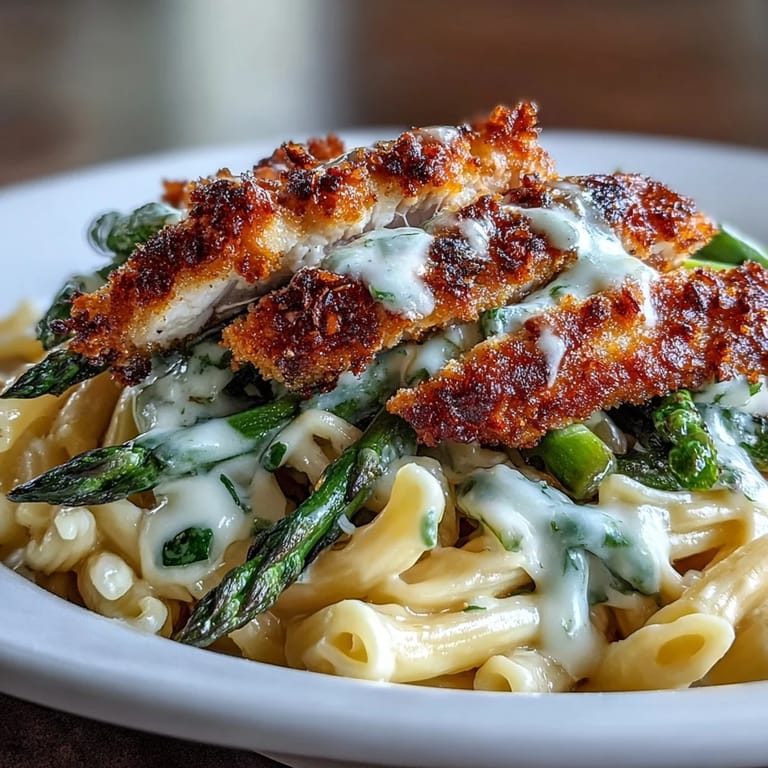
 There was a moment when my mom tasted this for the first time and said it reminded her of a restaurant she'd been meaning to take me to for years. We never made it to that restaurant, but somehow cooking this together in our kitchen felt even better. These are the meals that stick with you.
The Science of Crispy and Creamy
The contrast between that panko crust and the creamy sauce isn't just pleasant—it's actually what keeps your palate engaged the whole time you're eating. Texturally, your mouth never gets bored, and psychologically, that variety makes the dish feel more sophisticated than it actually is. I learned this the hard way after making a version without the topping and realizing I'd accidentally created something totally forgettable.
Timing and Temperature Matter More Than You Think
The first time I made this, I left the asparagus in the oven too long while I was distracted talking to someone, and it went from perfectly crisp-tender to almost burnt. That taught me to set a phone timer for literally every component because timing in this dish is tight but not impossible. The asparagus and chicken both cook in roughly the same window, so if you prep properly, everything comes together within a five-minute window of readiness.
Make It Your Own
The beautiful thing about this dish is how it accepts variations without complaining, so don't feel locked into my exact choices. I've made it with spinach instead of asparagus when that's what I had, and I've even added sun-dried tomatoes when I was feeling fancy. The lemon and cream framework is strong enough to support whatever vegetables or proteins speak to you.
- If Asiago feels like a fancy ingredient you can't find, just use extra Parmesan or even Pecorino Romano for a sharper edge.
- Double the panko topping if you're a texture person like me, and you can even roast it separately then sprinkle it on at the end for maximum crunch.
- A glass of cold Sauvignon Blanc or Pinot Grigio next to your plate transforms this from a weeknight dinner into something that feels intentional.
 Pin it
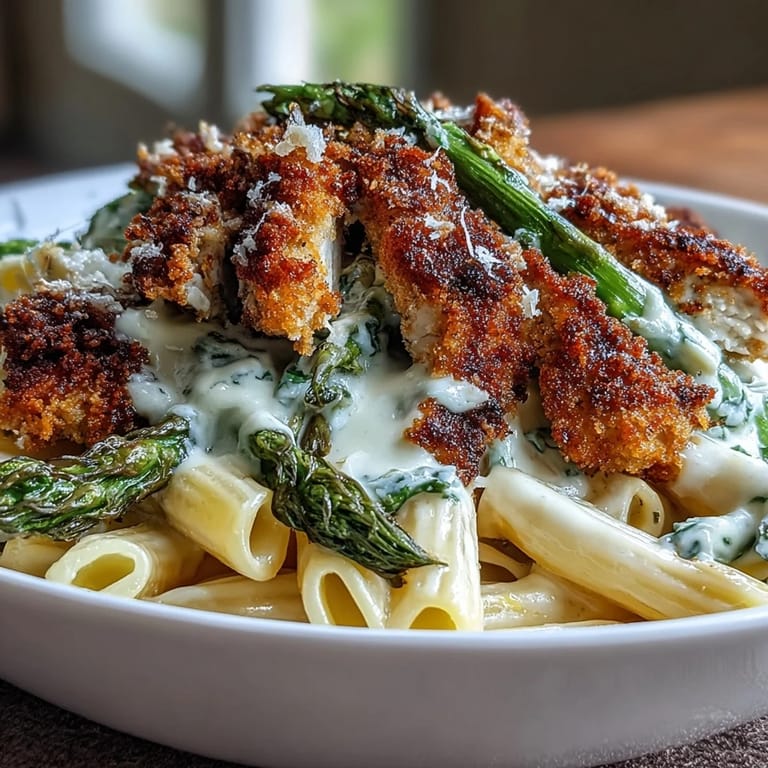
 This dish has become my answer to the question of what to cook when I want people to feel cared for without spending hours in the kitchen. It's the kind of meal that reminds you why cooking for others matters.
Recipe Questions & Answers
- → Can I use different pasta shapes?
Yes, fusilli, farfalle, or ziti work wonderfully. Choose shapes that catch the creamy sauce well in their crevices.
- → How do I store leftovers?
Refrigerate in an airtight container up to 3 days. The crispy topping will soften—reheat in a 350°F oven to restore some crunch.
- → Can I make this lighter?
Substitute half-and-half for heavy cream, though the sauce will be thinner. You can also reduce the amount of cheese slightly while maintaining flavor.
- → What vegetables can substitute asparagus?
Broccoli florets, green beans, or Brussels sprouts halved work well with the same roasting method and crispy topping.
- → Can I prep this ahead?
Cut chicken and asparagus, grate cheeses, and measure ingredients in advance. Cook everything just before serving for best texture and flavor.
- → Why reserve pasta water?
The starchy water helps thicken and emulsify the cream sauce, ensuring it clings perfectly to the pasta rather than pooling at the bottom.