 Pin it
 There's something magical about standing at the farmer's market on a warm afternoon, surrounded by vendors calling out their freshest picks, when you suddenly decide to build an entire meal around whatever colors catch your eye. That's exactly how this rainbow salad came into my life—not from a recipe book, but from the simple joy of wanting to eat something that looked like it belonged in a painting. The first time I assembled it, my kitchen smelled like fresh lemon and earth, and I realized I'd stumbled onto something that felt both exciting and effortless.
I made this for a picnic last summer where everyone was supposed to bring something light, and I watched people go back for thirds, piling more of those jewel-toned peppers onto their plates while swapping stories in the shade. That's when I knew this wasn't just a side dish—it was the kind of food that brings people together and gets them talking.
Ingredients
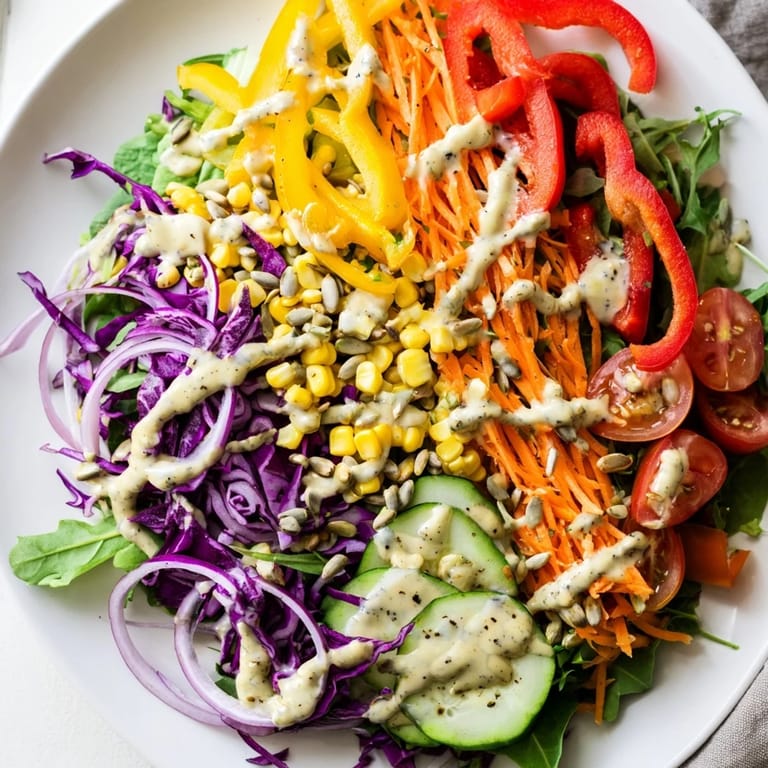
- Red and yellow bell peppers: These are your stars here, so choose peppers with glossy skin and no soft spots; they'll stay crunchier longer and taste sweeter.
- Carrot, julienned: I learned the hard way that thick carrot chunks don't absorb the dressing the way thin matchsticks do, so grab a julienne peeler if you have one.
- Purple cabbage, shredded: This holds its crunch for days and brings an earthy sweetness that balances the brightness of everything else.
- Cucumber and cherry tomatoes: Add these last if you're prepping ahead, since they release water and can soften the salad over time.
- Mixed salad greens: Arugula, spinach, or romaine all work beautifully; choose whatever feels freshest at your market.
- Sweet corn: Fresh or frozen and thawed tastes almost identical, and canned works in a pinch if you drain it well.
- Red onion: A thin slice adds bite without overpowering, and it won't leave your breath smelling like raw garlic.
- Tahini: This is the heart of the dressing; look for raw sesame paste without added oils, and stir it well before measuring.
- Lemon juice: Always squeeze fresh if you can; bottled changes the flavor in ways that catch up with you in every bite.
- Maple syrup or honey: A small touch balances the tahini's earthiness and helps emulsify the dressing into something silky.
- Olive oil: Use something you actually enjoy tasting, since it's not cooked away.
- Garlic: One clove minced is enough; too much turns the dressing harsh.
- Sunflower seeds and fresh herbs: These finish the dish with texture and brightness, but they're truly optional if you're in a hurry.
Tired of Takeout? 🥡
Get 10 meals you can make faster than delivery arrives. Seriously.
One email. No spam. Unsubscribe anytime.
Instructions
- Slice, shred, and arrange:
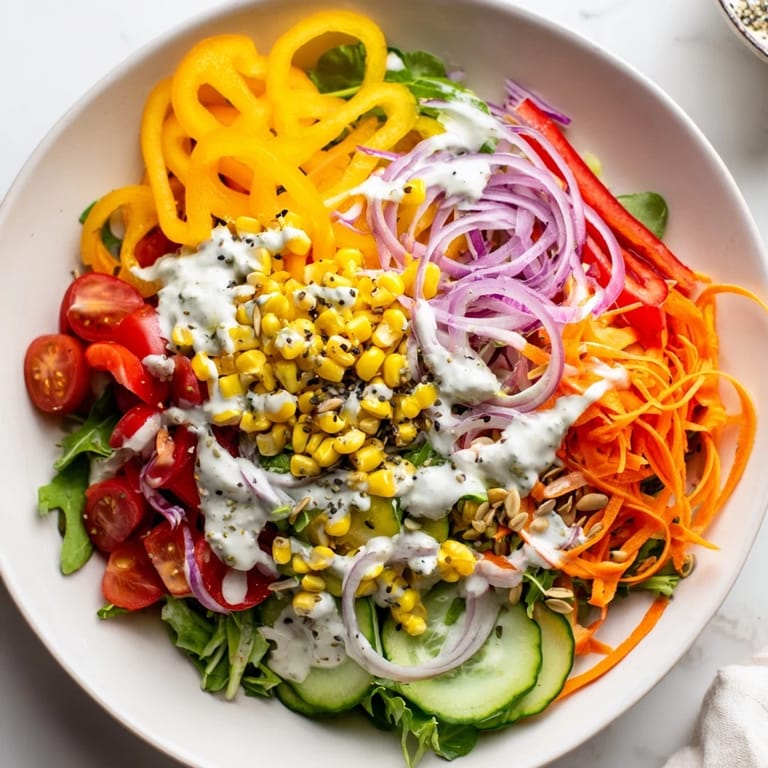
- Get all your vegetables prepped and nestled into a large bowl—there's something satisfying about seeing all those colors together before the dressing even touches them. Don't worry about perfect uniformity; what matters is that everything's cut roughly the same thickness so it eats evenly.
- Whisk the tahini magic:
- In a separate bowl, combine tahini, fresh lemon juice, maple syrup, olive oil, and minced garlic, whisking until smooth and creamy. Add water one tablespoon at a time, tasting as you go, until the dressing flows smoothly but still coats the back of a spoon—you want it pourable, not watery.
- Bring it together:
- Pour that golden dressing over your vegetables and toss gently with your hands or two large spoons, making sure every piece gets coated. The dressing will continue to coat as it sits, so don't oversaturate.
- Finish and serve:
- Scatter sunflower seeds and fresh herbs across the top if you're using them, then taste and adjust salt, pepper, or lemon to your preference. Serve right away for maximum crunch, or chill it for ten to fifteen minutes if you prefer things softer.
 Pin it
 There was a moment during that picnic when someone asked me the secret to the dressing, and I realized it wasn't really a secret at all—it was just tahini, lemon, and the willingness to taste as I went. That question made me understand that good food doesn't have to be complicated to feel special.
Seasonal Swaps and Variations
I've made this salad in every season, and it teaches you something new each time. In spring, I add fresh peas and tender new lettuces; in summer, I go heavy on the tomatoes and corn; in fall, I toss in thinly sliced beets and roasted squash; and in winter, I rely on hardy greens, shredded brussels sprouts, and whatever colorful storage vegetables have held up well. The beauty of this recipe is that it's a canvas, not a script.
Making It a Complete Meal
If you want to turn this into something more substantial, chickpeas are my go-to addition—a can drained and rinsed brings creaminess and protein without changing the light, fresh feeling. Grilled or baked tofu cubes work beautifully, as do edamame or white beans, and each adds its own quiet texture to the mix.
Storage and Make-Ahead Wisdom
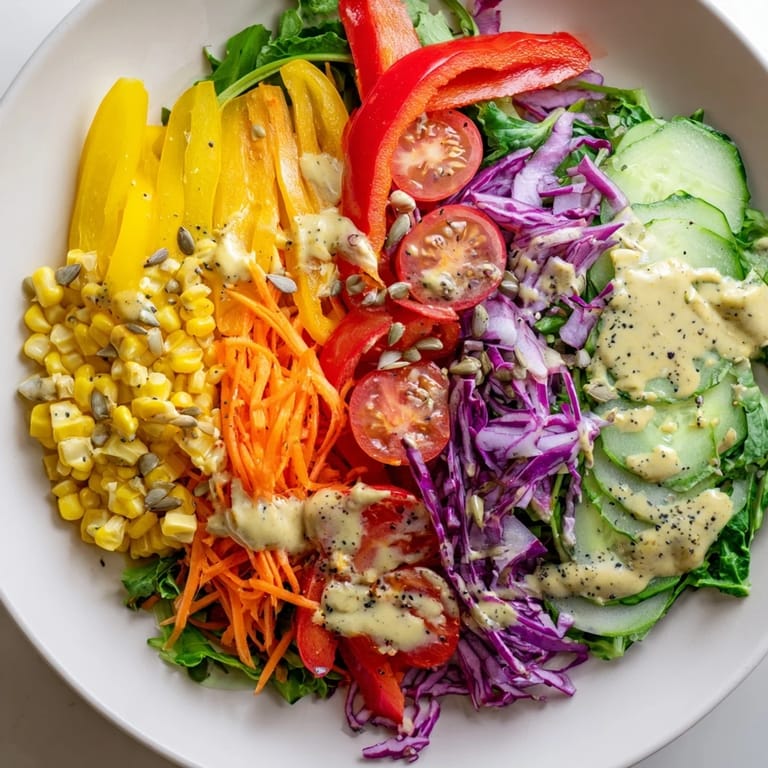
You can prep all the vegetables several hours ahead, but keep the dressing separate and store the softer vegetables like tomatoes and cucumber in their own container so you can assemble just before eating. This salad stays crisp and bright for a day, though the dressing gets absorbed as it sits—which some people love and others find too wet, so taste and adjust if you're eating leftovers.
- Make the dressing up to three days ahead and keep it in a sealed jar in the fridge, where it will thicken slightly and intensify in flavor.
- If you're packing this for lunch, keep the dressing in a small container and dress it right before eating to preserve the crunch.
- Leftovers are delicious as a base for grain bowls—just add rice or quinoa under the salad and you've got a completely new meal.
 Pin it
 This salad reminds me that the simplest meals are often the ones that bring the most joy, especially when they're built from fresh ingredients you chose yourself. It's the kind of food that makes you feel good the moment you eat it.
Recipe Questions & Answers
- → What vegetables are used in the salad?
The salad features red and yellow bell peppers, carrots, purple cabbage, cucumber, cherry tomatoes, sweet corn, red onion, and mixed salad greens.
- → How is the dressing prepared?
The dressing blends tahini, fresh lemon juice, maple syrup or honey, olive oil, minced garlic, salt, black pepper, and water for consistency.
- → Can toppings be added to the salad?
Yes, optional toasted sunflower seeds and fresh herbs like parsley, cilantro, or mint add texture and flavor.
- → Is the salad suitable for vegan diets?
Using maple syrup instead of honey keeps the dish vegan. Tahini and all vegetables are naturally plant-based.
- → How long does preparation take?
Preparation takes about 20 minutes with no cooking time required.
- → Can any ingredients be substituted?
Vegetables can be swapped according to season or preference. For extra protein, chickpeas, tofu, or edamame are great additions.