 Pin it
 The smell of browning sausage mixed with garlic hit me the moment I walked into my neighbor's kitchen one Sunday afternoon. She was assembling lasagna for her son's birthday dinner, and I watched her layer noodles and cheese with the kind of ease that only comes from making something a hundred times. I went home that night determined to recreate it, armed with a scribbled list on a napkin and way too much confidence. My first attempt was lopsided and soupy, but by the third try, I had it down—and now it's the dish I make whenever I want to feel like I've really fed someone well.
I made this for my brother's engagement party, doubling the recipe and baking two pans side by side. The kitchen was chaos—sauce splatters on the backsplash, cheese shreds everywhere—but when I pulled those golden, bubbling pans out of the oven, the whole room went quiet. Everyone lined up with plates, and by the end of the night, both dishes were scraped clean. My brother still asks me to make it every time he visits, and I pretend to be annoyed, but honestly, I love that it became our thing.
Ingredients
- Lasagna noodles: Uncooked noodles work beautifully here because they soak up all the sauce while baking, and you skip the annoying step of boiling and draining slippery pasta.
- Ricotta cheese: This is what makes the layers creamy and rich, and mixing it with an egg helps it set up instead of turning runny.
- Mozzarella cheese: Use the shredded kind for easy layering, and don't skimp—it's what creates those long, melty cheese pulls everyone loves.
- Parmesan cheese: Freshly grated Parmesan on top adds a salty, nutty crust that gets golden and crispy in the oven.
- Ground beef and Italian sausage: The combination gives you the best of both worlds—beef for heartiness and sausage for that fennel-spiced flavor that tastes unmistakably Italian.
- Marinara sauce: A good quality jarred sauce works perfectly, or use homemade if you have it on hand.
- Garlic: Fresh garlic sautéed in olive oil is the base of the whole sauce, so don't skip this step or use the pre-minced stuff.
- Fresh basil: Stirring chopped basil into the sauce at the end adds a bright, herby note that makes the whole dish smell like an Italian grandmother's kitchen.
- Olive oil: Just enough to get the garlic fragrant and prevent sticking.
- Salt and black pepper: Taste your sauce before layering and adjust—the seasoning should be bold because it has to flavor all those noodles and cheese.
Tired of Takeout? 🥡
Get 10 meals you can make faster than delivery arrives. Seriously.
One email. No spam. Unsubscribe anytime.
Instructions
- Preheat and prep:
- Get your oven to 375°F so it's ready when you finish assembling. This is also a good time to clear some counter space because lasagna gets messy fast.
- Start the sauce:
- Heat olive oil in a large skillet and add the minced garlic, letting it sizzle until your kitchen smells amazing, about a minute. Don't let it brown or it'll turn bitter.
- Brown the meat:
- Add the ground beef and sausage, breaking it up with a wooden spoon as it cooks until no pink remains. Drain off the excess fat so your lasagna doesn't turn greasy.
- Simmer with marinara:
- Stir in the marinara sauce, salt, pepper, and chopped basil, then let it simmer gently for 10 minutes to let the flavors meld together. Taste it and adjust the seasoning if needed.
- Mix the ricotta:
- In a bowl, beat together the ricotta and egg until smooth and creamy. This mixture will spread more easily and hold its shape once baked.
- Start layering:
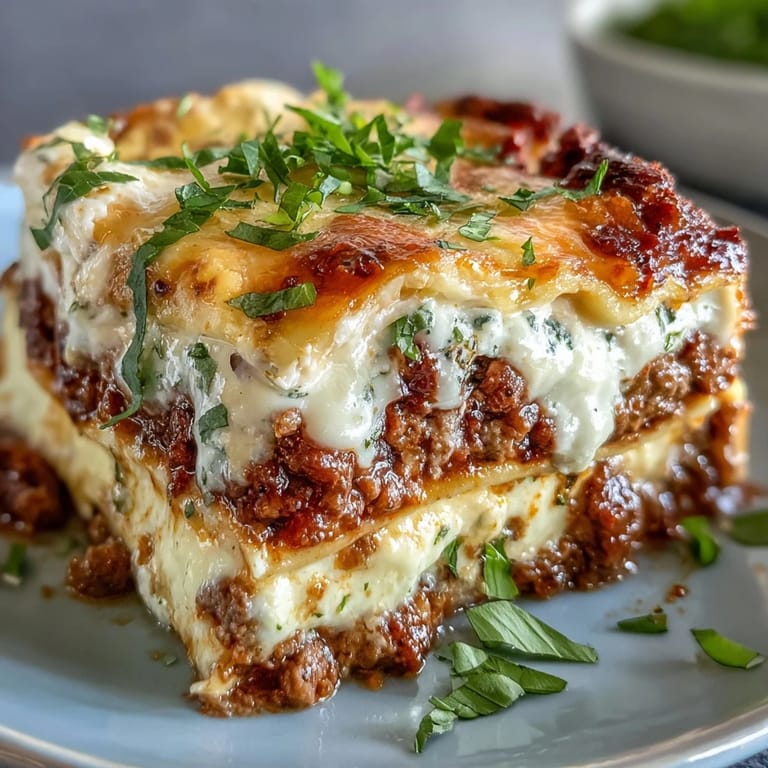
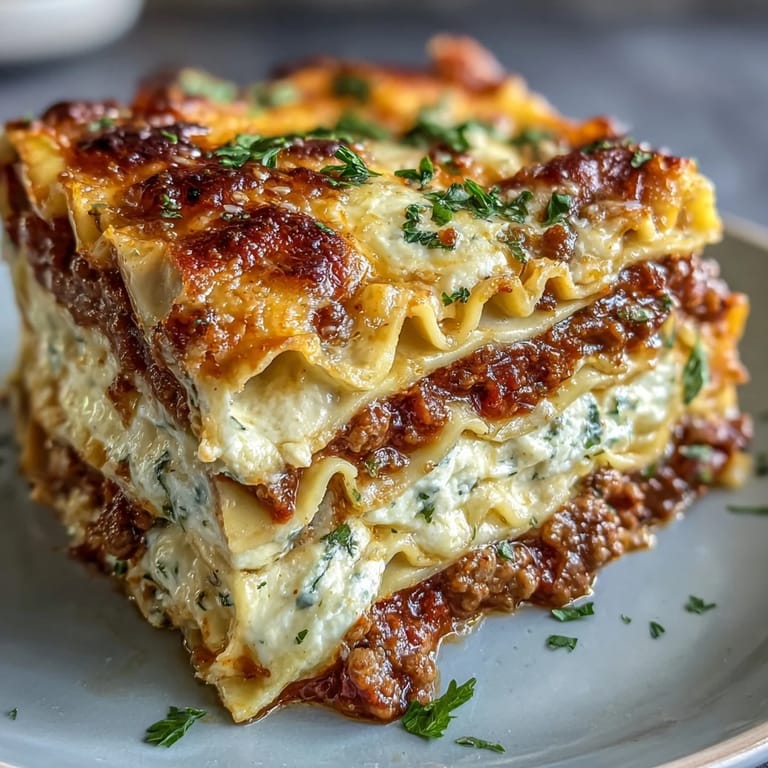
- Spread a thin layer of meat sauce on the bottom of your baking dish to prevent sticking, then lay down four lasagna noodles, overlapping them slightly. The noodles will expand as they cook, so don't worry if they don't cover every inch.
- Add ricotta and cheese:
- Spread half the ricotta mixture over the noodles, sprinkle with a third of the mozzarella, then spoon more meat sauce on top. Press gently so everything settles together.
- Repeat the layers:
- Add another layer of noodles, the remaining ricotta, more mozzarella, and more sauce. You're building flavor and structure with every layer.
- Finish with cheese:
- Top with the last noodles, the rest of the meat sauce, and a generous blanket of mozzarella and Parmesan. This top layer is what gets golden and bubbly, so be generous.
- Bake covered:
- Cover the dish tightly with foil and bake for 25 minutes. The foil traps steam, which helps cook the noodles through without drying out the top.
- Bake uncovered:
- Remove the foil and bake another 15 minutes until the cheese is melted, golden, and bubbling around the edges. The smell will be irresistible.
- Rest before serving:
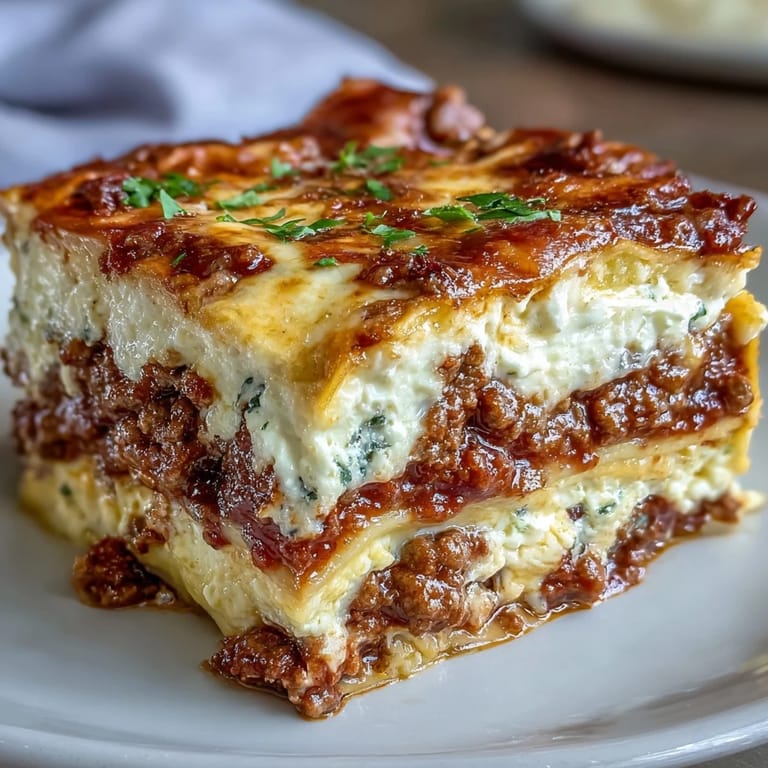
- Let the lasagna sit for at least 15 minutes before slicing. This gives the layers time to set so your slices hold together instead of sliding apart on the plate.
 Pin it
 One winter night, I made this for a potluck and forgot to label it. By the time I got there, someone had already cut into it, and a small crowd had gathered around the pan with forks. I never did get a piece myself that night, but watching people go back for seconds—and thirds—felt better than eating it. It's the kind of dish that turns a regular dinner into something people remember, and that's worth more than any leftovers.
Storing and Reheating
Lasagna keeps beautifully in the fridge for up to four days, tightly covered with foil or plastic wrap. I like to slice it into portions first so I can grab a single serving without dismantling the whole pan. Reheat individual slices in the microwave with a damp paper towel on top to keep them from drying out, or warm them in a 350°F oven for about 20 minutes if you want the cheese to get melty again. For longer storage, wrap slices or whole pans tightly in foil and freeze for up to two months—just thaw overnight in the fridge before reheating.
Variations to Try
I've tucked sautéed spinach and mushrooms into the ricotta layers before, and it adds an earthy richness that makes the lasagna feel a little more grown-up. You can swap the meat for crumbled turkey or even go fully vegetarian with roasted vegetables like zucchini, bell peppers, and eggplant. If you want to lighten it up, use part-skim ricotta and mozzarella, though I'll admit the whole milk versions give you that indulgent, restaurant-quality creaminess. For a spicy kick, use hot Italian sausage or stir in a pinch of red pepper flakes with the marinara.
Serving Suggestions
This lasagna is hearty enough to be the star of the meal, but I almost always serve it with a simple green salad dressed in olive oil and lemon, plus a basket of warm garlic bread for soaking up any extra sauce on the plate. A glass of Chianti or any robust Italian red wine cuts through the richness beautifully, though sparkling water with lemon works just as well if you're keeping it casual.
- Pair with a crisp Caesar salad or arugula with shaved Parmesan.
- Serve garlic bread or focaccia on the side for mopping up sauce.
- Finish with a light dessert like tiramisu or lemon sorbet to balance the richness.
 Pin it
 There's something deeply satisfying about pulling a pan of lasagna out of the oven and knowing you've made something that will feed people well and make them happy. It's the kind of recipe that turns into tradition without you even trying.
Recipe Questions & Answers
- → Can I make this ahead of time?
Yes, assemble the entire dish up to 24 hours before baking and refrigerate. Add 5-10 minutes to the covered baking time if cooking from cold. You can also freeze the unbaked lasagna for up to 2 months—thaw overnight in the refrigerator before baking.
- → Why is resting time important?
Resting for 15 minutes allows the layers to set, making clean slices possible. Cutting too soon will cause the fillings to slide and create a messy presentation. The texture also improves as the sauces redistribute.
- → Can I use no-boil noodles instead?
Absolutely. No-boil noodles work perfectly in this preparation and may even reduce the total baking time slightly. If using traditional boiled noodles, cook them to al dente before assembling to prevent mushiness.
- → How do I know when it's done?
The lasagna is complete when the cheese is golden brown and bubbly, and you can see the sauce actively bubbling around the edges. A knife inserted into the center should come out hot.
- → Can I make it vegetarian?
Replace the ground beef and sausage with plant-based crumbles or increase vegetables like mushrooms, spinach, and zucchini. You may want to add extra herbs and seasonings to maintain the depth of flavor.
- → What's the best way to reheat leftovers?
Reheat individual portions in the microwave at 50% power to prevent rubbery cheese, or cover the entire dish with foil and warm at 350°F until heated through. Add a splash of water or sauce if it seems dry.