 Pin it
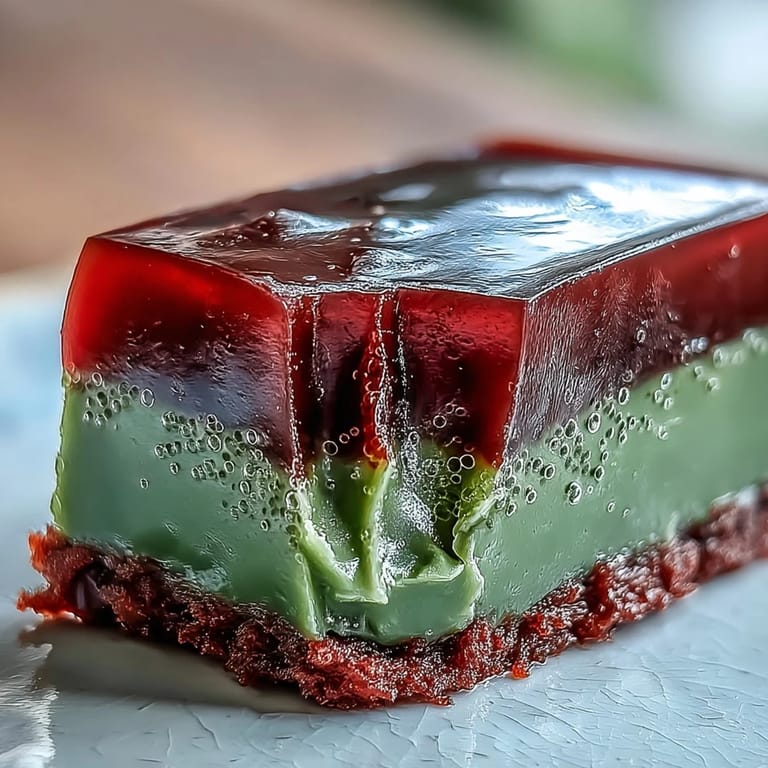
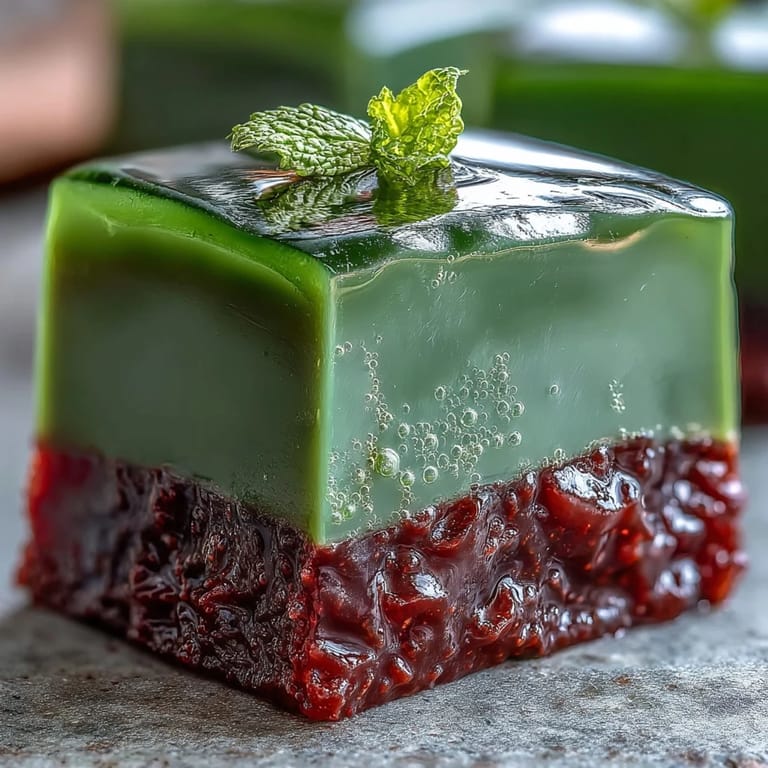
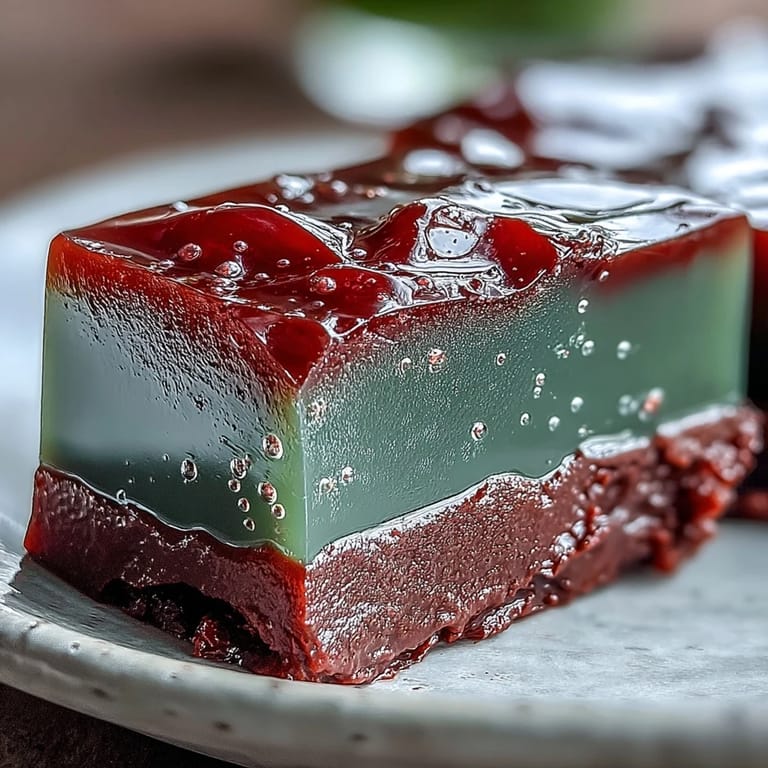
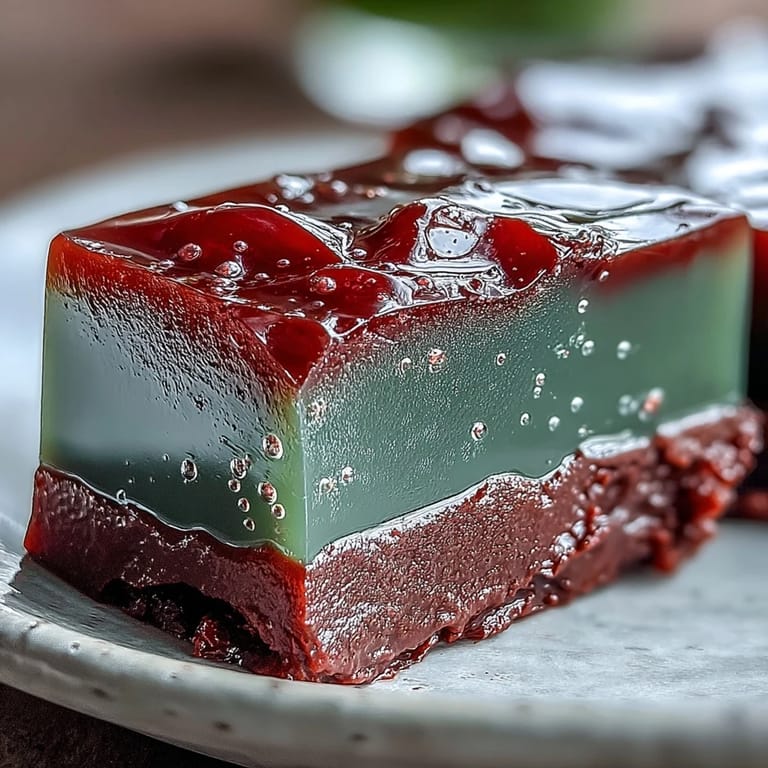
 The first time I made yokan with a matcha layer was purely by accident—it was a rainy afternoon and I had leftover red bean paste from another dessert. I remember the way the thick aroma of sweet beans drifted through my kitchen as I waited for the layers to set. The joy came as I unmolded it: two jewel-toned bands, glistening side by side, far prettier than I’d anticipated. There’s something quietly therapeutic about watching the glossy jelly firm up, then slicing it into neat rectangles. It still surprises me how such a delicate treat can come together with so few ingredients.
One late summer evening, I made this yokan for friends visiting from abroad. The kitchen was loud with laughter as we debated who dared the most matcha in their drinks, but everything went quiet the moment these little green-and-red bars hit the table. Someone snapped a photo before tasting, and another tried (in vain) to guess the secret to the silky layers. Eating together, we noticed how the sweetness paired perfectly with strong tea, an unspoken nod to its roots. Those plates were spotless within minutes.
Ingredients
- Sweetened red bean paste (koshian): Smooth koshian gives the jelly its classic luxuriously fine texture; if possible, seek out brands that list only beans, sugar, and a touch of salt.
- Water: Essential for dissolving the agar and creating the right degree of jiggle in the finished yokan; avoid hard or mineral-rich water if you can.
- Agar-agar powder: This seaweed-derived gelling agent is the magic behind yokan’s firm set—measure carefully, as too much leads to rubbery results.
- Sugar: Added to the matcha layer for balanced sweetness; you can tweak the amount to match your sweet tooth.
- Matcha green tea powder: High-quality matcha produces the most vivid color and a lovely bitterness, so sift it well to avoid lumps in your layer.
Tired of Takeout? 🥡
Get 10 meals you can make faster than delivery arrives. Seriously.
One email. No spam. Unsubscribe anytime.
Instructions
- Bloom the agar for red bean layer:
- Combine water and agar-agar powder in a saucepan, then stir and gently heat until you see it go completely clear and slightly thickened—about 1 to 2 minutes simmering softly.
- Create the red bean jelly:
- Take the pot off the heat and whisk in the sweetened red bean paste; be patient, as the paste melts into a seamless, satiny base with tiny bursts of earthy bean fragrance.
- Set the first layer:
- Pour the mixture into a rectangular mold slowly to avoid air bubbles; use a spatula to coax it into corners and skim off any foam before letting it cool for 10 minutes, then refrigerate for 30 minutes to set partway.
- Make the matcha jelly:
- In a clean saucepan, blend water and agar-agar, heating it just until the mixture loses all cloudiness—be sure to stir constantly so it doesn’t stick or scorch.
- Whisk in matcha and sugar:
- Lower the heat and sprinkle in the sugar and sifted matcha powder, vigorously whisking as the kitchen fills with the soft, grassy scent of green tea; check carefully for any lurking lumps.
- Layer the matcha:
- Let your matcha mixture cool to just warmer than room temp, then pour it gently over the now-firm red bean layer—listen for the faint click of the mold when it settles, then refrigerate again for at least 1 hour to finish setting.
- Unmold and serve:
- Run a thin knife around the edges, invert onto a cutting board, and slice into neat bars or squares; serve chilled for the cleanest flavors and loveliest sheen.
 Pin it
  Pin it
 The first time I shared this yokan with my grandmother, she silently reached for a second piece then quietly said it tasted “like spring in Kyoto.” In that brief moment, what started as an experiment felt a little bit like a gift back to her and myself.
Layering with Ease
If your kitchen tends to run warm, you might find the layers taking longer to set—chill the mold in advance and don’t be afraid to extend the fridge time. A sharp knife, lightly dampened, gives the cleanest cuts, especially on humid days. The most fun part is deciding how thick to make each layer: symmetry is lovely, but sometimes a bold matcha top wins all the compliments.
Serving Suggestions for Yokan
While yokan shines on its own, pairing it with unsweetened sencha or a light oolong truly balances the flavors. If you feel playful, scatter a few edible flowers or gold leaf atop each slice—the look alone invites conversation. Leftovers actually improve overnight, absorbing flavors more deeply and gaining an even silkier bite.
If Something Goes Wrong
Don’t let a less-than-perfect set deter you; yokan can still taste amazing even if the layers blur or the surface isn’t glassy. Once, my batch looked wobbly but tasted so right that no one cared. Here’s what helped me most:
- Let the agar simmer for a full minute so it activates completely.
- If you spot bubbles on top, skim with a spoon before chilling.
- For neater edges, run your knife under hot water between each slice.
 Pin it
  Pin it
 However you serve it, yokan always surprises someone at the table—it’s proof that something so simple can be quietly spectacular. Enjoy the calm that comes with each glossy slice.
Recipe Questions & Answers
- → How do I adjust the firmness of yokan?
Increase agar-agar slightly for a firmer, more gelatinous bite; reduce a touch for a softer, silkier texture. Small adjustments (about 0.5–1 g) make a noticeable difference—dissolve fully and test a small portion if unsure.
- → Which type of red bean paste is best?
Use smooth anko (koshian) for an even, glossy layer and a refined mouthfeel. Chunky paste (tsubuan) can work but will yield a coarser texture and may affect how cleanly the layers slice.
- → How can I get a vivid matcha layer?
Sift matcha to remove lumps and use high-quality, bright green matcha for the best color and aroma. Dissolve matcha into the warm (not hot) agar mixture to preserve color and avoid bitterness; adjust sugar to balance flavor.
- → What’s the best way to pour the matcha layer without disturbing the red bean base?
Cool the matcha mixture until warm but still pourable, then gently pour over the back of a spoon or the side of the mold to slow the flow. Ensure the base is lightly set but not fully cold to help layers adhere.
- → How long does yokan keep and how should it be stored?
Store yokan refrigerated in an airtight container; it keeps well for 3–4 days. Avoid freezing—texture and water separation can be affected. Serve chilled for the best mouthfeel.
- → Can I substitute agar-agar with gelatin or other gelling agents?
Gelatin behaves differently (softer, melts at lower temps) and is not suitable for vegetarian diets. If substituting, expect texture and setting differences; follow manufacturer guidance and test small batches.