 Pin it
 There's something about a creamy, bubbling casserole that makes you feel like you're taking care of yourself, even when you're supposed to be avoiding carbs. I discovered this cheesy cauliflower mac when I was tired of sad, spiralized vegetable dishes and wanted something that actually felt indulgent. The first time I pulled it from the oven, the kitchen smelled like a proper cheese sauce, not like health food, and I knew I'd found something worth making again.
I made this for a friend who'd just started eating low-carb, and she actually got quiet while eating—the good kind of quiet, where you're just focused on how much you're enjoying your food. She asked for the recipe before dessert, which tells you everything.
Ingredients
- Cauliflower florets (1 large head): The vegetable backbone of this dish; choose florets that are similar in size so they cook evenly and don't turn to mush.
- Unsalted butter (2 tbsp): Use real butter for flavor—it's the foundation of a silky sauce, and it matters more than you'd think.
- Almond flour (2 tbsp): This acts as a thickener without the carbs of wheat flour; coconut flour works but absorbs more liquid, so adjust slowly.
- Whole milk (1 cup): Full-fat is your friend here because it creates that velvety texture; if you must use almond milk, choose an unsweetened version to avoid sweetness.
- Sharp cheddar cheese (1 cup shredded): Sharp varieties have more flavor than mild, so you don't need as much to taste truly cheesy.
- Mozzarella cheese (1/2 cup shredded): This stretches beautifully and adds creaminess without overwhelming the cheddar flavor.
- Parmesan cheese (1/4 cup plus 1/4 cup for topping): The grated version melts fastest; it adds a subtle nuttiness that keeps the sauce from tasting one-note.
- Garlic and onion powders (1/2 tsp each): Don't skip these—they add depth that makes people ask what you did differently.
- Ground mustard (1/4 tsp, optional): A tiny pinch brightens the cheese flavor without making anything taste like mustard.
Tired of Takeout? 🥡
Get 10 meals you can make faster than delivery arrives. Seriously.
One email. No spam. Unsubscribe anytime.
Instructions
- Heat and prep:
- Preheat your oven to 400°F and lightly grease a 9x13-inch baking dish. This temperature gets everything bubbling and golden without overcooking the delicate cauliflower.
- Cook the cauliflower:
- Bring salted water to a boil and add your florets, cooking them for 4–5 minutes until they're just barely tender. The moment they're fork-tender, drain them in a colander and pat them completely dry with paper towels—any excess water will dilute your sauce.
- Arrange your base:
- Spread the drained cauliflower across the baking dish in a single layer. This ensures every floret gets coated with the good stuff.
- Build the sauce:
- Melt butter in a medium saucepan over medium heat, then whisk in almond flour and cook it for a full minute to remove any raw taste. Slowly pour in milk while whisking constantly—this prevents lumps and creates a smooth base. Keep whisking for 2–3 minutes until the mixture starts to thicken slightly.
- Add the cheese:
- Lower the heat to low and add your shredded cheeses one type at a time, stirring gently until each is melted and incorporated. Add garlic powder, onion powder, ground mustard, salt, and pepper—taste as you go because every palate is different.
- Combine and top:
- Pour the warm cheese sauce over the cauliflower and gently stir to coat everything evenly. Sprinkle the additional Parmesan and cheddar on top.
- Bake until golden:
- Bake for 15–20 minutes until the sauce is bubbling around the edges and the top is golden. If you want it extra crispy, you can broil it for 2–3 minutes at the very end, but watch it constantly.
- Finish and serve:
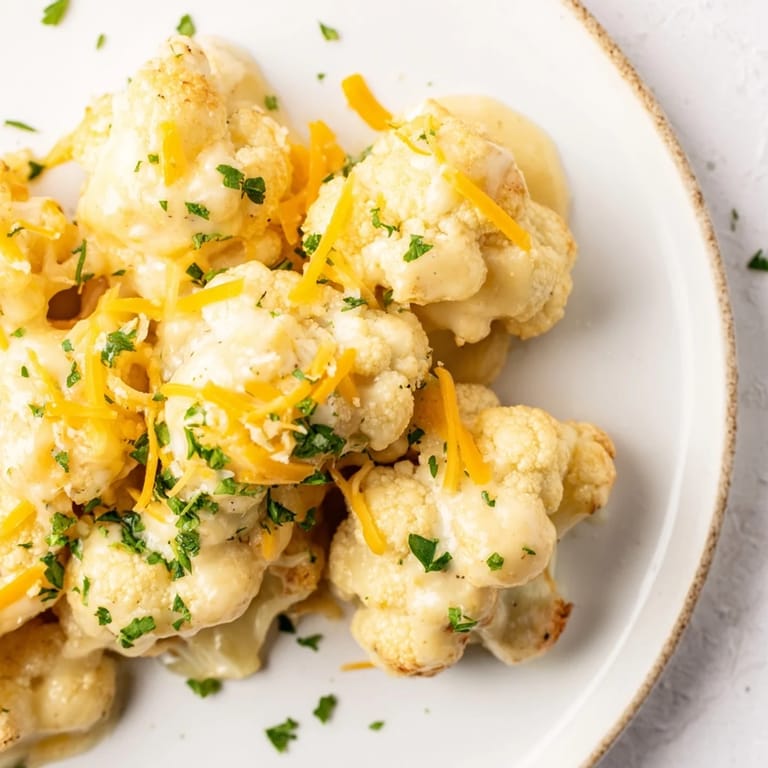
- Let it rest for a minute, add a scatter of fresh parsley if you have it, and serve while it's still hot and creamy.
 Pin it
 This dish sits at that perfect intersection of comforting and responsible, which is why it keeps reappearing on weeknight dinner rotations. There's something quietly satisfying about eating something that tastes like indulgence but leaves you feeling energized instead of sluggish.
Why This Works Better Than Pasta Mac and Cheese
Cauliflower has a neutral taste and porous texture that soaks up cheese sauce beautifully, unlike pasta which just sits there. The florets roast slightly in the oven, developing subtle caramelized edges, which adds a quiet depth that pure starch never could. You're not trying to recreate boxed mac and cheese—you're embracing a completely different dish that happens to feel just as satisfying.
Sauce Troubleshooting
If your sauce breaks or looks grainy, you've probably rushed it or used too-high heat. If it's too thick, whisk in a tablespoon of milk at a time until you reach silky consistency. If it's too thin, sprinkle in a tiny bit more almond flour mixed with a tablespoon of milk, whisking constantly, and let it cook for another minute. A good cheese sauce should coat the back of a spoon without running off immediately—that's your visual cue.
Variations Worth Trying
Once you master the basic sauce, you can play with it endlessly. Gruyère adds earthiness, smoked paprika brings a whisper of smokehouse flavor, and a tiny pinch of cayenne wakes everything up without making it spicy. I've mixed in roasted broccoli instead of cauliflower when I had it on hand, and it worked beautifully. Some people stir in crispy bacon or sautéed mushrooms, which turns this from a side dish into something hearty enough to stand alone.
- Try swapping cheese varieties—Monterey Jack melts silkily, and white cheddar tastes slightly sharper than orange.
- Add cooked broccoli, roasted mushrooms, or crumbled bacon to bulk it up and change the flavor profile.
- For extra richness, use heavy cream instead of milk, but then reduce it slightly because it's thicker to begin with.
 Pin it
 This is the kind of recipe that quietly proves you don't have to choose between eating well and eating deliciously. Serve it with grilled chicken, a crisp salad, or honestly, just by itself when you need something that tastes like home.
Recipe Questions & Answers
- → Can I use different cheeses for the sauce?
Yes, swapping cheddar with Gruyère or Monterey Jack can add unique flavors and enhance creaminess.
- → How do I ensure the cauliflower stays tender yet firm?
Blanch cauliflower florets for 4-5 minutes until just tender before baking to maintain texture without mushiness.
- → Is almond flour necessary for the sauce?
Almond flour thickens the sauce while keeping it low-carb; coconut flour is a suitable nut-free substitute.
- → What can I do for a crispier topping?
Broil the dish for 2-3 minutes at the end of baking to achieve a golden, crispy cheese crust.
- → How can I adjust the dish for additional flavor?
Add a pinch of smoked paprika to the sauce or topping to introduce a smoky depth to the profile.
- → What pairs well with this cheesy cauliflower dish?
Serve alongside grilled chicken or a fresh, crisp salad to complete a balanced, satisfying meal.