 Pin it
 My neighbor knocked on my door one Tuesday evening holding a brown paper bag of salmon fillets from the market, asking if I knew how to cook them without making them dry. I grabbed honey from the pantry, garlic from the bowl on the counter, and we figured it out together in under half an hour. The glaze bubbled and caramelized in the oven, filling the kitchen with a smell so good she texted me the next morning asking for the recipe. That improvised dinner became the dish I make whenever I want something impressive without the stress.
I served this salmon to my in-laws the first time they visited our new apartment, and I watched my father-in-law, who usually critiques everything, scrape his plate clean and ask for seconds. My mother-in-law leaned over and whispered that she never thought fish could taste this good at home. It became the dish that proved I could actually cook, even though all I did was brush on a glaze and let the oven work its magic.
Ingredients
- Salmon fillets: I prefer skin-on because it helps the fish hold together and gets crispy if you sear it, but skinless works perfectly fine and saves a step.
- Honey: This is what creates that glossy, caramelized coating, and it balances the saltiness of the soy sauce beautifully.
- Unsalted butter: Melted butter adds richness and helps the glaze cling to the salmon without making it greasy.
- Garlic: Fresh minced garlic is essential here, the jarred stuff just does not have the same punch or fragrance.
- Soy sauce: A tablespoon is all you need to add savory depth, and gluten-free soy sauce or tamari works just as well.
- Lemon juice: Freshly squeezed lemon cuts through the sweetness and keeps the glaze from feeling heavy.
- Dijon mustard: Optional, but it adds a subtle tang and helps emulsify the glaze so it coats evenly.
- Parsley and lemon wedges: A sprinkle of fresh parsley and a squeeze of lemon at the end brightens the whole plate.
Tired of Takeout? 🥡
Get 10 meals you can make faster than delivery arrives. Seriously.
One email. No spam. Unsubscribe anytime.
Instructions
- Prep the oven and salmon:
- Preheat your oven to 200 degrees Celsius and line a baking tray with parchment paper to prevent sticking. Pat the salmon fillets completely dry with paper towels, then season both sides lightly with salt and pepper.
- Make the glaze:
- In a small bowl, whisk together the honey, melted butter, minced garlic, soy sauce, lemon juice, and Dijon mustard until smooth. The glaze should be glossy and pourable, not thick.
- Brush and roast:
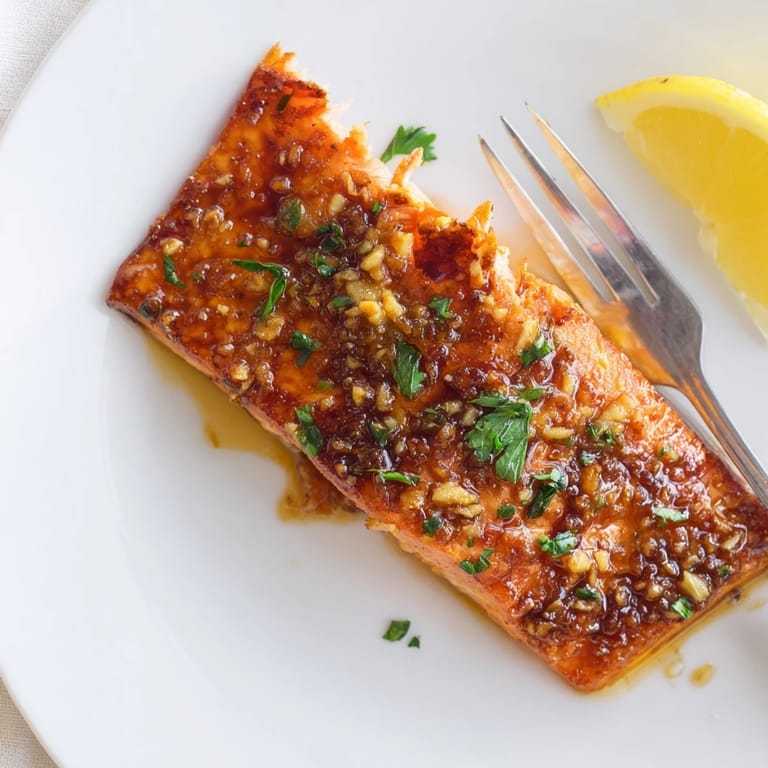
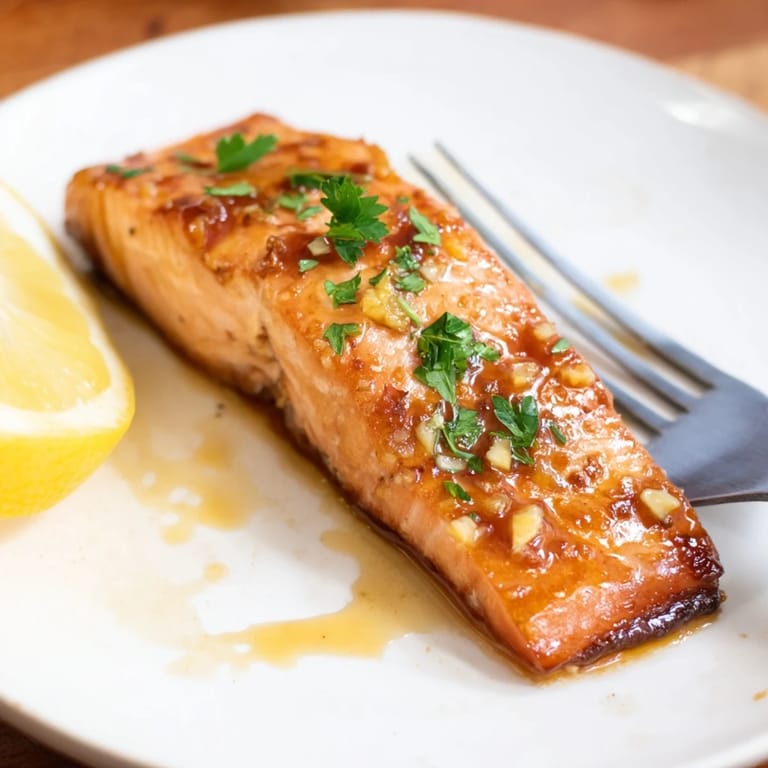
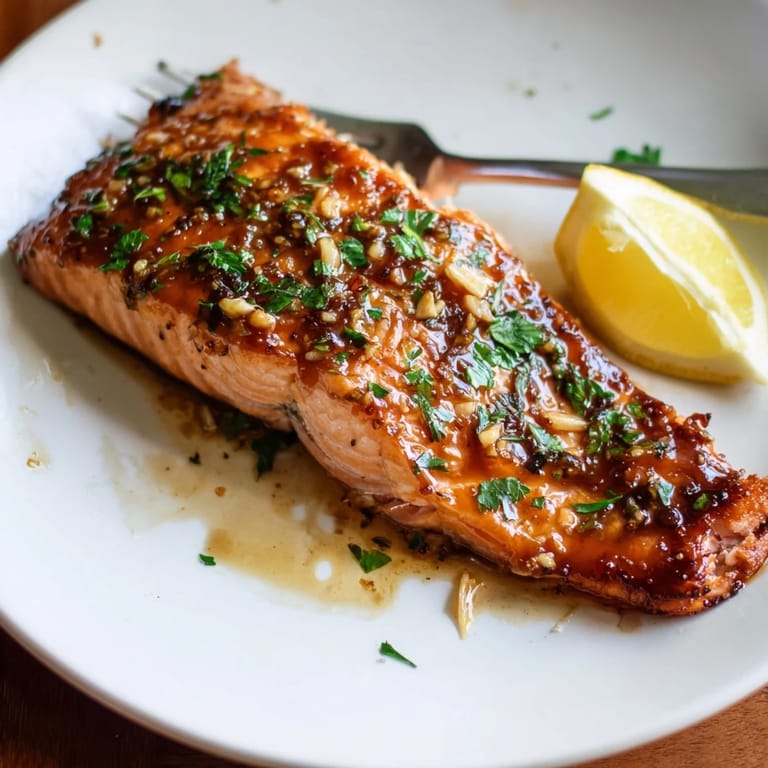
- Place the salmon on the prepared tray and brush the glaze generously over the top and sides of each fillet, saving a little for later. Roast for 12 to 15 minutes, until the salmon flakes easily with a fork and the glaze has caramelized into a shiny coating.
- Broil for extra caramelization:
- If you want deeper color and a slightly crispy top, switch the oven to broil for the final 1 to 2 minutes. Watch it closely because honey can go from caramelized to burnt in seconds.
- Finish and serve:
- Remove the tray from the oven, spoon any pan juices over the salmon, and sprinkle with chopped parsley. Serve immediately with lemon wedges on the side.
 Pin it
 One night I made this salmon for a friend going through a rough breakup, and she sat at my kitchen table eating straight from the tray, licking her fingers and laughing for the first time in weeks. She said the sweetness and the garlic somehow made everything feel a little less heavy. Food does not fix everything, but sometimes a perfectly glazed piece of salmon and good company come close.
Choosing Your Salmon
I have used both wild and farmed salmon for this recipe, and honestly, both work beautifully as long as the fillets are fresh and evenly sized. Wild salmon has a leaner texture and deeper color, while farmed tends to be fattier and more forgiving if you slightly overcook it. If you are buying frozen, thaw it in the fridge overnight and pat it very dry before glazing, because any excess moisture will dilute the glaze and prevent caramelization.
Glaze Variations
Once you master the basic honey garlic glaze, you can twist it in so many directions depending on your mood or what is in the fridge. I have swapped honey for maple syrup when I wanted something earthier, added a pinch of crushed red pepper flakes for heat, or stirred in a teaspoon of grated fresh ginger for brightness. A splash of rice vinegar or a spoonful of miso paste can also transform the flavor completely, making it feel like a different dish every time.
Serving and Pairing Ideas
This salmon is so flavorful that it does not need much on the side, but I love serving it over steamed jasmine rice to soak up the extra glaze, or alongside roasted asparagus and baby potatoes for a complete plate. A crisp green salad with a citrus vinaigrette balances the richness perfectly, and if you want to make it feel more special, add a handful of toasted sesame seeds or thinly sliced scallions on top. Leftovers, if you have any, are incredible flaked over a grain bowl the next day.
- Serve with steamed rice, quinoa, or roasted vegetables for a balanced meal.
- Pair with a crisp white wine like Sauvignon Blanc or a light beer.
- Leftover salmon is perfect for salads, grain bowls, or scrambled eggs the next morning.
 Pin it
 This salmon has become my go to whenever I need dinner to feel special without requiring hours in the kitchen. It is proof that a few good ingredients and a hot oven can turn an ordinary weeknight into something worth remembering.
Recipe Questions & Answers
- → How do I know when salmon is cooked through?
Salmon is done when it flakes easily with a fork and reaches an internal temperature of 63°C (145°F). The flesh should be opaque and no longer translucent.
- → Can I prepare the glaze ahead of time?
Yes, you can whisk the glaze ingredients together up to 2 hours in advance. Store it in a sealed container at room temperature and stir well before using.
- → What vegetables pair well with this dish?
Steamed broccoli, roasted asparagus, grilled zucchini, or a fresh green salad complement the rich glaze beautifully. Steamed rice or quinoa also work wonderfully as side dishes.
- → Can I substitute the honey with something else?
Absolutely. Maple syrup, agave nectar, or brown sugar dissolved in water work as excellent alternatives. Use equal amounts as the honey called for in the glaze.
- → Is this dish suitable for freezing?
It's best enjoyed fresh, but leftover cooked salmon can be refrigerated for up to 3 days in an airtight container. Reheat gently in a 160°C oven to avoid drying it out.
- → How can I make this spicier?
Add crushed red pepper flakes, sriracha, or cayenne pepper to the glaze. Start with a pinch and adjust to your heat preference before brushing onto the fillets.