 Pin it
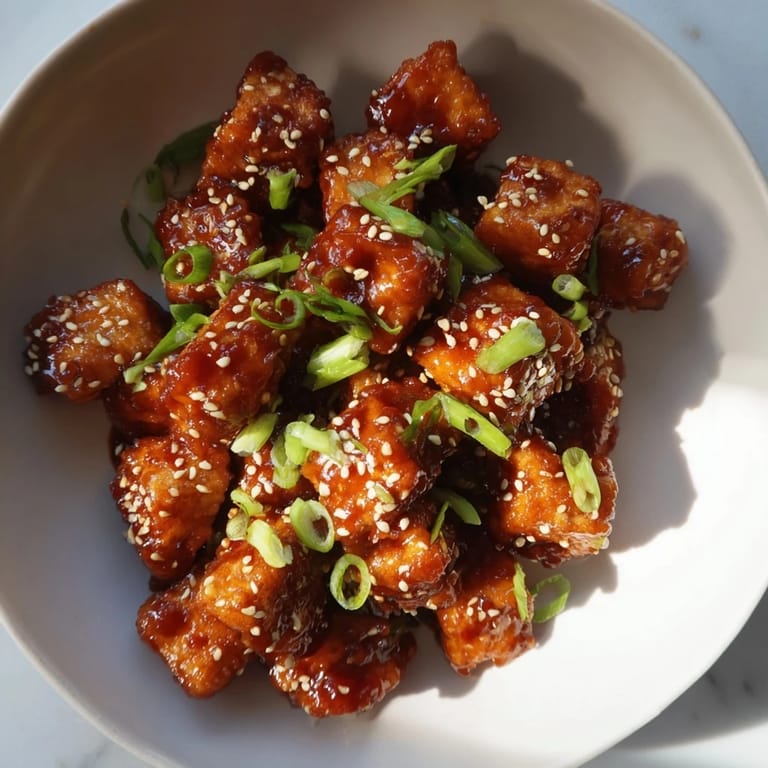
 I discovered honey gochujang tofu by accident one weeknight when I was staring into my fridge at a block of firm tofu and a jar of gochujang I'd bought weeks earlier but never opened. I had about twenty minutes before dinner needed to be ready, and instead of ordering takeout, I decided to see what would happen if I turned the tofu crispy and coated it in something sticky and spicy. The smell that filled my kitchen—garlic and ginger hitting that hot pan, then the sauce bubbling up with its deep red heat—made me forget I was cooking out of desperation. By the time I plated it with sesame seeds scattered across the top, my partner wandered in asking what smelled so good, and I realized I'd stumbled onto something I'd want to make again and again.
I made this for a small dinner party last month when a friend mentioned she'd been vegetarian for a year and was tired of being offered the same old pasta dishes. I wanted to give her something that felt intentional and flavorful, not like an afterthought. When she took her first bite and asked for the recipe right then and there, I knew this had become one of those dishes I'd keep returning to—the kind that proves you don't need meat to make people remember a meal.
Ingredients
- Firm tofu, 400g, pressed and cubed: Pressing removes water so the exterior crisps up beautifully; I learned this the hard way after making rubbery tofu for years.
- Cornstarch, 2 tbsp: This is the secret to that golden, crispy coating that makes you forget you're eating tofu.
- Salt, 1/2 tsp: Just enough to season the tofu and help it brown.
- Neutral oil, 2 tbsp: Canola or sunflower works best; the flavor of the sauce needs to shine.
- Gochujang, 2 tbsp: That umami-rich Korean chili paste does all the heavy lifting in this dish.
- Honey, 2 tbsp: Balances the heat and creates that glossy, sticky glaze.
- Soy sauce, 1 tbsp: Adds depth and saltiness to the sauce.
- Rice vinegar, 1 tbsp: A touch of brightness that keeps the sauce from feeling one-dimensional.
- Sesame oil, 1 tbsp: The finish line—toasted, nutty, nonnegotiable.
- Garlic, 2 cloves minced: Raw garlic hits differently than cooked, giving the sauce a living quality.
- Fresh ginger, 1 tsp grated: Warmth and spice that makes people ask what that flavor is.
- Water, 2 tbsp: Helps the sauce come together and coat everything evenly.
- Toasted sesame seeds, 1 tbsp: Scattered on top for crunch and visual appeal.
- Green onions, 2 sliced: Freshness and a gentle onion bite at the very end.
Tired of Takeout? 🥡
Get 10 meals you can make faster than delivery arrives. Seriously.
One email. No spam. Unsubscribe anytime.
Instructions
- Press your tofu:
- Wrap the block in a clean kitchen towel and set it on a plate with something heavy on top—a cast iron skillet, some cans, whatever you have. Let it sit for at least ten minutes while moisture drips away. This step changes everything.
- Cut and coat:
- Cut the pressed tofu into 2cm cubes, then toss them in a bowl with cornstarch and salt until they're dusty and evenly covered. The coating is what creates that crispy exterior.
- Get the pan hot and crispy:
- Heat oil in a large non-stick skillet over medium-high heat until it shimmers. Add the tofu cubes in a single layer and let them sit for a couple minutes before turning; they'll develop a golden crust. Turn occasionally over about eight to ten minutes total until most sides are caramelized. Transfer to a plate.
- Build the sauce:
- In a small bowl, whisk together gochujang, honey, soy sauce, rice vinegar, sesame oil, minced garlic, grated ginger, and water. The mixture should be glossy and smooth, with the honey helping to dissolve the gochujang.
- Simmer and thicken:
- Pour the sauce into the same skillet over medium heat and let it bubble gently for a couple minutes, stirring occasionally. It'll thicken slightly and smell incredible.
- Bring it together:
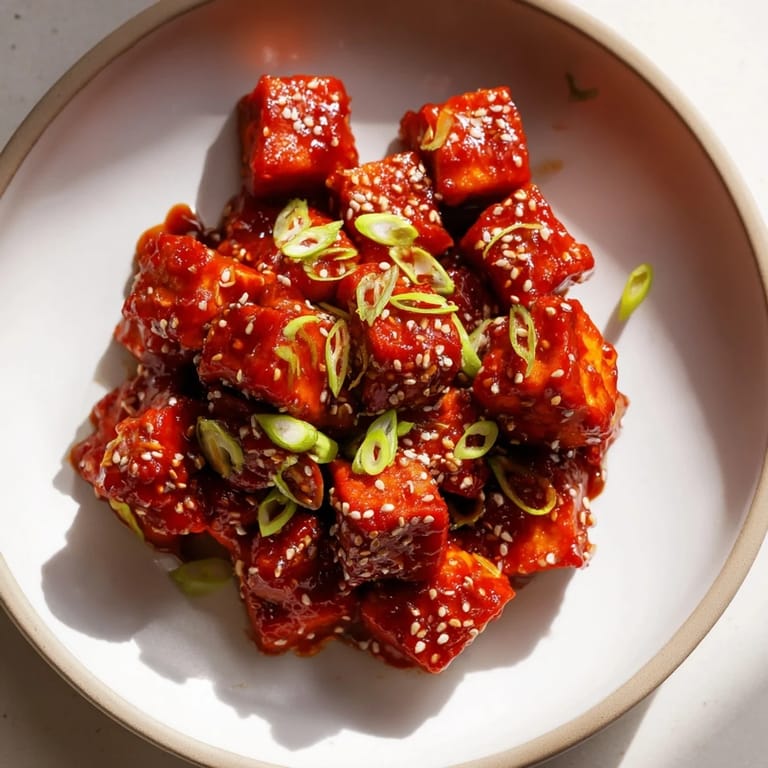
- Add the crispy tofu back to the pan and toss until every piece is coated in that glossy sauce. Cook for another minute or two until everything feels stuck together in the best way.
- Finish and serve:
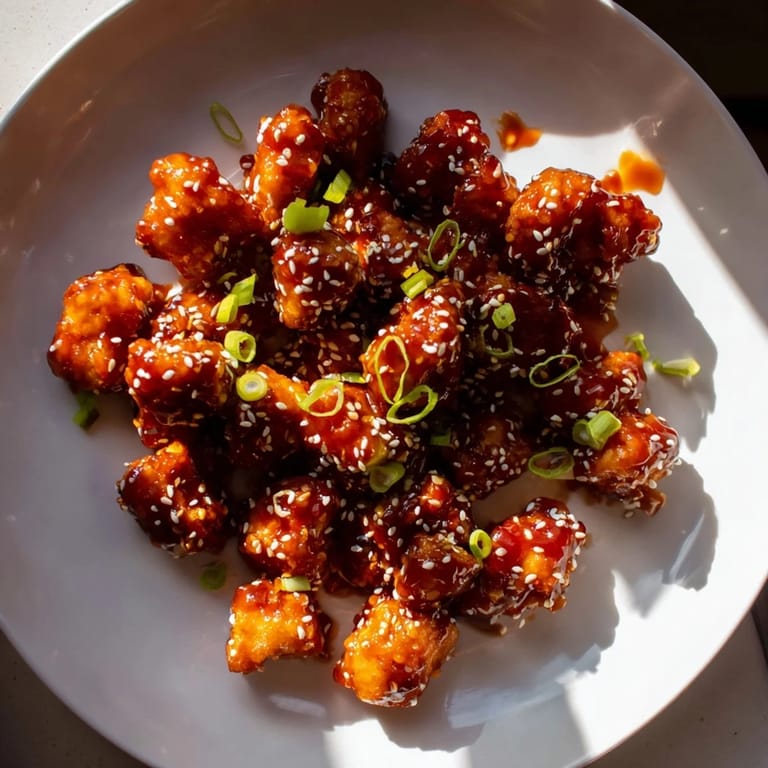
- Transfer to a plate and sprinkle with toasted sesame seeds and sliced green onions while it's still hot. Serve on its own as an appetizer or piled over steamed rice.
 Pin it
 There's something about serving this dish that makes people pause mid-conversation. It's the kind of food that tastes more complicated than it actually is, which means you get to be the person who made something unexpectedly delicious without spending all day in the kitchen. That moment when someone realizes the main ingredient is tofu and they're genuinely surprised—that never gets old.
Scaling and Serving
This recipe easily doubles if you're cooking for more people; just press two blocks of tofu and use two skillets if one feels crowded. The sauce proportions scale linearly, so if you're feeding eight instead of four, multiply everything by two. It keeps beautifully in the fridge for three days and reheats gently in a low oven, though the tofu won't be quite as crispy the second time around—it becomes more like a tender, saucy tofu situation, which is still delicious.
Variations and Swaps
For a vegan version, maple syrup or agave nectar works as well as honey, though maple will add a subtle earthiness. If gochujang feels too spicy, use less and add more honey to maintain the balance. I've served this over quinoa for friends doing grain rotation, in lettuce wraps for something lighter, and with steamed broccoli mixed right into the pan for extra vegetables and texture. The sauce itself is forgiving—you can adjust the ratios based on what you're feeling that day.
Why This Recipe Works
The combination of crispy exterior and tender interior is what makes this tofu craveable instead of virtuous-tasting. The gochujang gives you complexity without fussiness, and the honey keeps the heat from feeling aggressive. It's the kind of recipe that feels like you're eating something bold and intentional, not something you settled for because you wanted to eat less meat.
- Start with the best tofu your grocery store has; firmness matters more than brand.
- Toast your own sesame seeds if you can, or buy them already toasted; the flavor difference is real.
- Rice vinegar is worth keeping in your pantry for a dozen other things, so buy a proper bottle.
 Pin it
 This dish has become my go-to when I want to eat something that tastes intentional and tastes good. Come back to it whenever you need proof that simple ingredients and a little attention create something worth making again.
Recipe Questions & Answers
- → How do I achieve crispy tofu cubes?
Press the tofu to remove moisture, coat with cornstarch, and pan-fry in neutral oil over medium-high heat until golden on all sides.
- → Can I adjust the spiciness of the sauce?
Yes, vary the amount of gochujang to suit your preferred heat level, adding more for extra spice or less for mild flavor.
- → What substitutes work for honey in the glaze?
Maple syrup or agave nectar can be used as vegan-friendly alternatives that maintain the glaze's sweetness.
- → What side dishes pair well with this tofu?
Steamed rice, quinoa, lettuce wraps, or sautéed veggies like broccoli and bell peppers complement the dish nicely.
- → Are there any allergen considerations?
This dish contains soy and sesame; gochujang may also contain wheat, so check labels if you require gluten-free ingredients.