 Pin it
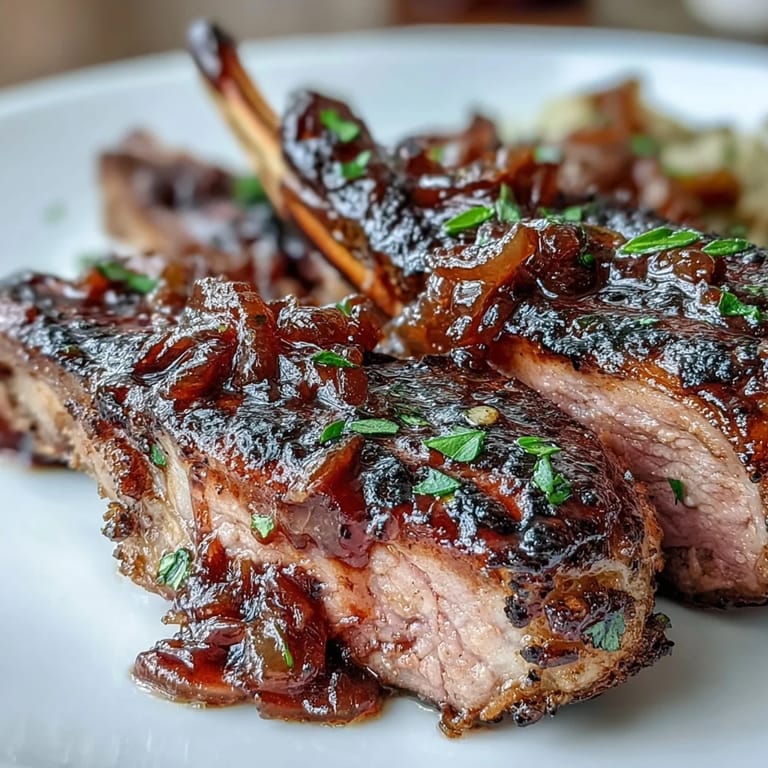
 My partner came home one evening raving about lamb chops he'd had at a dinner party, glazed with something sweet and savory that lingered on his palate. I'd never been particularly confident with lamb—it felt fancy, intimidating—but his description made me curious enough to attempt it. The first time I caramelized those onions, watching them transform from sharp and pale to glossy and mahogany-colored, something clicked. That golden jammy mixture clinging to perfectly seared chops became the moment I stopped thinking of lamb as restaurant-only food.
I made these for a small dinner with friends on a rainy autumn evening, and the aroma of butter and caramelizing onions brought everyone into the kitchen before anything was even plated. Someone asked if I'd been cooking all day—the jam had that deep, complex flavor that seemed impossible in under an hour. It's become my go-to move when I want to impress without the stress, which is exactly the kind of recipe that actually gets repeated in real life.
Ingredients
- Lamb chops (8 pieces, about 1-inch thick, trimmed): Look for meat that's bright red with good marbling; the fat is where the flavor lives, so don't feel bad about that trim of white along the edge.
- Olive oil (1 tablespoon): High heat demands a neutral oil, so don't splurge on your best stuff here—save that for drizzling.
- Kosher salt and freshly ground black pepper: Season generously before searing; you're building a crust, not being delicate.
- Unsalted butter (2 tablespoons): The foundation of your jam, so use something you'd actually eat on toast.
- Yellow onions (2 large, thinly sliced): Size matters here—thin, even slices cook uniformly and release their sweetness more evenly.
- Brown sugar (2 tablespoons): This amplifies the natural sugars already present in the onions, creating a proper glaze rather than just soft onions.
- Balsamic vinegar (1/4 cup): The acid cuts through richness and adds complexity; taste yours first, as some brands are sweeter than others.
- Dijon mustard (2 teaspoons): Just enough to add a subtle tang without announcing itself—this is a background player, not the star.
- Fresh thyme (1/2 teaspoon fresh or 1/4 teaspoon dried): Fresh is brighter, but dried works beautifully if that's what you have; crumble it between your fingers to release oils.
Tired of Takeout? 🥡
Get 10 meals you can make faster than delivery arrives. Seriously.
One email. No spam. Unsubscribe anytime.
Instructions
- Dry your lamb and build seasoning:
- Pat those chops completely dry with paper towels—moisture is the enemy of a good sear. Season both sides generously with salt and pepper, letting the seasoning sit while your pan heats; this lets it adhere instead of sliding right off.
- Get that pan screaming hot and sear:
- Pour olive oil into a large skillet and let it heat until it shimmers and moves like water, then add your chops—you should hear an immediate aggressive sizzle. Let them sit undisturbed for 2–3 minutes; this is where the golden crust happens, so resist the urge to move them around.
- Build the foundation for your jam:
- Lower the heat to medium, add butter and onions to the same pan (all those brown bits are liquid gold), and stir frequently as the onions soften and release their moisture. This takes patience—around 10–12 minutes—and it's the most important part, so don't rush it.
- Coax out the sweetness:
- Once the onions are soft and turning golden, add brown sugar and let everything cook together for 2–3 more minutes until the onions are deeply caramelized and look almost glossy. You're aiming for that jam-like texture, where the color has darkened noticeably.
- Add tang and depth:
- Pour in the balsamic vinegar, add mustard and thyme, and let it all simmer gently for 2–3 minutes until the liquid reduces slightly and coats the back of a spoon. Taste and adjust salt and pepper—this is your moment to tweak.
- Reunite lamb with its glaze:
- Return the rested chops to the skillet, nestling them into the onion jam and spooning glaze over each one. Cook for 2–3 minutes, turning once, until everything is heated through and the lamb has absorbed some of that sweet, savory coating.
- Serve while it still matters:
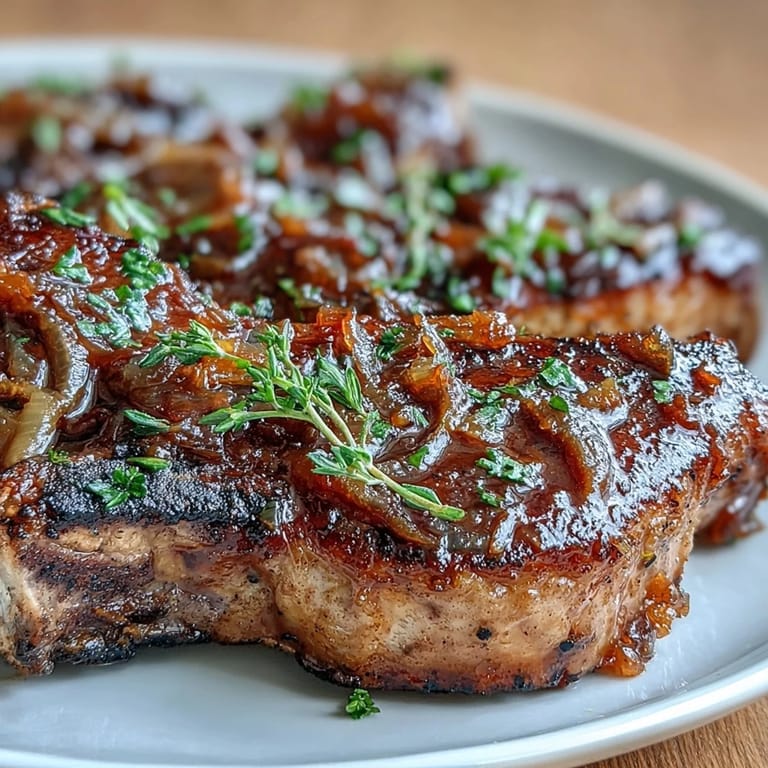
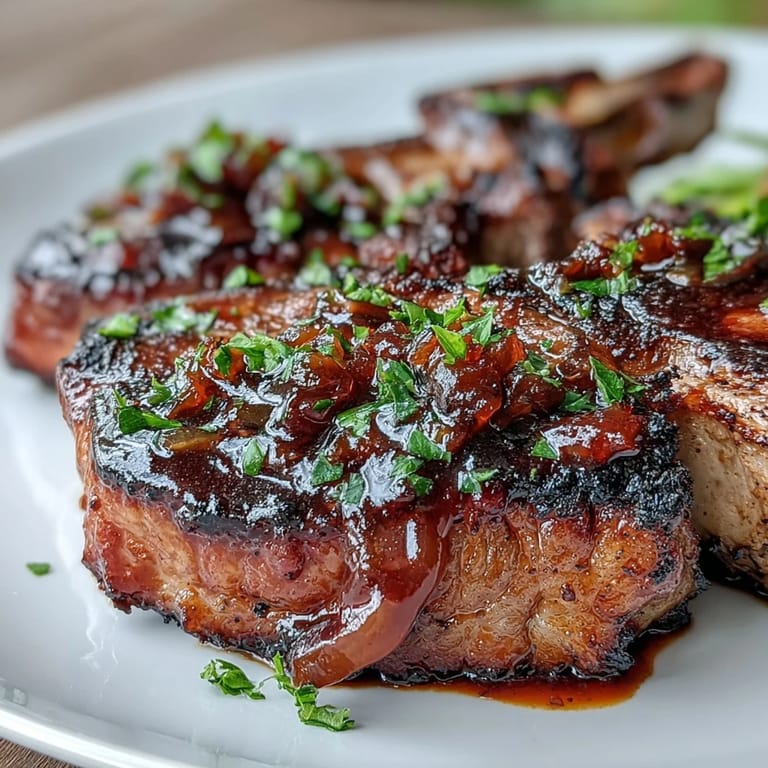
- Plate immediately while the chops are warm and the jam is still glossy, spooning extra onion mixture over the top of each chop. This isn't a dish that improves from waiting—it's best right now.
 Pin it
 There's something that happens when you put a plate of properly glazed lamb chops in front of someone—their whole face changes. My mom, who usually picks at restaurant food, went quiet and just ate, which is the highest compliment I've ever received. That's when I realized this recipe had become more than just technique; it was something I could make when I wanted someone to feel genuinely cared for.
Why This Works as a Main Course
Lamb has a naturally rich, assertive flavor that can sometimes feel overwhelming on its own, but the sweet and tangy onion jam acts as a perfect foil—it softens the intensity while adding its own depth and complexity. The mustard adds a subtle prickle of spice that brings all the elements into focus without dominating anything. What makes this brilliant is that every component serves a purpose; nothing is decorative or unnecessary.
Timing and Temperature Matter More Than You Think
The first time I made this, I worried constantly about overcooking the lamb, which meant I actually undercooked it—those thin chops came out more rare than I'd intended. The second time, I trusted the process and cooked them properly, and they were incomparably better: still tender and pink inside but with a proper crust on the outside. Medium-rare is the sweet spot for lamb chops this size; they finish cooking slightly as they rest on the plate.
Pairing and Serving
These chops are rich enough to stand alone but versatile enough to welcome sides gracefully. Creamy mashed potatoes or polenta soaks up all that glossy jam, while roasted vegetables—especially root vegetables like carrots or parsnips—echo the sweetness and add textural contrast. A simple green salad with sharp vinaigrette on the side cuts through the richness beautifully if you're feeding someone who appreciates balance on their plate.
- Make the onion jam up to two days ahead and reheat gently when you're ready to sear the chops, which turns this into a legitimate weeknight dinner.
- For a sweeter variation, swap half the balsamic vinegar for fig jam or red wine, depending on what you have around.
- Leftover jam is brilliant on grilled cheese, stirred into yogurt as a topping, or served alongside cold roasted chicken the next day.
 Pin it
 This recipe sits at that perfect intersection of simple and impressive, the kind of dish that tastes like you spent hours in the kitchen when really you were done in half that time. Once you've made it once, you'll find yourself coming back to it whenever you want to feel like a genuinely capable cook.
Recipe Questions & Answers
- → How do I achieve a perfect sear on the lamb chops?
Pat the lamb dry before seasoning and use medium-high heat in a preheated skillet. Sear each side 2-3 minutes until browned without overcrowding the pan.
- → What is the onion jam glaze made of?
It consists of caramelized onions, brown sugar, balsamic vinegar, Dijon mustard, fresh thyme, butter, and seasoning, creating a sweet and tangy coating.
- → Can I prepare the onion jam glaze ahead of time?
Yes, the glaze can be made in advance and gently reheated before glazing the lamb chops to enhance flavors.
- → What are good side dishes to serve with this lamb?
Mashed potatoes, polenta, or roasted vegetables pair well, balancing the rich flavors of the lamb and glaze.
- → Is there a suggested marinade for deeper flavor?
Marinating the lamb chops with olive oil, garlic, and rosemary for an hour before cooking intensifies the flavor profile.