 Pin it
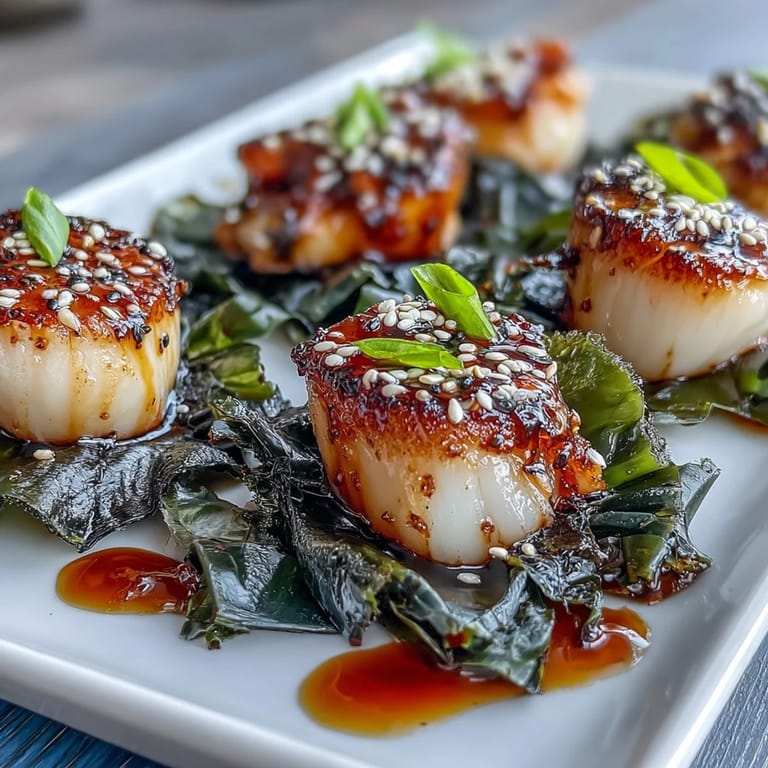
 There's a moment in every cook's life when something clicks, and for me, it happened while watching my neighbor arrange delicate nori strips on her cutting board with the kind of precision I'd only seen in sushi restaurants. She was making these seaweed-wrapped scallops for a dinner party, and I couldn't look away as those plump, glistening scallops disappeared into their crispy seaweed jackets. The kitchen smelled impossibly fresh—briny and lemony all at once—and when she seared them in that hot pan, the nori crackled like tiny fireworks. I asked for the recipe that night, and it's been my go-to fancy appetizer ever since.
I made these for my sister's birthday dinner last spring, and the second she bit into one, her eyes went wide in that way that tells you food just transported her somewhere good. She said it tasted like the ocean in the best possible way, which made me realize how much the quality of the scallops matters—these weren't the rubbery frozen ones you sometimes get, but honest, fresh ones from the Saturday market. That's when cooking stopped being about following steps and became about choosing ingredients that deserve your effort.
Ingredients
- Large sea scallops (8): The key is getting them truly dry before wrapping—any moisture clinging to the surface will prevent that beautiful golden sear and make the nori soggy instead of crisp.
- Nori sheets (4, cut in half): You're essentially creating a protective blanket that crisps up in the pan, so don't skimp on quality nori; the difference is real and tastes clean rather than fishy.
- Sesame oil (1 tablespoon): This is your medium for searing—it has a higher smoke point than you'd expect and adds a subtle nutty depth that butter couldn't provide.
- Salt and freshly ground black pepper: Season lightly before wrapping because the nori itself carries a gentle mineral saltiness that you don't want to overshadow.
- Soy sauce (3 tablespoons): The backbone of your ponzu, providing umami that anchors all the brighter, sharper notes coming next.
- Fresh lemon juice (2 tablespoons): This is your acidic backbone that makes everything taste alive and prevents the sauce from feeling heavy.
- Rice vinegar (1 tablespoon): A gentler acid than regular vinegar, it rounds out the ponzu with subtle complexity rather than harsh sharpness.
- Mirin (1 tablespoon): Don't skip this—it adds a whisper of sweetness that balances the salty and sour notes so the sauce feels complete.
- Fresh ginger (1 teaspoon, grated): The warmth here complements scallops like nothing else can, waking up your palate with a gentle heat.
- Sugar (1 teaspoon): Just enough to round out the flavors and help the ginger shine through without making anything taste dessert-like.
- Green onion (1, sliced): Both in the sauce and as garnish, this bright, oniony snap keeps everything from feeling too rich or heavy.
- Toasted sesame seeds (for garnish): These add a final textural contrast that makes every bite feel intentional and complete.
Tired of Takeout? 🥡
Get 10 meals you can make faster than delivery arrives. Seriously.
One email. No spam. Unsubscribe anytime.
Instructions
- Make your ponzu sauce first:
- Combine soy sauce, lemon juice, rice vinegar, mirin, ginger, and sugar in a small bowl, stirring until the sugar completely dissolves. This won't take long, but it gives the flavors time to get acquainted while you handle the scallops. Stir in the sliced green onion just before serving so it stays bright.
- Prep your scallops properly:
- Pat those scallops completely dry with paper towels—this step matters more than you'd think. Season them lightly on both sides with salt and pepper, remembering that restraint here prevents a salty final dish.
- Wrap with care:
- Take a halved nori sheet and wrap it around each scallop like you're giving it a gentle hug, with the seam facing down when it hits the pan. Moisten the edge where the nori overlaps with just a tiny bit of water to seal it, and use a toothpick only if you're worried it won't hold—most of the time, it will.
- Get your pan singing hot:
- Pour sesame oil into a nonstick skillet and heat it over medium-high heat until it shimmers and moves like liquid silk. You'll know it's ready when a tiny piece of nori sizzles immediately upon contact.
- Sear the scallops:
- Place them seam-side down and let them sit undisturbed for 2 to 3 minutes—resist the urge to move them around because that's when the magic happens, the nori getting gorgeously crisp and the scallop starting to caramelize. Flip gently and give the other side another 2 minutes, just until you can see the scallop is opaque and cooked through without being rubbery.
- Finish and serve:
- Transfer to your serving plate, remove any toothpicks, and either drizzle the ponzu sauce directly over or serve it alongside for dipping. Scatter sesame seeds and green onion on top if you want that extra visual and textural pop.
 Pin it
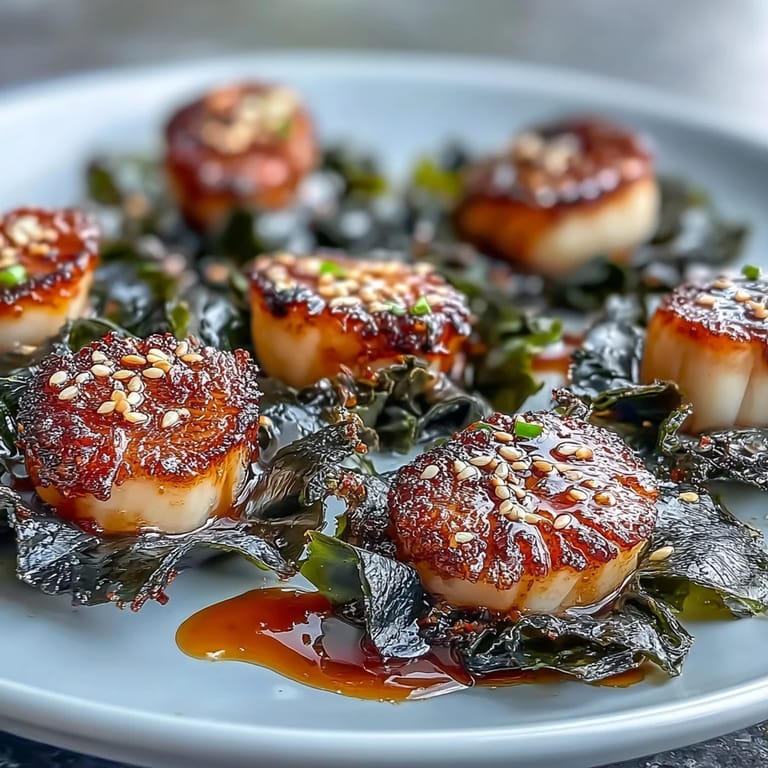
 There's something almost ceremonial about serving these to people—watching them cut into that crispy seaweed layer to find the tender scallop inside feels like opening a gift. That moment when someone tastes ponzu for the first time and realizes how a few simple ingredients can create something so balanced and alive is always worth the effort.
Why Scallops Deserve Better Treatment
Scallops have this bad reputation in home cooking circles, but I think it's because most people either overcook them until they're rubber or don't dry them properly before cooking. These aren't complicated proteins—they just want respect and brevity on the heat. The moment they turn opaque all the way through, you're done; anything longer and you've crossed into tough territory that can't be recovered. Once you nail this, you'll realize why restaurants charge what they do for scallop dishes.
The Ponzu Balance
Ponzu isn't just a sauce; it's a lesson in balance that translates to everything else you cook. Salty, sour, sweet, and umami all working together in harmony—if any one note dominates, the whole thing falls apart. The first time I tasted a truly balanced ponzu, I understood why Japanese cuisine feels so refined; nothing is accidental, everything is considered. This sauce keeps for a week in your fridge, and honestly, it's good on grilled vegetables, fish, or even stirred into mayonnaise for a scallop ceviche situation.
Timing and Presentation That Matters
The beauty of this recipe is that you can prepare everything—scallops wrapped, sauce mixed, garnishes prepped—up to thirty minutes ahead, then sear everything in the final moments before people sit down. This is the kind of dish that demands to be eaten warm, the nori still crackling slightly as the fork cuts through. You're not trying to be fancy here; you're just being thoughtful about how food tastes best.
- Make your ponzu sauce first so the flavors have time to meld while you handle the scallops.
- Pat scallops completely dry before wrapping to ensure they sear and don't steam inside the nori.
- Sear everything just before serving to keep that crispy seaweed jacket at its absolute best.
 Pin it
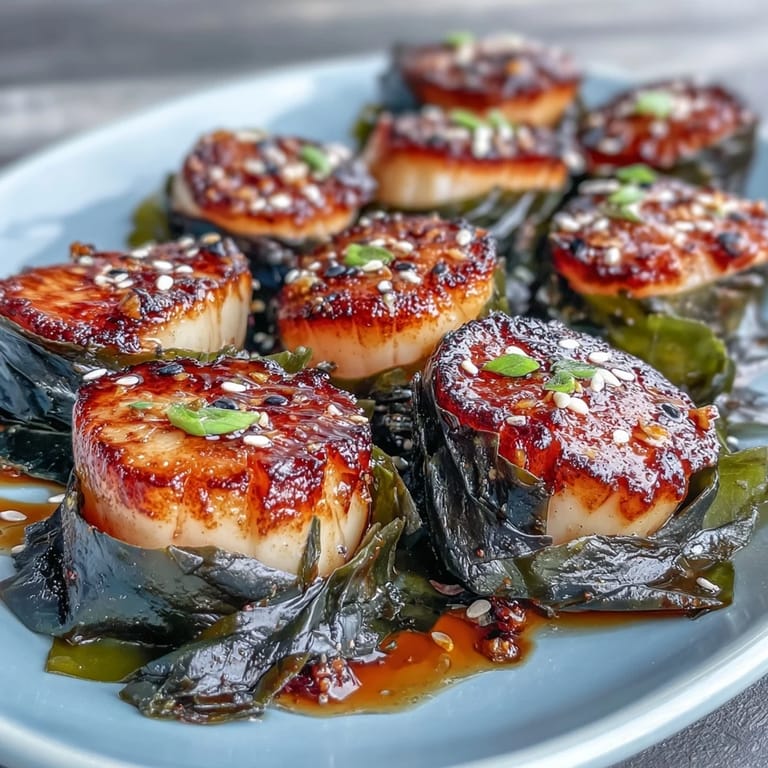
 This dish has become my move for dinner parties because it's impressive without being stressful, and it tastes like you spent way more time thinking about it than you actually did. Every time someone asks for the recipe, I just smile and hand them these instructions, knowing they're about to experience what good, simple cooking really means.
Recipe Questions & Answers
- → What type of seaweed is best for wrapping scallops?
Nori sheets are ideal for wrapping scallops because they crisp nicely when seared and complement seafood flavors.
- → How can I ensure scallops cook evenly wrapped in seaweed?
Secure the nori tightly around each scallop and sear them seam-side down first to crisp the seaweed, then flip carefully to cook through without overcooking.
- → What ingredients create the ponzu sauce’s tangy flavor?
The tanginess comes mainly from fresh lemon juice and rice vinegar, balanced with soy sauce and a hint of sweetness from sugar and mirin.
- → Can the ponzu sauce be adjusted for spiciness?
Yes, adding a pinch of chili flakes to the ponzu sauce introduces a subtle heat that complements the dish well.
- → Are there alternatives to lemon juice for ponzu sauce?
Yuzu juice can substitute lemon to provide a more authentic and aromatic citrus flavor often used in Japanese cuisine.