 Pin it
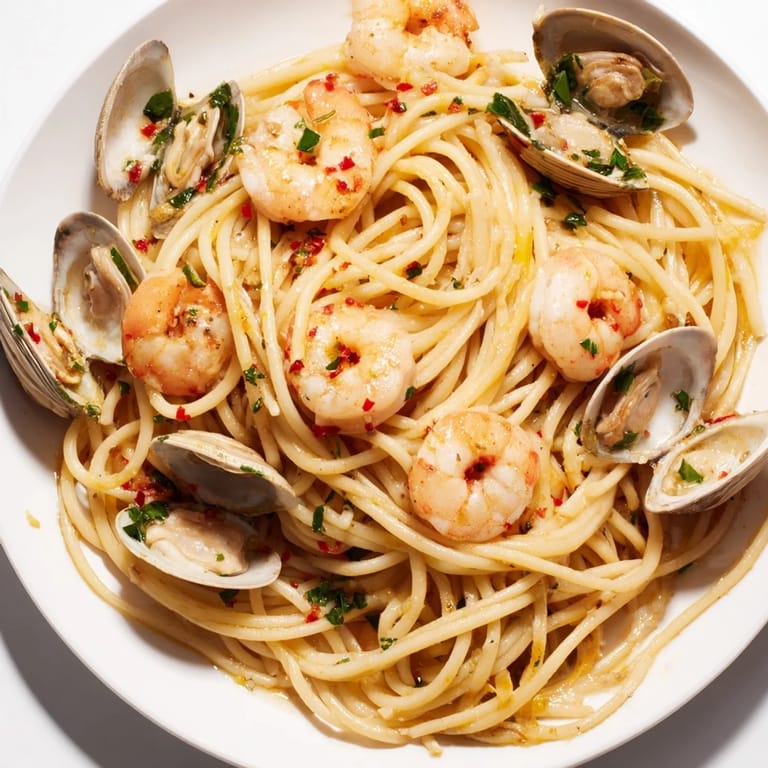
 There's something about the smell of garlic hitting hot olive oil that makes you feel like you're cooking somewhere on the Italian coast, even if you're just in your kitchen on a Tuesday night. I discovered this seafood pasta version years ago when a friend casually mentioned she'd throw whatever shellfish was on sale into her aglio e olio, and I realized I'd been overthinking pasta the whole time. It's one of those dishes that feels fancy enough to impress people but honest enough that you're not stressed the entire time you're making it.
I made this for my partner once when we were trying to eat better but didn't want to sacrifice anything delicious, and watching their face when they realized there was no cream in something this rich was worth every minute. The kitchen smelled so good that our neighbor actually knocked on the door thinking we were running a restaurant, which became a running joke between us for months.
Ingredients
- Large shrimp (250 g): Buy them still in the shell if you can and peel them yourself—you get better flavor and the shells make incredible stock if you're feeling ambitious.
- Fresh clams (500 g): The key is freshness; they should smell like the ocean, not fishy, and they should close when you tap them—any that stay open are done for.
- Spaghetti (400 g): Don't reach for the fancy bronze-cut stuff here; regular dried spaghetti grabs the oil and sauce perfectly.
- Extra virgin olive oil (6 tbsp): This is not the time to use your cooking oil; use something you'd actually enjoy drinking, because you're basically making liquid gold.
- Garlic cloves (5): Slice them thin yourself rather than mincing—you want delicate little chips that turn golden and crispy, not a garlicky mush.
- Red chili flakes (1/2–1 tsp): Start with half a teaspoon and taste as you go; heat builds as it sits, and it's easier to add more than take it out.
- Dry white wine (1/2 cup): Use something you'd actually drink, not cooking wine; the alcohol burns off but the flavor stays.
- Lemon: The zest and juice brighten everything up and cut through the richness in the best possible way.
- Fresh flat-leaf parsley (1/4 cup): Add most of it during cooking and save some for garnish so you get both the cooked herbal depth and fresh brightness.
Tired of Takeout? 🥡
Get 10 meals you can make faster than delivery arrives. Seriously.
One email. No spam. Unsubscribe anytime.
Instructions
- Start your pasta:
- Bring a big pot of salted water to a rolling boil—salt it like the sea, which sounds dramatic but actually makes a difference. Add your spaghetti and cook until just al dente, checking a couple minutes before the package says because it'll keep cooking a tiny bit when you mix it with the hot seafood.
- Make your garlic oil magic:
- While the pasta cooks, pour your olive oil into a large skillet and turn the heat to medium. Add those thin garlic slices and the chili flakes, and listen for them to sizzle—you want about a minute of gentle bubbling where the garlic turns a pale golden color and smells absolutely incredible. The second it starts getting darker, pull it off heat because burnt garlic is bitter and there's no coming back from it.
- Cook the shrimp:
- Slide the raw shrimp into that garlicky oil and let them sit for a minute before stirring—they'll turn pink and opaque on one side, then flip them and give them another minute. As soon as they're barely cooked through, move them to a clean plate because they'll keep cooking later and you don't want rubbery shrimp.
- Steam the clams:
- Pour in your white wine and add all those clams to the pan. Cover it with a lid and let them steam for about 3 to 5 minutes, shaking the pan every 30 seconds or so to help them open evenly. They'll start popping open one by one—it's really satisfying to watch—and you can discard any stubborn ones that refuse to budge.
- Bring it together:
- Drain your pasta and save that starchy water like it's liquid gold because it is—it emulsifies the oil into a silky sauce. Return the shrimp to the pan, add the pasta, lemon zest and juice, and most of the parsley, then toss it all together gently. Add pasta water a splash at a time until you've got this beautiful glossy sauce coating every strand.
- Taste and serve:
- Give it a taste and adjust salt and pepper, then serve immediately in shallow bowls with more parsley scattered over top and a lemon wedge on the side for people who want extra brightness.
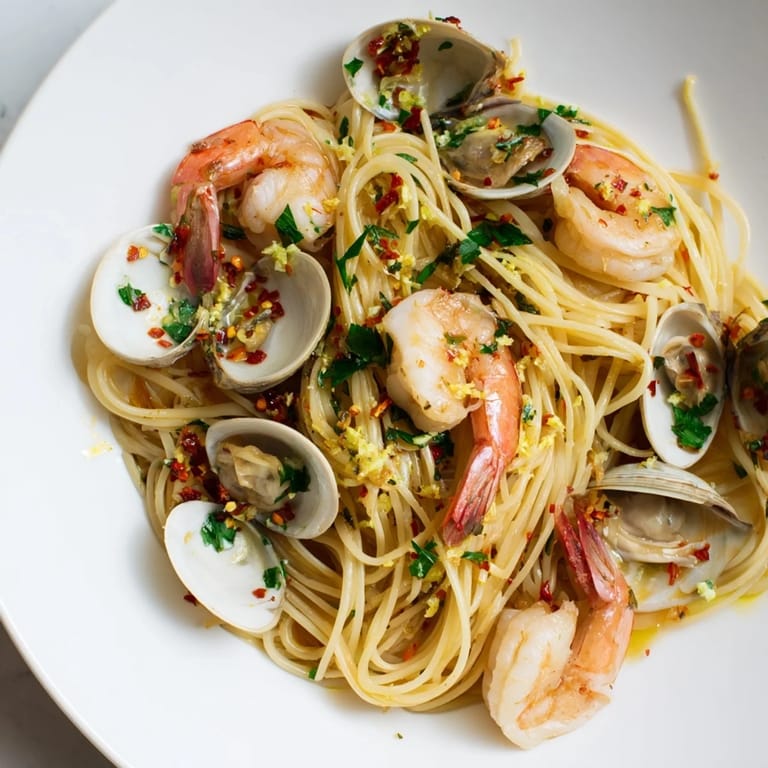 Pin it
 The first time I made this for a dinner party, I was so nervous about the seafood that I basically stood over the pan the whole time, and one of my guests came to keep me company and we ended up having this really good conversation about travel and food while the clams were steaming. That's when I realized that this dish, despite being relatively simple, creates space for actual living instead of stress—you can chat, you can breathe, you can enjoy the process.
Understanding Aglio e Olio
Traditional aglio e olio is just pasta, garlic, oil, and chili, and it's nearly perfect in its simplicity. Adding seafood turns it into something more substantial without losing that essential character—the pasta and the oil are still the main event, with the shrimp and clams as honored guests rather than the star. The magic is in building layers: first the garlic and chili flavor the oil, then the seafood cooks in that infused oil, and finally the pasta picks up all that goodness and the starchy cooking water brings it together into something smooth and glossy.
Timing and Technique
The biggest mistake people make is trying to do everything at once and ending up with overcooked seafood or undercooked pasta. The truth is you have a little bit of flexibility: your pasta can sit in the pot for a minute after it's done while you finish the seafood, and your shrimp and clams can wait on a plate without falling apart. What you can't fix is burnt garlic or seafood that's been hammered by high heat for too long, so those are the two things worth paying attention to during cooking.
Variations and Substitutions
Mussels work just as well as clams and cook a tiny bit faster, so if that's what you have, use it. Some people add calamari cut into rings, which cooks almost instantly and adds a nice chewiness. You can also make this vegetarian by skipping the seafood and adding things like artichoke hearts, sun-dried tomatoes, or crispy chickpeas if you want that hearty protein element, though it becomes a different dish entirely.
- Scallops are amazing in this if you can find them fresh—just give them 90 seconds per side in the oil and they're perfect.
- Don't use frozen seafood unless you absolutely have to, but if you do, thaw it completely and pat it very dry before cooking.
- If you can't find fresh clams, honestly it's better to make a different pasta than to use canned ones, which just aren't the same thing.
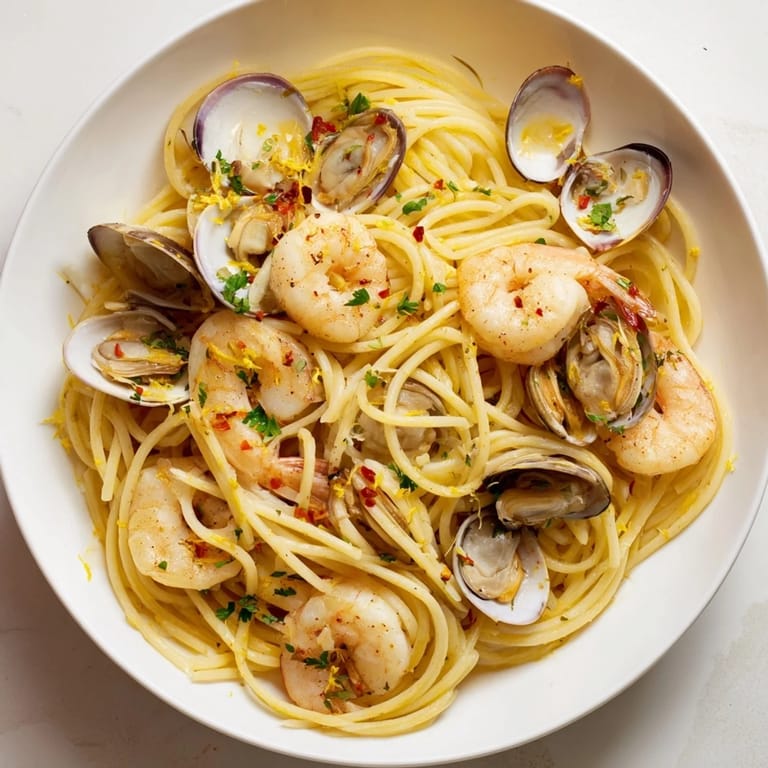 Pin it
 This is the kind of dish that reminds you why you love cooking—it's fast, it's delicious, and when you sit down to eat it, everyone looks at you like you're a genius. That feeling never gets old.
Recipe Questions & Answers
- → Can I use other seafood instead of clams?
Yes, mussels or calamari can be used as alternatives to clams for a similar texture and flavor.
- → How can I make this dish gluten-free?
Simply substitute the traditional spaghetti with gluten-free pasta to accommodate dietary needs.
- → What type of wine pairs well with this dish?
A crisp Italian white wine, such as Pinot Grigio, complements the garlic and seafood flavors nicely.
- → How do I prevent garlic from burning when sautéing?
Cook garlic on medium heat just until it turns golden and fragrant, about 1 minute, stirring constantly.
- → What is the purpose of adding reserved pasta water?
Reserved pasta water helps create a silky sauce by binding the olive oil and lemon juice with the spaghetti.