 Pin it
 I was standing in a butcher shop one December afternoon, staring at a row of lamb shanks behind the glass, when the owner told me his grandmother used to braise them with nothing but rosemary and wine. He said the smell alone could make you forget the cold outside. I bought four on the spot, went home, and filled my kitchen with that exact warmth he promised.
The first time I made this for friends, I pulled the pot from the oven and lifted the lid. Steam rolled out carrying rosemary and wine, and everyone went quiet for a second. One friend said it smelled like a holiday she couldn't quite remember. We ate at the table until the candles burned low, soaking up sauce with bread no one admitted they had room for.
Ingredients
- Lamb shanks: Look for shanks that feel heavy and have a good layer of meat around the bone, they shrink a bit as they cook so size matters.
- Carrots and celery: These become sweet and soft in the braise, almost melting into the sauce if you let them go long enough.
- Onion: Slicing it thick means it holds its shape and adds body to the liquid without disappearing.
- Garlic cloves: Smashing them with the flat of your knife releases their flavor faster and makes peeling easy.
- Fresh rosemary: The star here, it gets woodsy and fragrant in the oven and perfumes the meat from the inside out.
- Fresh thyme and bay leaves: They add a quiet herbal backbone that you notice most when they are missing.
- Beef or lamb stock: Homemade is lovely, but a good store bought version works beautifully if you choose one with actual flavor.
- Dry red wine: Something you would drink, not cooking wine from a bottle with a dusty cap.
- Olive oil: Just enough to get a good sear and keep things from sticking at the start.
- Kosher salt and black pepper: Season more than you think, the meat is thick and needs it.
Tired of Takeout? 🥡
Get 10 meals you can make faster than delivery arrives. Seriously.
One email. No spam. Unsubscribe anytime.
Instructions
- Get the oven ready:
- Set it to 160°C so it has time to settle at the right gentle heat while you prep everything else.
- Season the shanks:
- Pat them completely dry with paper towels, then coat every side with salt and pepper like you mean it.
- Sear until golden:
- Heat the oil in your heaviest pot until it shimmers, then brown each shank on all sides without moving them too much. You want a deep crust that smells nutty and looks almost caramelized.
- Soften the vegetables:
- Toss the onions, carrots, celery, and garlic into the same pot and let them cook in the lamb drippings until they start to color at the edges.
- Build the braise:
- Nestle the shanks back in, tuck the rosemary, thyme, and bay leaves around them, then pour in the wine and stock. Let it come to a gentle bubble, scraping up all the stuck on bits from the bottom.
- Cover and slow roast:
- Seal the pot tightly with the lid or foil and slide it into the oven. After about an hour and a half, turn each shank over so they cook evenly and stay moist.
- Check for tenderness:
- When the meat pulls away from the bone with almost no resistance, they are done. This usually takes closer to three hours, and patience here is everything.
- Finish the sauce:
- Lift out the shanks and vegetables, then skim off any fat pooling on top. If the sauce seems thin, simmer it on the stove for a few minutes until it coats the back of a spoon.
- Serve hot:
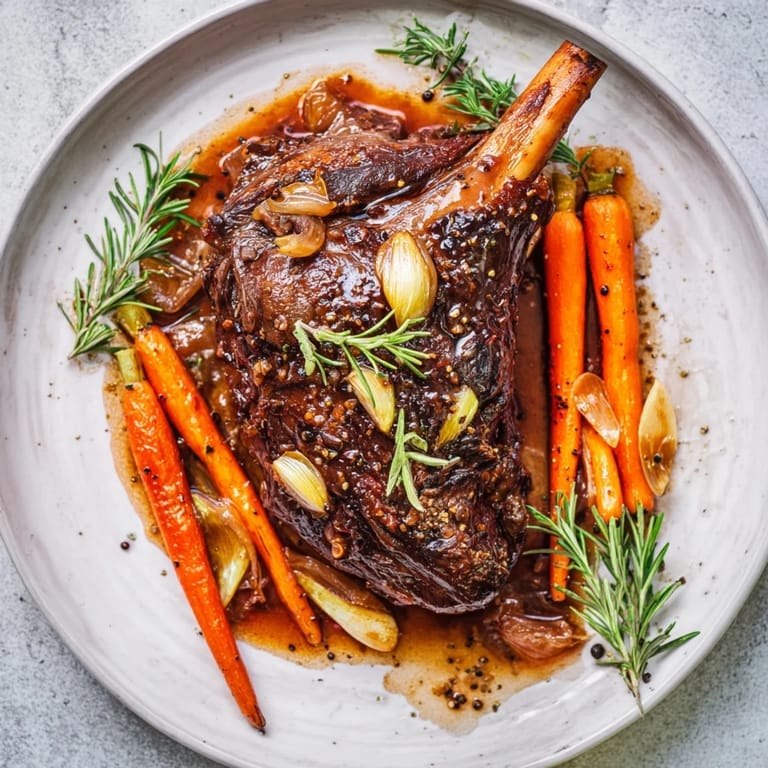
- Arrange everything on a warm platter and spoon the glossy sauce over the top. Serve immediately while it is still steaming.
 Pin it
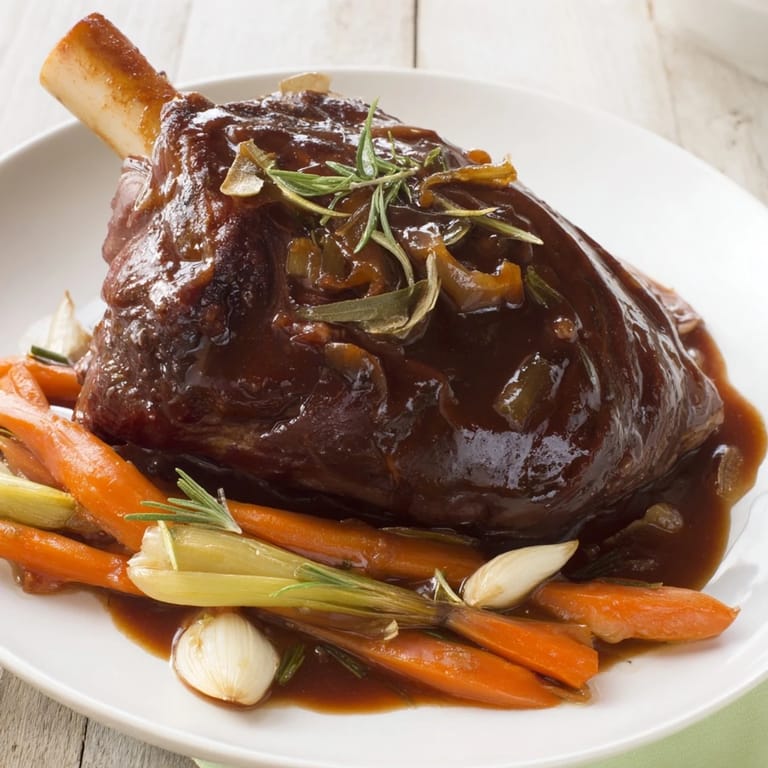
 There was a Sunday afternoon when I reheated leftovers and realized they tasted even better the next day, the flavors had deepened and softened into something richer. I ate standing at the counter, pulling meat off the bone with my fingers, and it felt like the best kind of secret.
What to Serve Alongside
Creamy mashed potatoes are the obvious choice because they soak up the sauce like nothing else, but polenta works just as well if you want something a little different. I have also served this with roasted root vegetables or a simple pile of buttered egg noodles, and it never disappoints. The key is having something soft and starchy to balance the richness of the lamb.
Making It Ahead
This is one of those rare dishes that actually improves if you make it a day early and let it sit in the fridge overnight. The flavors marry and the sauce thickens just enough on its own. Reheat it gently on the stove or in a low oven, and it will taste like you just pulled it from the oven for the first time.
Small Tweaks That Make a Difference
Sometimes I add a wide strip of orange zest to the pot before it goes in the oven, and it adds a bright note that cuts through the richness. A splash of balsamic vinegar at the end can do the same thing if you like a little tang. These are not necessary, but they are the kind of touches that make people ask what you did differently.
- If you want a thicker sauce, whisk in a teaspoon of cornstarch mixed with cold water at the end.
- Fresh parsley or a squeeze of lemon over the finished dish wakes everything up just before serving.
- Leftover sauce freezes beautifully and makes an incredible base for ragu or shepherd's pie later on.
 Pin it
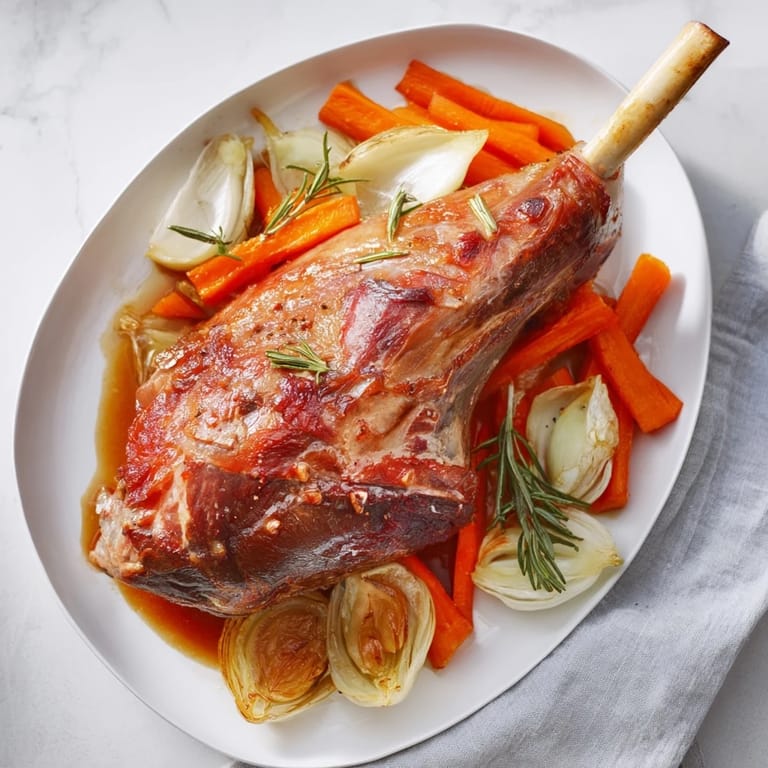
 This is the kind of meal that turns a regular evening into something you remember, the kind where everyone lingers at the table a little longer. I hope it fills your kitchen with the same warmth it brought to mine.
Recipe Questions & Answers
- → How do you make lamb shanks tender?
Slow roasting at low temperatures allows connective tissues to break down, resulting in tender, fall-off-the-bone meat.
- → Can I substitute red wine in the cooking liquid?
Yes, you can replace red wine with additional stock or grape juice for a milder flavor without impacting tenderness.
- → What herbs complement lamb shanks best?
Rosemary, thyme, and bay leaves add fragrant, earthy notes that enhance the rich flavor of lamb.
- → Should I sear the lamb shanks before roasting?
Searing lamb shanks caramelizes the surface, adding depth and complexity to the finished dish.
- → What sides pair well with slow-roasted lamb shanks?
Creamy mashed potatoes, polenta, or roasted root vegetables balance the rich flavors and soak up the savory sauce.