 Pin it
 My neighbor knocked on my door one evening with a handful of lemons from her tree, insisting I do something interesting with them. I'd been staring at chicken thighs in my fridge and a can of artichokes, so I threw together this Mediterranean one-pan wonder on a whim. The smell that filled my kitchen was so good, she invited herself to dinner, and honestly, I've made it at least twice a month ever since.
There was this moment midway through cooking when my daughter wandered into the kitchen and said the smell reminded her of a Greek restaurant we visited last summer. We ended up talking about that trip while the chicken finished in the oven, and suddenly dinner felt like more than just fuel—it felt like a memory we were building right there together.
Ingredients
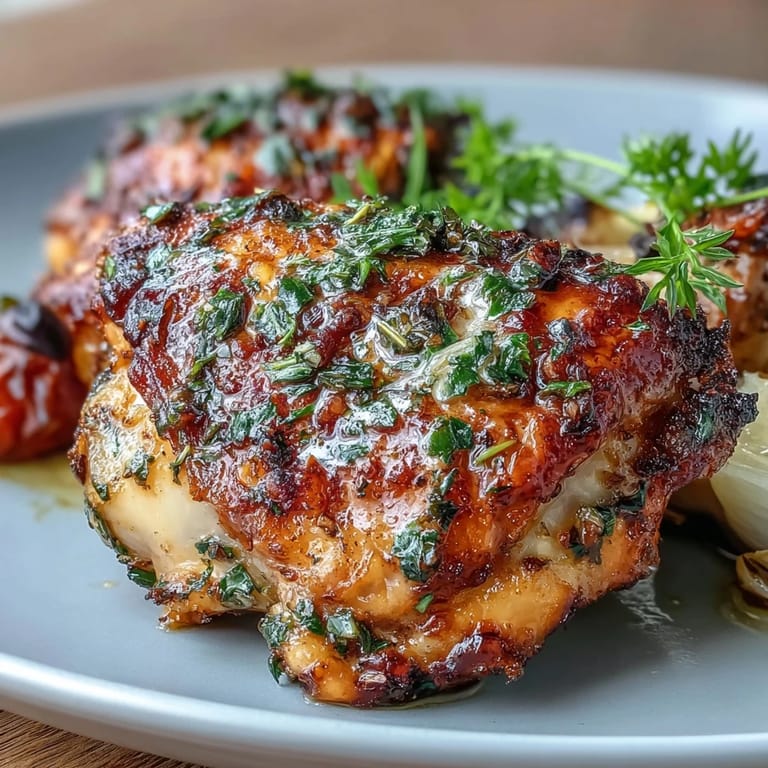
- Bone-in, skin-on chicken thighs: The skin gets gorgeously golden and crunchy, while the bones keep the meat incredibly moist through the cooking process.
- Red onion: It softens into something almost sweet and adds a subtle purple beauty to the pan.
- Garlic cloves: Mince them finely so they distribute throughout the sauce rather than sitting in chunks.
- Red bell pepper: Choose one that's firm and glossy; it will add sweetness and color without overpowering the other flavors.
- Canned artichoke hearts: Drain them well and quarter them so they soak up the broth and don't break apart during cooking.
- Cherry tomatoes: Halving them prevents them from rolling around and helps them release their juices into the sauce.
- Kalamata olives: Use pitted ones to spare yourself the surprise of biting into a pit mid-meal, and don't rinse them—their briny flavor is essential.
- Extra virgin olive oil: This is where quality matters; use something you actually enjoy tasting on its own.
- Dried oregano and thyme: These Mediterranean staples are the backbone of the flavor profile, so measure carefully.
- Smoked paprika: It adds a whisper of depth without any actual heat or smokiness that overwhelms.
- Sea salt and black pepper: Apply the salt early to the chicken so it seasons from the inside out.
- Low-sodium chicken broth: This lets the other flavors sing instead of fighting against saltiness.
- Lemon: Fresh zest and juice brighten everything; bottled juice won't have the same lift.
- Fresh parsley: Chop it right before serving so it stays vibrant and doesn't turn dark.
Tired of Takeout? 🥡
Get 10 meals you can make faster than delivery arrives. Seriously.
One email. No spam. Unsubscribe anytime.
Instructions
- Get your oven ready:
- Preheat to 400°F so it's hot and waiting when you need it, which prevents the chicken from sitting around after searing.
- Season the chicken:
- Pat the thighs completely dry with paper towels, then season both sides generously with salt, pepper, oregano, thyme, and smoked paprika. Let them sit for a minute so the seasonings cling properly.
- Sear for that golden crust:
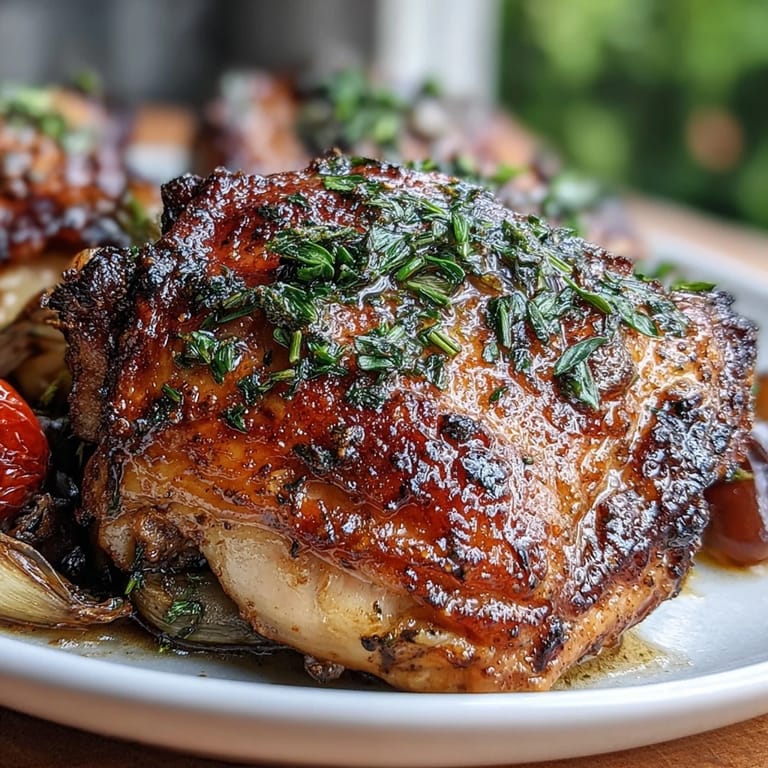
- Heat olive oil in your large ovenproof skillet over medium-high heat until it shimmers slightly. Lay the chicken skin-side down and don't move it for 4 to 5 minutes—you want that skin to turn deep golden brown and crispy. Flip and cook another 2 minutes on the other side, then transfer to a plate.
- Build the flavor base:
- In the same skillet with all those beautiful browned bits stuck to the bottom, add the red onion, bell pepper, and garlic. Sauté for 2 to 3 minutes, stirring occasionally, until the vegetables just start to soften and become fragrant.
- Add the Mediterranean elements:
- Stir in the drained artichoke hearts, halved cherry tomatoes, and Kalamata olives. Cook for about 2 minutes so everything warms through and mingles.
- Deglaze and build the sauce:
- Pour in the chicken broth and lemon juice, using a wooden spoon to scrape up all those browned, flavorful bits from the bottom of the pan. This is where the dish gets depth and richness.
- Return the chicken to its home:
- Nestle the chicken thighs back into the skillet skin-side up, and sprinkle the lemon zest over everything. The zest will brighten the final dish.
- Finish in the oven:
- Transfer the entire skillet to the oven and bake for 25 minutes, or until the chicken reaches an internal temperature of 165°F at the thickest part. The skin will darken further and the sauce will reduce slightly.
- Garnish and serve:
- Scatter fresh parsley over the top just before bringing it to the table. The fresh herb brightens all those deep, cooked flavors.
 Pin it
 I once made this dish for my parents when they visited, and my dad—who's notoriously quiet about food—spent the whole meal asking questions about how I'd learned to cook like this. It wasn't complicated or fussy, but somehow it tasted like I'd put genuine care into it, and that's what made it feel special.
Why Bone-in Thighs Matter
Chicken thighs have more fat and connective tissue than breasts, which means they forgive a slightly longer cooking time and emerge tender instead of dry. The bones conduct heat evenly throughout the meat, and when you sear them skin-side down, that skin becomes a textural contrast that makes every bite interesting. Once you switch to thighs for dishes like this, you realize breasts were the safety net for anxious cooks, but thighs are where the real flavor lives.
The Power of the Pan Sauce
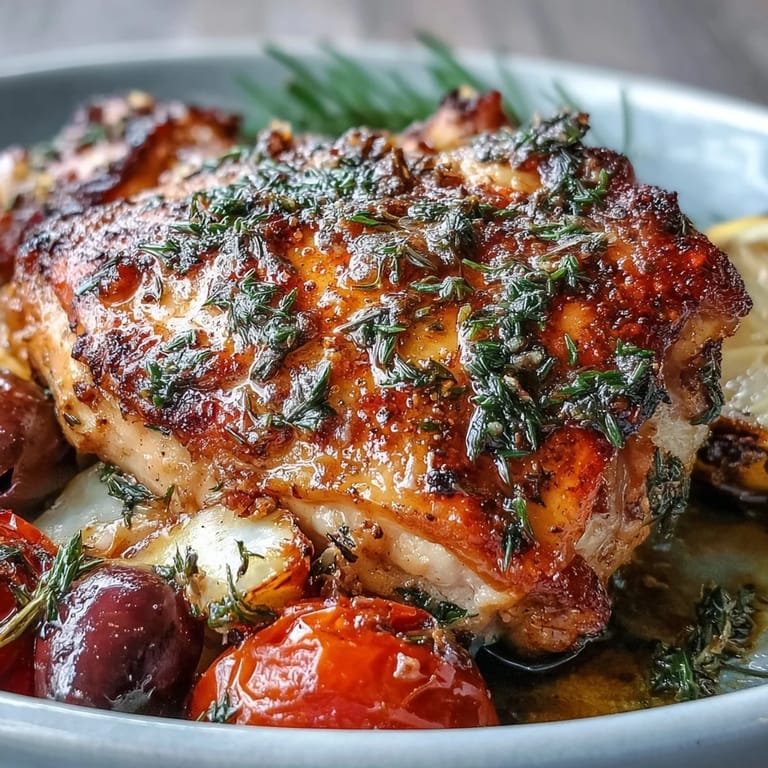
Everything in this skillet is designed to build a sauce that's both light and deeply flavorful—the broth carries the essence of the vegetables and olives, while the lemon juice keeps it from feeling heavy. The browned bits stuck to the bottom of the pan after searing the chicken are pure concentrated flavor, and deglazing them means nothing goes to waste. When the chicken finishes cooking, it's sitting in a sauce that tastes like you've been tending it for hours, even though you haven't.
Making It Your Own
This recipe is a template more than a rule, and some of my favorite versions have come from improvising with what was actually in my pantry. I've added capers for extra briny punch, scattered red chili flakes for heat, even dropped in a handful of spinach at the end because I had it and it wilted right into the sauce. The Mediterranean flavor profile is flexible enough to handle these changes without losing its essential character.
- Swap the cherry tomatoes for sun-dried tomatoes if you want deeper, more concentrated tomato flavor.
- Try a handful of fresh dill or basil instead of parsley for a different herbal note.
- If you want something to soak up the sauce, couscous or crusty bread works better than rice, which tends to absorb the liquid too greedily.
 Pin it
 This is the kind of dish that reminds you why cooking at home matters—it's not about impressing anyone with complexity, but about taking simple, good ingredients and letting them become something that nourishes both body and soul. Once you've made it, you'll find yourself returning to it whenever you want something that feels both comforting and special.
Recipe Questions & Answers
- → What cut of chicken works best?
Bone-in, skin-on chicken thighs are perfect for juicy, flavorful results and hold up well during searing and baking.
- → Can I use boneless chicken instead?
Yes, boneless chicken breasts can be used but reduce the baking time by 5 to 7 minutes to prevent drying out.
- → How do olives affect the dish?
Kalamata olives add a briny depth that complements the herbs and artichokes, enriching the Mediterranean flavors.
- → What sides pair well with this dish?
This chicken pairs nicely with crusty bread, couscous, or roasted potatoes to soak up the flavorful juices.
- → Is this dish suitable for gluten-free diets?
Yes, this dish is naturally gluten-free and dairy-free, focusing on fresh ingredients and simple seasonings.