 Pin it
 My friend texted me a photo from a Korean fusion food truck she'd discovered, and I couldn't stop staring at those glossy, caramelized sliders glistening under the truck's heat lamps. Something about the combination of gochujang's umami heat with the casual charm of an American slider just clicked, and I knew I had to recreate it in my kitchen. The first batch was admittedly chaotic—I underestimated how much the ginger would bloom when it hit the hot pan, and suddenly my whole kitchen smelled like a Korean restaurant had materialized on my stovetop. My partner wandered in mid-cook, intrigued by the aroma, and ended up taste-testing so many batches that dinner became more of a celebration than a meal. Now whenever I make these, I'm transported back to that moment of happy kitchen accidents.
I made these for a casual dinner party last summer, and what struck me most wasn't just how quickly they disappeared—it was watching people's faces light up when that first bite combined the gochujang-glazed turkey with the cool, tangy slaw. Someone actually said, 'Wait, did you really make this at home?' as if homemade meant it had to be boring or complicated. That moment reminded me why I love cooking: not because I'm trying to impress anyone, but because food creates these little pockets of joy around a table.
Ingredients
- Ground turkey: Lean and forgiving, it absorbs the gochujang sauce beautifully without becoming greasy; don't skip browning it thoroughly so it has texture.
- Gochujang (Korean chili paste): This fermented powerhouse is the soul of the dish—that umami depth is irreplaceable, so seek it out in the international aisle or online rather than substituting.
- Soy sauce: Use low-sodium to avoid an overly salty filling; the sauce concentrates as it simmers.
- Rice vinegar: Its gentle tang balances the richness better than distilled vinegar, which can taste too sharp.
- Toasted sesame oil: Just a teaspoon adds nutty complexity that regular oil cannot touch; don't skip it or cook with it as it burns easily.
- Green cabbage: Its natural sweetness plays beautifully against the spicy filling, and it stays crisp longer than red cabbage.
- Slider buns: Soft buns make assembly easier and keep the filling from overwhelming each bite; brioche buns add richness if you want something more indulgent.
Tired of Takeout? 🥡
Get 10 meals you can make faster than delivery arrives. Seriously.
One email. No spam. Unsubscribe anytime.
Instructions
- Make the slaw ahead:
- Whisk together the mayo, rice vinegar, honey, sesame seeds, salt, and pepper in a bowl, then toss it all with your shredded cabbage and carrots. Letting it chill while you cook the turkey allows the flavors to meld and the cabbage to soften just slightly without becoming mushy.
- Build your flavor base:
- Heat oil in a large skillet and sauté your finely chopped onion until it turns translucent and sweet-smelling, usually about 3 to 4 minutes. Add minced garlic and grated ginger and cook just until fragrant—this usually takes about a minute—so they don't burn and turn bitter.
- Brown the turkey:
- Add your ground turkey and break it apart with a spoon as it cooks, making sure to achieve an even golden-brown color throughout, which takes about 5 to 6 minutes. You'll notice the pan getting savory-looking as the turkey releases its juices and starts to caramelize on the edges.
- Create the glaze:
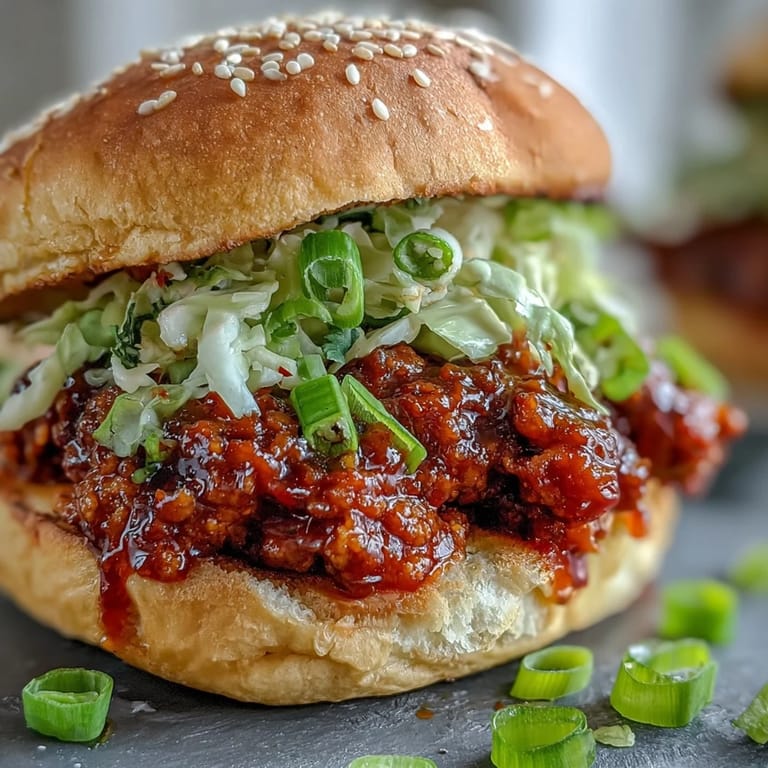
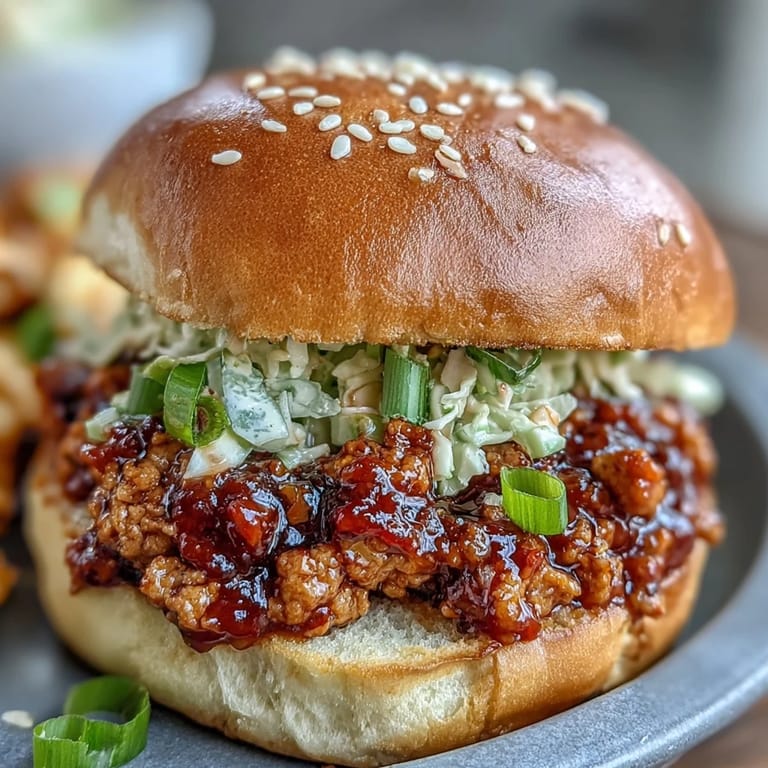
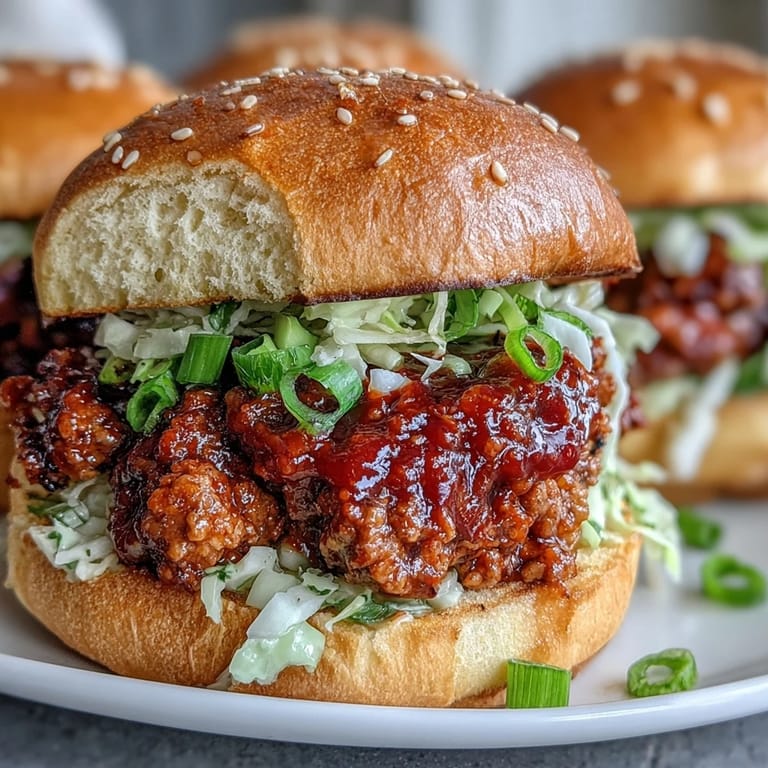
- Stir in your gochujang, soy sauce, ketchup, brown sugar, rice vinegar, and toasted sesame oil, then simmer gently for 3 to 4 minutes while stirring occasionally so the sauce thickens and coats the turkey. The mixture should look glossy and smell absolutely intoxicating, with the spice and sweetness becoming more pronounced.
- Finish with fresh elements:
- Stir in your sliced green onions and turn off the heat, letting them soften slightly from the residual heat without cooking away all their fresh bite. Taste and adjust—a tiny splash more vinegar if it feels too rich, a pinch more sugar if the spice dominates.
- Assemble with care:
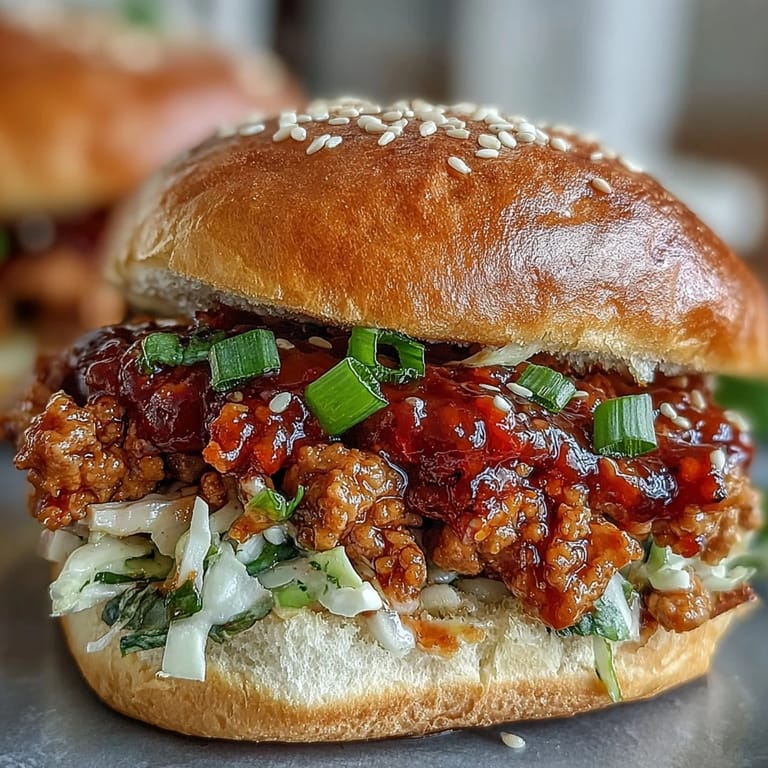
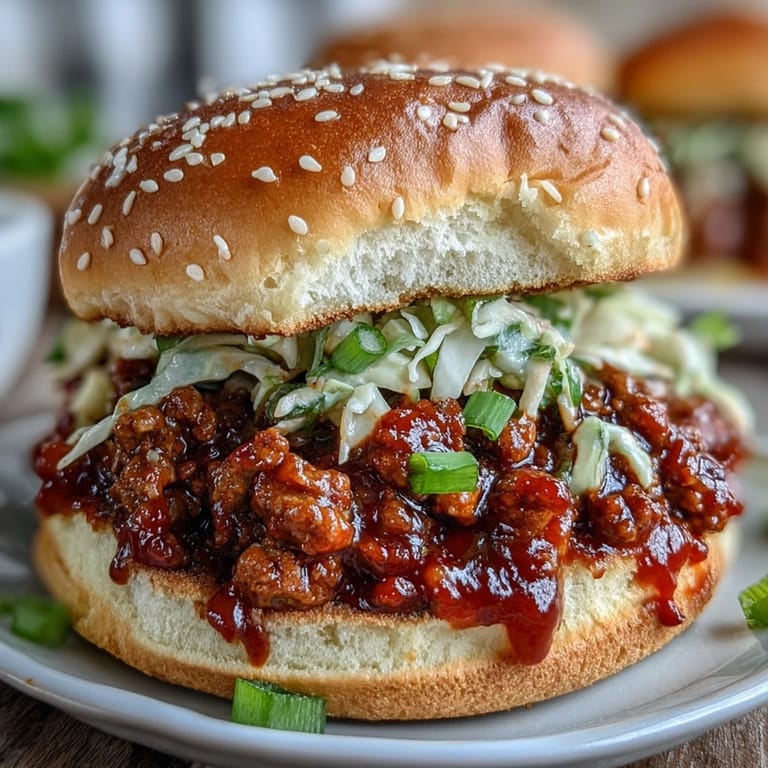
- Toast your slider buns lightly if you want them to hold up better against the moist filling, then spoon a generous amount of turkey onto each bun bottom. Top each with a small handful of slaw, a sprinkle of sesame seeds, and the bun top, then serve immediately while everything is warm and the contrast between temperatures is still dramatic.
 Pin it
  Pin it
 There was this one dinner where a guest who claimed to hate spicy food ended up eating three sliders before asking if there was a 'secret ingredient' making them so craveable. When I told her it was the gochujang, she laughed and said it didn't feel dangerous like other spicy things she'd tried—just warm and complex and somehow addictive. That's when I realized these sliders do something special: they introduce people to flavors without demanding anything of them, which feels like the best kind of food magic.
The Sweet-Spicy Balance
Getting this balance right is where the magic happens, and honestly, it took me a couple of tries to understand the proportions. The brown sugar isn't there to make the filling dessert-like; instead, it's a buffer that lets the gochujang's heat bloom gradually on your palate rather than hitting you all at once. I learned this when I made a batch without adequate sugar, and it tasted more aggressive than inviting—suddenly those sliders felt confrontational rather than joyful. Now I taste as I go, knowing that a touch more sugar won't make it sweet so much as it will round out the spice and create complexity.
Why Slaw Texture Matters
The slaw is honestly as important as the filling, and I didn't truly get this until someone told me that the cold crunch is what makes your mouth keep wanting another bite. Without that contrast, you're just eating warm meat on bread, which is fine but not remarkable. The cabbage provides relief from the richness of the mayo-based sauce and the heat from the gochujang, and it does something psychological too—it makes the slider feel lighter and fresher than it actually is, which means you can justify having a second one.
Serving and Customization
These sliders shine when served warm and fresh off the skillet, but they're forgiving enough to work for casual entertaining or meal prep. You can make the turkey mixture ahead and reheat it gently before assembly, and the slaw can sit in the fridge for several hours without losing its crunch. The beauty of this recipe is that it invites personalization without demanding it.
- Add diced jalapeño to the turkey mixture if you want to build heat gradually rather than all at once through the gochujang.
- Substitute ground chicken or beef if turkey doesn't appeal to you, keeping cooking time the same since they're similar in density.
- Serve with a crisp lager or chilled white wine to echo the cool-and-spicy interplay happening on your plate.
 Pin it
  Pin it
 These Korean turkey sloppy joe sliders remind me that the best cooking happens when you're willing to break a few rules and blend what you love. They're proof that fusion doesn't have to feel forced—it just needs respect for both sides of the equation, and a willingness to taste and adjust along the way.
Recipe Questions & Answers
- → What makes these sliders Korean-inspired?
The Korean inspiration comes from gochujang (Korean chili paste), fresh ginger, garlic, rice vinegar, and toasted sesame oil in the turkey mixture, plus sesame seeds in the slaw for authentic Asian flavors.
- → Can I make the turkey filling ahead of time?
Yes, the turkey filling can be prepared up to 2 days in advance and stored in the refrigerator. Reheat gently on the stove before assembling the sliders to maintain the best texture.
- → What can I substitute for gochujang?
If unavailable, substitute with sriracha mixed with a teaspoon of miso paste, or use sambal oelek with a small amount of brown sugar added to mimic the sweet-spicy flavor profile.
- → How do I prevent the buns from getting soggy?
Lightly toast the slider buns before assembling and serve immediately after topping with the turkey mixture. You can also place a layer of slaw between the bun and turkey for extra protection.
- → Can I use different meat?
Ground chicken, beef, or even plant-based crumbles work well as substitutes. Adjust cooking time slightly as different meats may brown at different rates.
- → What sides pair well with these sliders?
These pair beautifully with crispy potato wedges, Asian cucumber salad, pickled vegetables, or a simple green salad with sesame vinaigrette to complement the bold flavors.